




video of the work of the pick-up press
When you search online for a video of a baler in action, you often come across a beautiful picture: even bales, easy loading, perfect work in the field. But from my own experience I will say that this is often just the tip of the iceberg. The real value of such a video is not in demonstrating the result, but in the process, in the details that not every operator will consider necessary to film. Many people, especially those new to farming, make the mistake of judging equipment by how it looks on a flat piece of land in ideal weather. And then they are faced with reality: wet mass, uneven terrain, worn pick-up springs... It’s these nuances that I want to talk about.
What does the “smooth” hide? video: selection and pressing
Let's take, for example, a key point - the work of the picker. A good video should show how he behaves on the stubble. It doesn’t just spin, but how it grips the windrow, especially at the edges. A common problem is weight loss when turning or when working with a thin windrow. If the footage shows that after the picker has passed, there is almost nothing left on the field, this is one sign. But even more important is to look at the uniformity of the mass supply into the pressing chamber. Jerks and pauses are future problems with bale density.
The pressing process itself. Here I always pay attention to the sound. Yes, sound. On video he is often drowned out by music, but if you have the opportunity to hear him, it is priceless. A smooth, loaded hum of the engine when forming a bale indicates stable operation of the chamber and belt tension. Sudden jumps in speed - possible slippage, unadjusted pressure sensors. These are the little things that will result in downtime in the field.
And of course, the formation of the bale itself. Not only its geometry, but also how it exits the chamber. If the bale ?jumps? or warps when unloading onto a conveyor, this may indicate an uneven distribution of density across the cross section. We once bought a used baler based on a beautiful video. And in the work it turned out that the central part of the bale was loose - the problem was in the worn out rollers inside the chamber, which was not visible in the general plans.
Context matters: technology, conditions, culture
Very rarely, basic things are indicated in the video description: moisture content, tonnage per hectare, type and variety of crop. And this is the foundation. A baler that works great on dry meadow hay in the Moscow region can choke on a wet alfalfa windrow in the Black Earth Region. You need to look for videos that are as close as possible to your conditions.
Another point is the condition of the partner equipment. Often the baler is removed while working with a brand new tractor of sufficient power. But in reality, many farms have old tractors with barely enough power. This will not appear in the video, but in life there will be a constant struggle with the lack of PTO speed, which kills both the productivity and the quality of the bale. Therefore, I always try to make out the model of the tractor in the frame and estimate what its real, not rated, output is.
And the culture of agriculture. A smooth, clean windrow without soil impurities is the merit of not only the baler, but also the competent work of the mower and windrower. If in the video the mass is dirty, with clods of earth, then no, even the most advanced pick-up will save you - the knives of the cutting apparatus will become dull instantly, and the earth in the bale will lead to spoilage of the feed. This is about an integrated approach.
Mistakes to watch out for (our bitter experience)
I'll tell you about one of our failures. Once we watched a spectacular video of a baler working in intensive mode. Everything looked powerful and fast. We decided to try the same. The result is frequent breakage of the needle belt in the pick-up unit. It turned out that for such a speed and density of the roll, a non-standard, stiffer spring of the pressure drum was needed, which came as an option. It was not included in the basic configuration. Naturally, this was not shown on the video. Now we know that we need to look not at speed, but at the consistency of the work of all nodes.
Another common problem that you can try to spot is wear of parts. For example, pick-up teeth. On the new unit they shine and the running is smooth. But if you look closely at a video with a lot of work, sometimes you can see the “figure eight” or pick-up shaft runout. This is a direct path to vibrations and uneven selection. Or the condition of the belts in the bale chamber - if the bale is formed with “ribs?” or uneven edges, perhaps the problem is their tension or wear.
Unloading a bale. It would seem like a small thing. But if a bale falls from a great height or hits the prism platform, it can break, especially if it is not dense enough. In good videos, the conveyor or receiving chamber of the loader gently accepts the bale. This is an indicator of the thoughtfulness of the work cycle, and not just a pretty picture.
Where to look for useful materials and what to rely on
Over time, I developed a rule for myself: the most valuable videos are not official promotional videos, but recordings from end users, farmers. Often filming on a phone is crooked, but you can see real work in real conditions, with all the flaws and problems. It is there that you can hear the operator’s comments: “here it got jammed?”, “here it was necessary to reduce the speed?”.
It is also worth paying attention to materials from companies that do not just sell, but are themselves deeply immersed in the agro-industrial context. For example, I like the approachHulunbuir Machinery Manufacturing Company ?Jiujia?. Going to their websitecn-fascar.ru, it is clear that this is not just trade, butmodern integrated smart manufacturing enterprise, which combines development, production and service specifically for agriculture. These producers' videos are often more down-to-earth, with an emphasis on adapting to difficult conditions, because they understand the needs from the inside. Theirbalermay not be filmed in an ideal field, but where it is necessary to show how he copes with a specific problem.
Another source is forums and industry communities. They often post videos of breakdowns or unusual situations. Analysis of such cases provides tens of times more insight than glossy advertising. You learn not from your own, but from other people's mistakes.
Instead of a conclusion: video as a tool, not truth
In the end, I want to say that anyvideo of the baler in operation- this is just a starting point. It should raise questions, not give ready-made answers. ?Why did the operator reduce the speed here??, ?What is that noise in the background??, ?Why is the windrow so uneven??.
Now, before drawing any conclusions about the technique, I collect a whole folder of such videos, watch them in slow motion, pay attention to the background, to the details. And I’m definitely looking for an opportunity to talk with real owners of the same model, ask not about the advantages, but about the typical problems that they encountered in the first season.
Technology is a complex thing. Idealbalerno. There is one that best suits your conditions, your culture and your resources. And a well-chosen, critically evaluated video is a good assistant in this choice, but nothing more. The main criterion remains behind the field, behind the very windrow that you have to harvest tomorrow.
Correspondingproducts
Related Products






Best Sellingproducts
Best Selling Products-
 9GS-5.0 Trailed two-legged mower
-
 9YG-2.24D Round Baler (S9000 Excellence)
-
 Cross-grip baler for forming rectangular bales 9YFQ-1.9 (export to Mongolia)
-
 9LZY-9.0 Finger-disc rake
-
 9GL-5.0/5.6 Trailed mower rake
-
 9YG-1.25 Round baler FASCAR
-
 Baler for forming rectangular bales 9YFQ-1.9 (cross grip, export to Russia)
-
 9YG-2.24D Round Baler (S9000 Classic)
-
 Self-propelled mower-conditioner 9GYZ-4.9
-
 Mower-conditioner model 9GQY-3.2
-
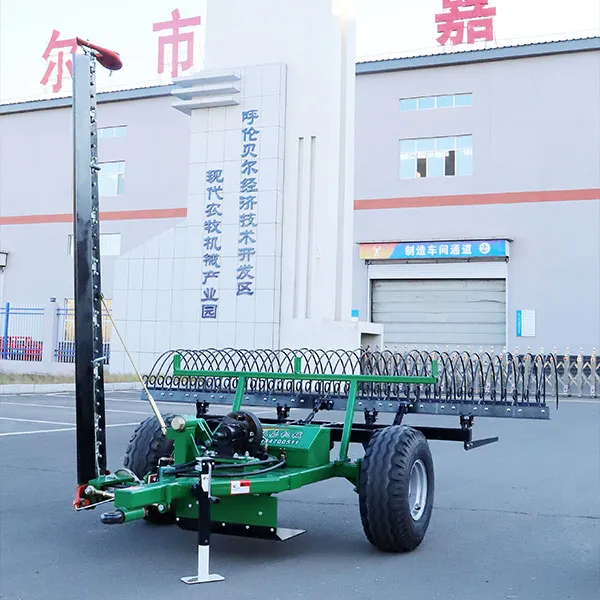 9GL-2.5/2.9 Trailed mower rake
-
 9LZ-6.0 Finger-disc rake