




import of agricultural machinery
When they talk aboutimport of agricultural machinery, many immediately imagine European brands, high technology and full automation. But in practice, it often turns out that behind these beautiful pictures there are a lot of nuances that are not written about in catalogs. I went through this myself - I thought that buying a tractor or seeder abroad was simply a matter of choosing a model and paying. It turned out that the key thing is not the machine itself, but how it will work in our specific conditions: on our soils, with our fuel, with our personnel. And this is where the fun, and sometimes painful, begins.
Why doesn't everything that glitters fit?
Take, for example, the story of balers. Several years ago we decided to import a batch from Western Europe - the cars are beautiful, and on paper the performance is excellent. But they forgot to take into account one simple point - the moisture content of our forage crops during the harvesting period. The equipment was designed for drier raw materials, which resulted in constant blockages, downtime, and dissatisfaction among machine operators. We had to urgently modify it and look for local engineers to modify the pressing chamber. Conclusion?Import of agricultural machineryrequires not a comparison of technical characteristics, but an in-depth analysis of the agronomic context. Equipment should not just perform a function, but fit into the entire technological cycle of the farm.
Or another aspect - service. It would seem that now there are no problems with spare parts, everything can be ordered. But when a critical component breaks down in the midst of sowing, and its delivery takes three weeks, it’s a disaster. Therefore, now we always look not only at the price tag and capabilities of the machine, but also at the availability of a service network in the region and spare parts warehouses. Sometimes it’s safer to take a less “advanced” one. model, but one for which there is support within a radius of 200 km. This is a bitter experience, paid for by more than one lost season.
By the way, about “advancement?”. Now it is fashionable to talk about smart agriculture, precision farming. Many imported complexes offer a bunch of sensors and control systems. But often our farms are simply not ready for this - there are no specialists who can manage this, there is no digital infrastructure. As a result, expensive equipment is used at 10% of its potential. It turns out that we are paying for opportunities that we cannot take advantage of. Sometimes step-by-step modernization looks much more effective: first, basic reliable equipment, then the gradual addition of “smart” ones. modules.
Case: when localization matters
Recently, I began to pay attention to companies that do not just import ready-made equipment, but adapt it or even develop joint projects to suit our needs. For example, I came across the siteHulunbuir Machinery Manufacturing Company ?Jiujia? (https://www.cn-fascar.ru). Their description states that this is a modern integrated enterprise for intelligent production for agriculture and livestock farming, with its own R&D, production and service. This is an interesting model.
Why is this important? Because this approach can solve many problems of cleanimport. If a company has its own research and development, it means they can not only import a Chinese tractor, but modify it to suit our conditions - strengthen the suspension for working on heavy soils, tune the engine to our diesel fuel, and provide the ability to operate in low-temperature conditions. This is no longer just supply, it is creating a product for the market. And the service responsibility is different - it lies on one shoulder, and is not spread between the manufacturer, importer and dealer.
Of course, such statements should always be treated with a healthy dose of skepticism. ?Intelligent manufacturing? and ?integrated enterprise? - these are beautiful words. The key question: are there any real cases of introducing their technology on our farms? How does it perform in its fifth season of operation? How are things going with the repair of complex electronic components? The answers to these questions determine whether the collaboration will be successful or turn into another story of “didn’t live up to expectations.”
The price of the issue: not only in money
Talking aboutimport of agricultural machinery, everyone first looks at the purchase price. But the cost of ownership is a much more important indicator. This includes the cost of maintenance, off-season storage, depreciation, and, critically, the cost of downtime. A cheap combine, which costs half a harvest to repair, ends up costing more than its more expensive but trouble-free counterpart.
Another hidden expense is operator training. Modern technology is complex. You can buy a super seeder with a variable seeding rate, but if the machine operator does not understand how to work with a tablet and field maps, it will be of no use. You have to budget for either training from the dealer or sending your own people to the manufacturer. This is time and money that is often not taken into account at the procurement planning stage.
And of course, logistics. Delivery of large equipment is a separate story with trucks, permits, and customs clearance. There have been cases when equipment arrived at the beginning of the season, but the necessary attachments were stuck at customs for a month. Everything must arrive comprehensively and on time, otherwise the meaning is lost. Therefore, now we always work with suppliers who undertake the full cycle: from selecting a model range and processing documents to turnkey delivery. and commissioning on site.
The future: hybrid solutions and pragmatism
Where is the market heading? It seems to me that the future lies not in the pure import of finished cars, but in hybrid solutions. Some of the units are imported, proven global brands (engines, hydraulics, navigation systems), and some - the frame, cabin, attachment systems - can be produced locally or in countries with similar conditions, like the sameHulunbuir company ?Jiujia?. This allows you to reduce the final cost and increase maintainability.
Pragmatism will be the main trend. There is less and less desire to chase the “best” thing. from an exhibition in Hannover. There is an increasing demand for understandable, maintainable, adapted equipment with fast service. Imports will remain, but their nature will change. This will not be an import of “hardware,” but rather of technology, know-how and high-quality components for subsequent assembly and adaptation already here.
In this context, sites likecn-fascar.ruare interesting precisely because of their declared integrated approach. If they truly integrate development, production and service, they could potentially solve many of the pain points of farmers. But, again, this needs to be tested in practice, on specific fields and farms. No beautiful websites and descriptions can replace reviews from a real agronomist who worked with this equipment for three seasons.
Bottom line: Don't be afraid to ask tough questions.
My main advice to those consideringimport of agricultural machinery: Be meticulous. Don't be shy about asking your suppliers difficult questions. Not “what is the maximum power?”, but “what is the service life before the first overhaul in working conditions on heavy loams?” It’s not “is there a driving system?”, but “how quickly will your engineers come and fix it if it breaks down on Saturday, 300 km from the regional center?”.
Look not at presentations, but at contracts. Especially the sections relating to warranties, spare parts provision and personnel training. And always, always look for an opportunity to communicate with those who have already purchased such equipment. It’s better to hear about real problems from a colleague once than to deal with them yourself later.
Import is a tool. The tool is powerful and can give a serious competitive advantage. But like any tool, you need to choose it for a specific task and know how to use it. Blindly chasing foreign brands without understanding your own technological chain is a sure way to disappointment and financial losses. A balanced, pragmatic approach, taking into account all the pitfalls, on the contrary, will lead to increased efficiency and, ultimately, productivity.
Correspondingproducts
Related Products




Best Sellingproducts
Best Selling Products-
 9GD-2.5 Single-blade trailed mower (updated version)
-
 9YG-1.0 Round Baler
-
 9YG-2.24D Round Baler (S9000 Excellence)
-
 Mower-conditioner model 9GQY-3.2
-
 9JYY-4.5 Roll pick-up-conveyor
-
 Self-propelled mower-conditioner 9GYZ-4.9
-
 Baler for forming rectangular bales 9YFQ-1.9 (cross grip, export to Russia)
-
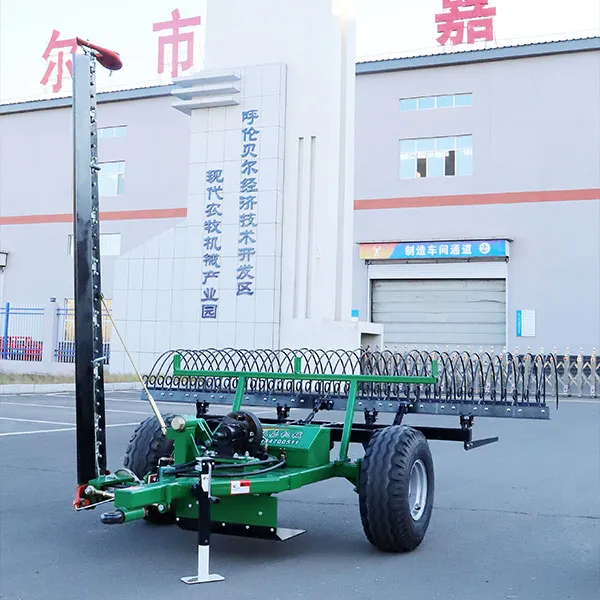 9GL-2.5/2.9 Trailed mower rake
-
 9LZD-9.0 Finger-disc rake
-
 Trailed single-drum combine harvester 4DQ-5 for bean threshing
-
 9GL-5.0/5.6 Trailed mower rake
-
 9YG-1.25 Round baler FASCAR