




trailed baler
When people talk about a trailed baler, many people immediately imagine a simple box on wheels that a tractor pulls behind it. Like, what's so complicated about that? But in practice, the difference between a good trailed baler and just a 'hay box' is like the difference between spending the night in a field and working three shifts. The main mistake is to consider it a minor piece of equipment. Its reliability and thoughtfulness directly determine whether you leave the field with a neat bale or with a pile of tattered hay and frayed nerves.
Design: where the main problems lie
If we take the classic scheme, then everything seems obvious: frame, pressing chamber, picking mechanism, knitting machine. But the devil, as always, is in the details. For example, camera geometry. Too sharp angles - and the mass begins to 'get stuck', requiring constant increased effort from the tractor. Too flat - the bale does not hold its shape and falls apart when unloaded. In a good press, this profile has been verified over years of trial and, importantly, error.
There are always a lot of questions for the selection department. The fingers should not just spin, but should effectively grip even a crushed, uneven windrow. I have seen models where, at the slightest unevenness of the ground, several fingers simply stopped working, leaving behind a strip of uncollected mass. This is a direct loss. That's why many manufacturers, such as China's Hulunbuir Jiujia Machinery Manufacturing Company, are now relying on reinforced and adaptive pick-up units that monitor the load. By the way, their websitecn-fascar.ruIt is useful to study it from the point of view of engineering solutions - it is clear that they are not just copying, but are thinking about adapting to difficult conditions.
And one more thing - the frame. It would seem like just a metal structure. But if it doesn't have the correct weight distribution and stiffness points, the abs will start to 'walk' when cornering or at speed. This is not only dangerous, but also quickly leads to fatigue cracks in the welds. It's easy to check - look at the frame of a press that was in use. If traces of repairs or additional “kerchiefs” that the owner welded himself are visible, this is a bad sign.
Knitting machine: a heart that can stop
This is, without exaggeration, the most capricious and responsible knot. When it works, it seems like it should be. But once you refuse him the field, you will learn everything about him. Modern systems mainly use mesh or twine. With twine, in my opinion, there is more hassle - you need proper threading, tension control, high-quality twine itself that will not break at the most inopportune moment.
The problem with many budget models is the simplification of the feeding and binding mechanism. There is not enough safety margin in the gears, the springs that form the unit are rather weak. As a result, when the humidity of the mass increases or simply when the pace of work accelerates, the machine begins to skip bales or performs poor-quality dressing. The bale then simply falls apart during loading or transportation.
What do competent manufacturers do? They install redundant control sensors, strengthen critical components and, most importantly, provide easy access for cleaning and maintenance. Because 90% of knitting machine failures are winding of plant residues and dust. If you need to disassemble half the press to clean it, this is a failure in the design. At the sametrailed balerfrom ?Jiujia? This point, judging by the documentation, has been thought out - the service hatches are located on external panels.
Hitching and working with a tractor: what the specifications are silent about
The passport always says: 'to be mounted with tractors from 80 hp.' This is pure theory. In practice, especially on inclines or on heavy, wet soils, even 100 hp. may not be enough if you do not take into account the torque on the power take-off shaft (PTO). The press consumes enormous power. And if the tractor works at the limit, this is not only excessive fuel consumption, but also rapid wear of both the press itself and the tractor transmission.
Another nuance is the drive system. A gear reducer is more reliable, but heavier and more expensive. Chain transmission is simpler and cheaper, but requires constant tension control and is susceptible to shock loads. The choice often depends on the class of the press and the expected volumes. For small farms, maybe a chain will do. But for constant commercial procurement - only a gear.
It is important to look at the versatility of the hitch. A standard trailer hitch is good, but in modern conditions a quick hitch and unhitch are often needed. Especially if one tractor operates several pieces of equipment. Not all presses allow this; you have to make some handicrafts.
Real experience: the case of waterlogged alfalfa
I would like to give an example from practice that well illustrates the importance of safety margin. A couple of years ago I had to work baling alfalfa, which was caught by unexpected rain. The humidity was clearly higher than optimal. Regulartrailed balerthe middle hand immediately began to 'press' - the wet mass clogged the chamber, the tractor's PTO literally howled, and the bales came out loose and heavy.
Then we decided to try a technique that we had heard about - the same press from the Hulunbuir company “Jiujia”. It was stated that the pressing chamber has variable force and special ribs to relieve pressure. To be honest, I was skeptical. But in reality, the difference was noticeable. The press, of course, also worked under tension, but did not choke. It seemed to 'chew' the mass, producing more or less dense bales. The knitting machine never failed, although we waited for it every minute. This is a case where thoughtful engineering, rather than just brute force, solves the problem. The company positions itself as an integrated intelligent manufacturing enterprise for agriculture, and in this situation it was not just words.
Of course, this doesn't mean he's perfect. After such extreme work, I had to spend time thoroughly cleaning all the components from adhering greenery. But the fact is that he completed the job where other equipment most likely would have failed.
Maintenance and 'longevity': what works in the field and what in the workshop
Any baler is a machine for difficult conditions. And its resource depends 70% on how it is maintained. I didn’t read the manual, didn’t lubricate the bearings in the selection unit in time - I had to replace the entire unit during the season. Many people make the mistake of leaving the press in storage with an uncleaned chamber. Plant residues, especially legumes, actively absorb moisture and trigger corrosion from the inside. In the spring you find not just dirt, but “stuck” pieces and rusty stripes.
Hence the conclusion: a good press should not only be durable, but also 'maintainable'. All oil fittings must be visible and easily accessible. Protective covers on belts and chains are quick-release. It’s ideal if the manufacturer provides a clear maintenance schedule indicating critical points. On the websitecn-fascar.ru, for example, they post such diagrams and even video instructions for seasonal maintenance for their models. This makes life much easier for the machine operator.
And the last thing - spare parts. Biggest headache. The press may be excellent, but if a gear in the gearbox breaks in the north of the Tambov region, and you have to wait three weeks for it from abroad, then the whole point of reliability is lost. Therefore, now they are increasingly looking towards manufacturers who either have spare parts warehouses in the region, like the same “Jiujia”, which is developing a network in Russia, or use in their designs the most standardized bearings and parts that can be found locally.
Results without gloss
So what is moderntrailed baler? It's not just a trailer anymore. This is a complex unit where the balance between power, smart design and maintainability is everything. When choosing it, you can’t look only at the price tag or the maximum bale size. You need to crawl under the frame, look at the quality of the welds, ask about the availability of knitting needles or mesh, and try it on for your fields and tractors.
Experience suggests that the future lies in machines that are not only powerful, but also 'smart', able to adapt to different conditions in the field. And behind the manufacturers who understand that they are not selling hardware, but a tool for uninterrupted operation. Therefore, studying the proposals of companies like the Hulunbuir Jiujia Machinery Manufacturing Company, which rely on the full cycle - from development to service - looks like a logical step for someone who wants to work, and not constantly repair.
After all, good abs are the ones you forget about during the busy season. It just quietly and reliably does its job somewhere behind the tractor while you think about the next field. And this is perhaps the best characteristic.
Correspondingproducts
Related Products






Best Sellingproducts
Best Selling Products-
 9YG-2.24D Round Baler (S9000)
-
 Baler for forming rectangular bales model 9YFQ-2.2D (cross type, for export to Russia)
-
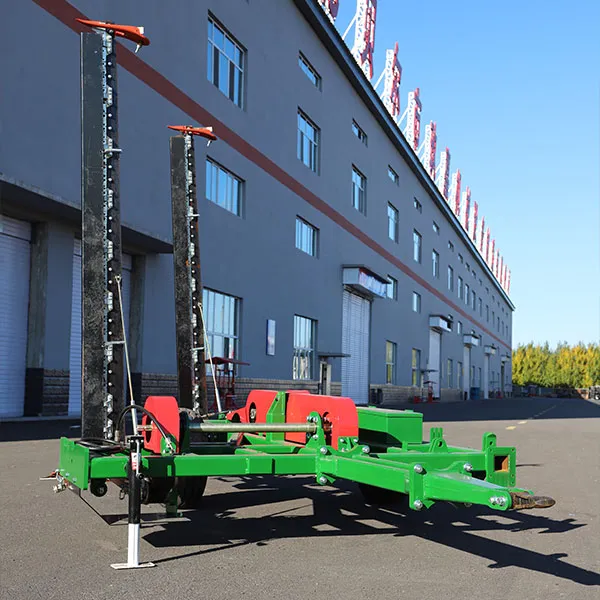 9GS-5.0 Trailed two-legged mower
-
 9GD-2.5 Single-blade trailed mower (updated version)
-
 Drum type raking machine 9LG-9.0
-
 Baler model 9YGD-0.5B
-
 Mower-conditioner model 9GQY-3.2
-
 9LZ-6.0 Finger-disc rake
-
 9LZY-9.0 Finger-disc rake
-
 9YG-1.0 Round Baler
-
 9FZ-2.0 Finger-disc tedder
-
 Baler for forming rectangular bales 9YFQ-1.9 (cross grip, export to Russia)