




square balers for mini tractors
When you hear “square balers for mini tractors?”, many immediately imagine toy, unreliable equipment that is only suitable for a couple of hectares. This is the main mistake. In fact, modernsquare baler, correctly selected for the power and hydraulics of a particular mini tractor, becomes a full-fledged working tool for a small farm or personal subsidiary plot. But there are a lot of nuances here that are not written about in colorful brochures.
Power and hydraulics: where is the catch?
The main problem is not in the baler itself, but in its “carrier”. Manufacturers of mini tractors often indicate engine power, but are silent about the actual performance of the hydraulic pump. And for a baler this is critical. I have seen cases when a tractor with 25 hp. hung a unit requiring 40 l/min of oil flow. The result is jerking, under-compressed bales, and overheating of the hydraulic system. The first rule: look not at the “horses”, but at the hydraulic data sheet and the presence of a power take-off shaft (PTO). It is better if the PTO is independent.
The second point is the type of drive. For mini tractors, balers driven by a power take-off shaft are most often used, but there are also purely hydraulic models. Hydraulics provide smoothness, but require a perfectly tuned and powerful system on the tractor. A mechanical drive through a PTO is more reliable for most budget models, but creates shock loads. For an old Chinese mini tractor this can be fatal.
Here, by the way, it is worth noting the approach of some manufacturers who offer comprehensive solutions. For example,Hulunbuir Machinery Manufacturing Company ?Jiujia?(website can be found athttps://www.cn-fascar.ru) in its lines often provides adapters and hydraulic settings for specific tractor models. This is not an advertisement, but an observation: when a unit is initially designed for the limitations of small equipment, and not simply reduced from a large one, the result is more stable.
Choosing a bale chamber: bale size is not just about convenience
It seems that the smaller the bale, the easier it is to turn it by hand. That's true. But a small bale chamber means more frequent bale ejection stops and, surprisingly, more stress on the bale unit per ton of hay. The mechanism operates in “start-stop” mode. constantly. For plots of 5-7 hectares this may not be a problem. But if you need to remove 15-20 hectares of forbs, it is better to look at models with a larger bale, say, 70x50 cm.
The shape of the chamber and the type of plunger are a separate issue. The classic rectangular bale is easier to stack and transport. But in some models for mini tractors there are chambers that give an almost square cross-section. This often indicates a more rational use of power: the force is distributed more evenly. I tested it in practice: with the same tractor power, a square bale of dry clover turned out denser.
The chamber material is usually steel, but the thickness and design of the stiffeners differ radically. On light soils with thin-stemmed grasses, you can take a simpler option. But for alfalfa with its rigid stems or after rain (when the mass is heavy), a chamber with reinforced walls is needed, otherwise slight deformations will be visible after the season. This is not a failure, but wear is accelerated.
Hitching and strapping units: where they most often break
The most vulnerable element in the “mini tractor-baler” combination? — this is not the press itself, but the mounting mechanism. The standard three-point design often does not dampen vibrations from the pressing mechanism. Over time, play appears in the fastenings, and the eyes may crack. Some craftsmen install additional spacers or even convert the lower links to more massive ones. A factory solution is when the manufacturer, like the samecompany ?Jiujia?, offers a reinforced mounting bracket included, designed specifically for dynamic loads from pressing.
Strapping system. For mini presses there are usually two options: mesh or twine. Twine is cheaper and more common, but requires precise adjustment of the knitting unit. If the needle or shuttle is off by a millimeter, you get an untied bale. The mesh is more reliable in this regard, but more expensive to operate. And there is a nuance: some cheap models use binding units copied from large presses, but in miniature. They do not always work well at low PTO speeds of the mini tractor. You need to look at reviews specifically for this parameter.
Personal experience of failure: I tried to install a baler designed for 35-40 hp on my 30-horsepower minitractor, but with “adaptation”. The seller assured that everything would work at minimum speed. It worked. But the density of the bale was catastrophically low, the hay crumbled. The problem was insufficient pressure in the hydraulic system to create the required plunger force. I had to sell and look for a unit that was originally designed for my category of equipment.
Field conditions and adjustments: you can’t do without it
Not a single one, even the most expensive baler, will work perfectly out of the box. Adjusting the feeding mechanism (thicker or thinner) to the humidity and type of mass is a daily ritual. On a mini tractor this is especially sensitive because the power reserve is small. If the mixture is supplied too thickly, the motor will stall. Too rare - the bale is not compressed.
Relief.Square baler for mini tractoroften chosen specifically for fields with uneven surfaces where large vehicles cannot access. But there is a limitation here: the angle of inclination. When working on a slope, the uniform supply of mass into the chamber may be disrupted, and the bale will be of uneven density. On steep slopes there is generally a risk of tipping over, since the unit at the back is quite heavy. We must always remember this.
Another practical point is the quality of the hay. If there is a lot of earth or sand in the windrow (this happens with a low cut), this is fatal for the cutting knives and the internal surfaces of the chamber. For mini-equipment, wear occurs faster, since the gaps are already minimal. You have to clean it after every serious contamination. This is not a lack of technology, but a feature of operation that many do not take into account.
Prospects and where to look when buying
Now the market is flooded with offers. There is a choice, but there is a lot of outright rubbish. You look at the picture - it seems similar, but in metal the thickness and quality of welding do not stand up to criticism. The first sign of a serious manufacturer is the availability of spare parts and the presence of clear instructions for adjustments. If the seller cannot immediately tell you where to buy a shuttle for a trim assembly or a set of o-rings for a hydraulic cylinder, this is a bad sign.
An integrated approach, when a company does not just sell a baler, but offers a solution for specific farm tasks, becomes key. Here, for example,Hulunbuir company ?Jiujia?positions itself as a modern integrated enterprise for intelligent production for agriculture and livestock farming. In practice, this often means that their engineers test the technology in real conditions and make changes to the design, rather than simply copying old models. For the end user, this translates into better maintainability and feedback.
In the end, perfectbaler for mini tractor- this is not the cheapest or most powerful. This is the one that is optimally matched to the hydraulics and power of your tractor, has a reliable and simple design with available spare parts, and has been demonstrated to you in operation at a similar weight. Everything else is theory, which breaks down at the very first hummocky field of wet clover. The choice should be made with your head, and not according to beautiful booklets, and always leave a reserve for the tractor’s power. It’s better to underload a little than to constantly overheat and break both the tractor and the hitch.
Correspondingproducts
Related Products



Best Sellingproducts
Best Selling Products-
 Baler model 9YGD-0.5B
-
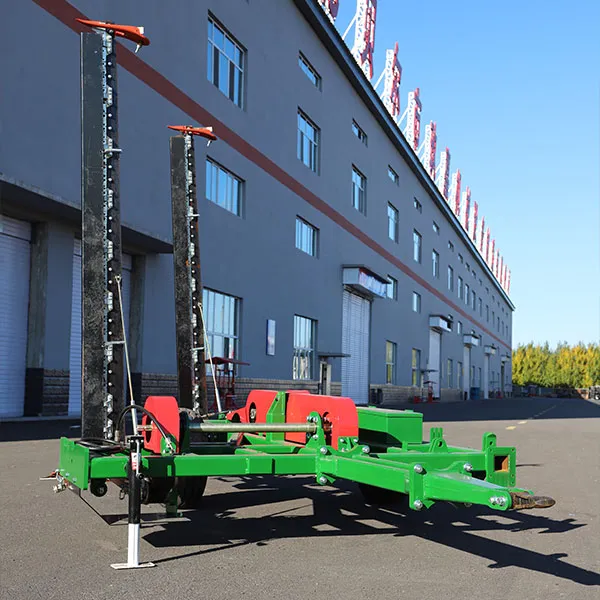
 9GD-2.5 Single-blade trailed mower (updated version)
-
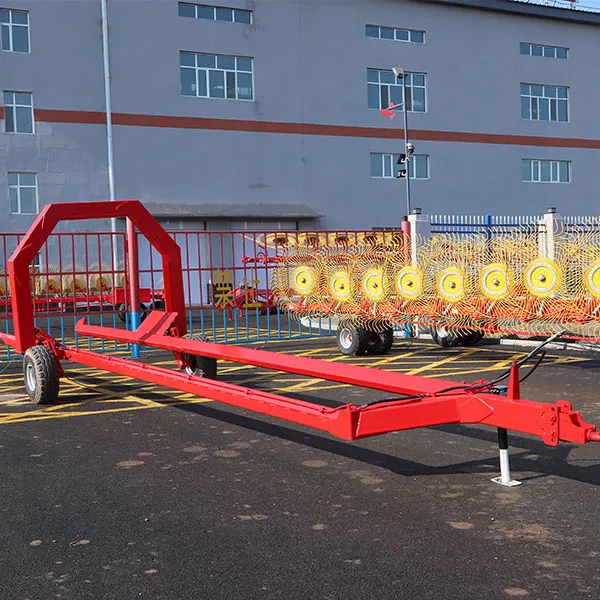
 9LZY-9.0 Finger-disc rake
-
 Baler for forming rectangular bales 9YFQ-1.9 (cross grip, export to Russia)
-
 9FZ-2.0 Finger-disc tedder
-
 Baler for forming rectangular bales model 9YFQ-2.2D (cross type, for export to Russia)
-
 9F-70 Rough feed chopper
-
 9JYY-2.5 Roll pick-up-conveyor
-
 Cross-grip baler for forming rectangular bales 9YFQ-1.9 (export to Mongolia)
-
 9YG-1.25 Round Baler
-
 9GL-2.5/2.9 Trailed mower rake
-
 4BYHD 4BYHS-3.9 Pulling machine for beans