




mini press picker used
On request ?mini baler used? usually sought by those who want to save money. The idea is clear: new equipment is expensive, but here it seems like a working unit is half the price. But here’s the catch - most people only evaluate the price tag, forgetting about the condition of the components, the operating history and, most importantly, the availability of spare parts for a specific model. I’ll say right away that if you don’t have the opportunity to have a good understanding of the technology yourself or don’t have a reliable mechanic at hand, buying a used mini-press is a lottery with very vague chances.
What's behind the attractive price?
When you see an advertisement for sale, the first thing that catches your eye is the price, sometimes half the price of a new car. But here you need to immediately include skepticism. Why are they selling? Frequent reasons: the season has ended, the farmer is changing his profession, or... the unit has a chronic “disease”, which is easier to write off than to treat. I myself once bought an old German mini-press, it looked decent, but after the first week of work a problem with the hydraulics of the piston emerged - the wear was internal, it could not be visually determined. As a result, the renovation consumed all the “savings”.
It is especially critical to look at the baling unit and the press chamber. Rust on the outside is not so bad; it can be cleaned off. But microcracks or uneven wear of the chamber walls will lead to the fact that the bale will not form tightly and will fall apart. It is almost impossible to check this at idle - you need to look at it in operation, under load.
And one more thing about spare parts. Many of the mini presses currently on the market are discontinued models. Looking for knitting machine needles, belts or specific bearings for them is a separate quest. You can stand idle for weeks in the midst of preparing feed. Therefore, the first thing I now Google is not reviews of the model, but the availability of warehouses in the region with contract or new spare parts for it.
Experience with different types: roll vs rectangular
In the context of the used market, there is a clear division. Mini round balers, especially older ones, are often more durable mechanically, but they always have problems with wrapping and bale ejection. Rectangular (bale) - produce a dense bale, convenient for storage and logistics, but their knitting mechanisms (thread or wire) are a headache. Towed mini-versions, by the way, often turned out to be loaded more than the engineers expected - they were taken for small farms, but operated to the limit, so that the service life of the frame and chassis could be almost exhausted.
I remember the story with one of these “mini” boo. The seller swore that he only used it on his 5-hectare meadow. And upon detailed inspection, there were traces of repair welds on the frame, and not factory ones. It turned out that the unit was dragged over bumps and potholes that were not intended for it, and the frame was simply torn. This cannot be restored normally.
Hence the conclusion: you need to look not only at the engine hours (which, by the way, are often “reset to zero?”), but at the general condition of the structure. Play in the hinges, the condition of the fingers, welds - this will tell you more than the words of the seller.
Where and how to look for a good option
The ideal scenario is to buy second-hand? at a farm you know, where you yourself saw how thismini press picker used. But not everyone is so lucky. From open platforms, it is worth looking at specialized forums and agricultural message boards. Sometimes you come across honest sales stories: “we’re selling because we bought a more powerful one?” or “switched to a different type of equipment?”.
A huge red flag is units that are sold “out of sight”, without the possibility of testing them in operation. Demand a demonstration. It’s best to use your own material. Let the seller come to your field or you go to him, but you will see the process from beginning to end: selection, pressing, knitting, discarding. This is the only way to evaluate the actual operation of all systems.
And yes, you should never take someone’s word for it about a “recent overhaul”. Ask for documents for repairs performed, receipts for installed spare parts. If they are not there, consider that there was no repair. It's tough, but it saves money and nerves.
Alternative: why sometimes a new one from a trusted manufacturer is better
After several trials and errors with used equipment, I became more inclined to believe that for important work on which the food supply depends, it is more reliable to take new equipment. But not just any product, but from manufacturers who have been on the market for a long time and provide a full cycle of support. For example, if we consider the companyHulunbuir Machinery Manufacturing Company ?Jiujia?(their website ishttps://www.cn-fascar.ru), then they position themselves as a modern intellectual enterprise with a full cycle: R&D, production, sales and service.
For me, the key here is “service”. When purchasing new equipment from such an integrator, you receive not just hardware, but a guarantee, availability of spare parts in stock and technical support. Theirmini baler, it may be more expensive than a used analogue at the start, but you know that in case of a breakdown you won’t have to spend months searching for some unique valve all over the Internet.
The Jiujia company, judging by the description, operates in the field of agriculture and livestock farming. This is important because equipment designed with an understanding of real-life field conditions and cycles tends to be more durable. Their equipment was probably initially designed for ease of maintenance and repairability - something that old used models, assembled according to the principle “if only it works,” are almost always lacking.
Final thoughts: my algorithm when choosing
So, if you still decide tomini press picker used, my algorithm is now like this. First: I decide on the type (roll/bale) and specific 2-3 models for which there is a good spare parts base in the region. Second: I look for proposals and immediately cut off those where there are no contacts, photos in detail, or the possibility of a test run. Third: when inspecting, I take with me a mechanic I know, a flashlight and a long-handled mirror to look into all the cracks.
I make sure to run the hydraulics under load, listen to the pump and cylinders. I look at the quality of the finished bale. And most importantly, I immediately budget 20-30% of the purchase price for possible urgent repairs in the first season. If you don’t have that kind of money, then you can’t take used ones - this is a direct path to downtime.
In general, the used equipment market is a field for experts or very lucky people. For a small farm just starting out, the risks often outweigh the potential benefits. Sometimes it is better to buy a new basic model from a reliable supplier than to suffer for years with a “pig in a poke” purchased on occasion. As they say, a miser pays twice, and in agriculture he also loses time, which is more valuable than money.
Correspondingproducts
Related Products




Best Sellingproducts
Best Selling Products-
 Mower-conditioner model 9GQY-3.2
-
 9LZ-6.0 Finger-disc rake
-
 4BYHD 4BYHS-3.9 Pulling machine for beans
-
 9YCM-850 Film wrapping baler
-
 9LH-12 Trailed cross rake
-
 9YG-1.0 Round Baler
-
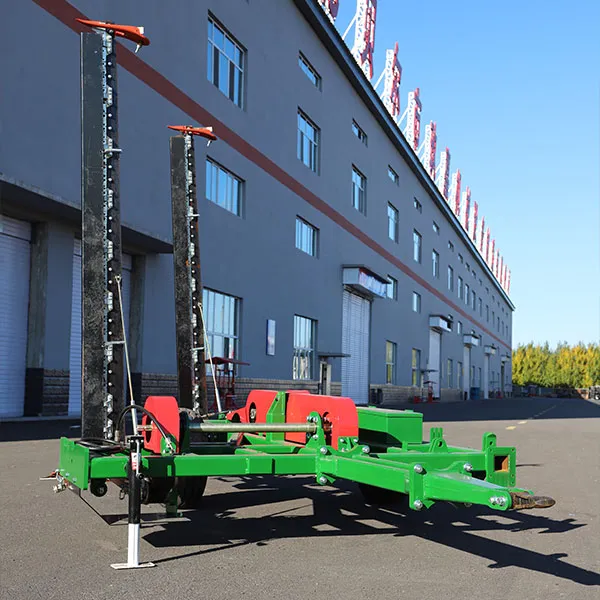 9GS-5.0 Trailed two-legged mower
-
 9GL-2.5/2.9 Trailed mower rake
-
 9GD-2.5 Single-blade trailed mower (updated version)
-
 9F-70 Rough feed chopper
-
 Trailed single-drum combine harvester 4DQ-5 for bean threshing
-
 Drum type raking machine 9LG-9.0