




selling baler
Do you see the ad “I’m selling a baler?” - and you immediately think that everything is simple? I bought it, hooked it up, it works. In fact, these three words hide a lot of pitfalls, which only those who have gone through this know about. Many people, especially beginners, are chasing cheapness or a big brand, forgetting that the main thing is how this machine will behave in your fields, with your crop and in your hands. I myself stepped on this rake, so I want to share not the theory from the catalog, but what was left out of the brackets.
What actually stands behind the word “sell”?
When a person writes “I’m selling a baler?”, the first thing that comes to an experienced person’s mind is “why?”. The reason is not always a fleet upgrade. Often these are hidden problems: accumulated metal fatigue, nuances with hydraulics that do not appear immediately, or a banal discrepancy with the tasks. I once bought a seemingly strong roll press, but it began to “spit” on wet clover. under-pressed rolls. It turned out that the previous owner only worked on dry straw, and the pressing belt had already lost its elasticity. The seller, of course, kept silent about this.
Therefore, my first advice is - don’t ask “how much?”, ask “why are you selling?” and “what is he not friends with?”. The answers are very revealing. There are no ideal cars, each has its own character. One may be capricious with small-stemmed herbs, the other may require the ideal setting of the springs on the chamber.
By the way, about cameras. Fixed or variable? There's a lot of arguing here. For a diverse farm with alfalfa today and corn silage tomorrow, perhaps a variable chamber option will provide more flexibility. But there will also be more difficulties in maintenance. Personally, I am inclined to think that specialized equipment is better. For haylage - one, for straw - perhaps simpler. Although, this is already a question of economics and scale.
Unobvious details that make all the difference
Everyone looks at performance, type (roll or bale), price. And the first thing I do is look at the knots that they don’t write about in the advertisement. Is the drive of the pressing mechanism belt or chain? A belt is quieter and, it seems to me, softer, but a chain, if it is of high quality, is easier to maintain in the field. True, there is more noise.
Or here's the strapping system. It would seem like a small thing. But when you lose half a day during the season becausebalerconstantly breaks the twine or ties the knots incorrectly, you understand that this is not a trifle, but a critical knot. Mesh, by the way, is more expensive and more capricious than twine, but for some crops it is irreplaceable. You need to consider the overall economics, not just the price of the material itself.
Particular attention is paid to the picker. Width, type of teeth. If you have an uneven field with high stubble residue, a conventional rake pick-up can become clogged and leave a lot of material behind. You have to either slow down or make an extra pass. This is time and fuel. Sometimes it’s better to pay extra for a rotary or other active option; it will pay for itself over a season over large areas.
Experience with “not our own” brands and the search for reliability
The market is now flooded with offers. After that incident with the belt, I became more careful with used ones and paid attention to new players. Not everyone shoots, of course. But some manufacturers, who are not well known, offer very thoughtful designs. For example, for several years I looked closely at technology fromHulunbuir Machinery Manufacturing Company ?Jiujia?. At first, honestly, skeptically - not the most popular brand for our region.
But then I managed to see their baler in action at one of the demonstrations. I was attracted by the thoughtfulness: reinforced hinges in the load nodes, protective covers on important hydraulic lines, and what is important - clear and accessible service documentation on the websitecn-fascar.ru. For me, this is an indicator: if a company does not hide information, it means it is ready for dialogue. Their positioning as an integrated enterprise that itself leadsresearch and development, and not just assembled by a ?constructor? from other people's nodes also speaks volumes. Such producers often respond more flexibly to the specific needs of farmers.
Of course, this is not a call to run out and buy. This is an example of how to look: not at the name, but at engineering solutions and support. Now, when choosing equipment, I would definitely study whether the manufacturer has a full cycle from development tosales and service. This protects against situations where a unique bearing breaks, but it has not been produced for a year now, and the entire unit turns into a pile of scrap metal.
Practical rake: setup and adaptation
Let's say you bought. The biggest mistake is to go into the field and immediately give it a full load.Baler, especially new or new to you, needs to be ?tamed?. The first hectares are just setup. The pressure in the chamber, the density of the roll/bale, the tension of the twine - all this is set for a specific weight. If the humidity is higher, other settings are needed. This is not taught in the instructions, it is understood in practice.
I had an incident. I set everything up perfectly for my dry hay. Delivered a batch of excellent bales. The next year was a rainy summer, the hay was a little smelly. I didn’t adjust the settings and ended up with several self-collapsing rolls right in the camera. I had to stop, clean, waste time. Now I have a page in my notebook with settings for different humidity levels and crops. It's corny, but it works.
And one more thing: watch what gets into the shaft. Once, due to old wire remaining in the roll, half of the pressing channel had to be dismantled. Now before work I always walk along the edge of the field and look for debris. It seems nonsense, but one metal object can damage an expensive unit.
Final thoughts: I won’t sell, but I’ll share the conclusion
So, if I now write “I’m selling a baler?”, then most likely it will be a very detailed advertisement. I will indicate what moisture content of the material I worked with, what springs I changed, which roller from which rake it works best with. Because it's honest. The goal is not just to hand over the hardware, but to get the machine into hands where it will be useful and not a headache.
When choosing a technique, look deeper. Ask awkward questions to sellers, whether private orcompany. Look for those who not only “produce”, but who invest insmart manufacturingand dialogue with the agricultural producer. Like the same guys from Jiujia, who, apparently, understand this philosophy. Their website is not just a directory, but rather a knowledge base.
Ultimately correctbaleris not the one that is cheaper or more powerful, but the one that becomes a reliable partner in the field. Which allows you to think about the quality of the feed, and not about whether the strapping mechanism will jam. And such a choice always requires not only money, but also a thoughtful, even meticulous approach. That's probably all. Good luck in the fields and sober calculations.
Correspondingproducts
Related Products



Best Sellingproducts
Best Selling Products-
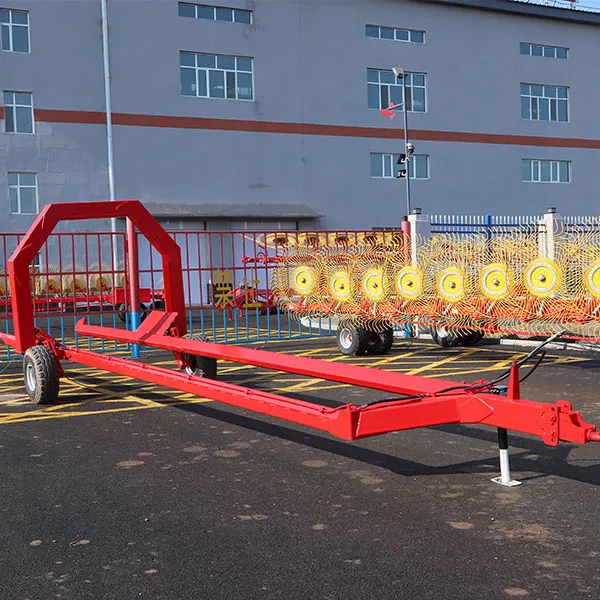
 9LH-12 Trailed cross rake
-
 4BYHD 4BYHS-3.9 Pulling machine for beans
-
 9FZ-2.0 Finger-disc tedder
-
 9GL-5.0/5.6 Trailed mower rake
-
 9YCM-850 Film wrapping baler
-
 9LZ-6.0 Finger-disc rake
-
 9GL-2.5/2.9 Trailed mower rake
-
 Mower-conditioner model 9GQY-3.2
-
 Baler for forming rectangular bales 9YFQ-1.9 (cross grip, export to Russia)
-
 9YG-1.25 Round baler FASCAR
-
 9YG-2.24D Round Baler (S9000)
-
 9GD-2.5 Single-blade trailed mower (updated version)