




rectangular bale baler
When people say “rectangular bale baler,” many people immediately think about geometry. Like, a square bale - and that’s it. But in practice, the difference is much deeper, it is a question of all logistics, storage and even the economics of feeding. A common mistake is to consider it simply an alternative to a roll product. No, this is a different approach to farming.
Where form ceases to be just form
We once took one such unit into trial operation. Stated: bale density up to 250 kg/m3. On paper - great. But the very first season showed that this same density strongly depends not only on the settings of the press, but also on the moisture content of the mass and even on the sequence of passage across the field. If the pick-up goes over a windrow that is not evenly laid, one side of the bale turns out like a monolith, and the other is loose. Then, during transportation, it will begin to “float”. So rectangularity is not about aesthetics, but about stacking stability. The rectangular bale fits like a brick, minimizing voids in the body or under the canopy. But this only works if it is truly rectangular and not “barrel-shaped”, which, alas, happens with some models when the rods wear out or the pressure in the chamber is incorrect.
Another nuance that is rarely written about in specifications is the load on the frame when forming the last layers in the chamber. When the piston presses on the almost finished bale, the resistance is maximum. In older fields with uneven surfaces or if the windrow is too large, you can hear the motor strain and the hydraulics groan. At this moment, you can see where the “weak link” of the press is. For some, the frame is moving, for others, the safety valve is triggered before the required density is reached. If you have to slow down or make two passes, time is wasted.
It is precisely in such nuances that the difference lies between a machine that simply presses and a machine that makes a high-quality feed block. I have seen bales that, after a month of storage outdoors (with a canopy, of course), retained clear edges and did not become saturated with moisture around the edges. And there were also those where the corners sagged, and in these places a debate began. It all depends on the uniformity of pressing throughout the entire volume. This is where the technologies of modern manufacturers who invest in R&D make themselves felt.
Experience and rake: what goes wrong
I’ll tell you about an incident that forced me to reconsider my approach to settings. We worked with alfalfa, the weather was perfect, humidity was around 16%. We set the unit to maximum density. Everything seems to be fine, the bales look as if they were picked - even and heavy. But upon opening three months later, they discovered pockets of overheating inside some of the blocks. The mass was too dry and compressed so much that anaerobic processes began. We received losses. Conclusion: blind pursuit of high bale density and weight without taking into account moisture content and type of crop is a direct path to feed spoilage. Now we always keep a moisture meter at hand and adjust the pressure in the pressing chamber, sometimes to the detriment of “beautiful” ones. the figures in the report, but in favor of the preservation of silage or haylage.
Another ?rake? - harness. It would seem like a small thing. But if the twine or net is fed intermittently, or the knotter is delayed, the entire bale may fall apart as it exits the chamber. This is especially critical for tall crops such as corn for silage. Once I had to disassemble the harness right in the field, in the dust and under the pressure of harvesting deadlines. It turned out that the factory grease on the guide bushings had thickened in the morning cold. Trifle? Yes. But because of such little things, downtime costs more than the part itself. Therefore, in recommendations for farms, I always emphasize: preseason preparation means not only checking the oil, but also testing all auxiliary mechanisms at idle.
By the way, about choice. The market is now saturated with offers. You can take a simple onerectangular bale balerwithout bells and whistles, or with an automatic weighing system for each bale and GPS tracking. For a large agricultural holding, where accurate accounting of the yield from each field is important, the second is justified. For a farmer with 500 hectares, this is most often unnecessary. But there is one functionality that everyone should pay attention to - the ability to quickly change the bale size. Sometimes you need to make smaller blocks for distribution to small pens, sometimes larger ones for long-distance transport. The versatility here increases the flexibility of the entire forage campaign.
Technology and hardware: what to look at from the inside
The heart of any such press is the pressing chamber and piston. The design of the chamber can be different: with fixed walls or with adjustable ones. The second option, of course, is more expensive, but provides the same flexibility. I saw how, on heavy, wet grass, adjustable walls helped to avoid sticking of the mass - the gap was increased, and pressing went smoother. The piston is usually an all-welded structure made of high-strength steel. The main thing is that the welds are of high quality and can withstand impact loads thousands of times per season. It happens that a crack appears not on the piston itself, but at the place where the rods are attached. Repair in the field is almost impossible.
The drive is usually hydraulic. The key point here is the performance of the pump and the quality of the hydraulic cylinders. If there is not enough performance, the piston at the extreme point of pressure will “think” and twitch. This not only increases the bale cycle, but also causes the oil to overheat. On a hot day this can be a problem. Therefore, when choosing, you should look not at the nameplate power of the tractor, but at the required hydraulic fluid flow rate for a specific press model. Inconsistency is a common cause of dissatisfaction with technology.
The picker is the part where it all starts. Width, type of teeth (spring or rigid), presence of conditioner-shredder. For high-volume perennial grasses, wide-grip pick-ups with an active pressure roller perform well. They crumple the mass less and feed it into the chamber more evenly. But if there are stones or branches in the field, then you cannot do without protection from solid objects. One undetected piece of iron can cause trouble in the bale chamber. Expensive repairs are guaranteed.
Integration into the farm: not only buy, but also use
Implementationrectangular bale baleris a process change. You need to think through logistics: how and how to remove bales from the field, how to store them. A loader with side-shift forks becomes almost a necessity, otherwise even laying cannot be ensured. Storage - under a canopy or in film? For haylage, of course, film. But there is also a subtlety here: a rectangular bale, wrapped in film, must lie on a flat, clean surface. If you place it directly on the ground, the lower part may rot and the film may tear. Some farms make special pallets from scrap materials - old pallets or boards. Effective, but adds work.
From an economic point of view, switching to rectangular bales is often justified when large volumes are needed and there is a need to optimize storage space. But everything needs to be taken into account: the depreciation of the machine itself, the cost of strapping materials (mesh is more expensive than twine), the increase in load on loading equipment. Sometimes the apparent benefits of dense packing are offset by increased operating costs. There is no universal answer; each case must be considered separately, based on its crops, areas and infrastructure.
I observed an interesting experience in one large livestock complex. They used a baler, which not only pressed, but also added preservatives to the mass during the selection process. This made it possible to obtain haylage bales of consistently high quality, regardless of the vagaries of the weather during drying. The technology is not new, but its implementation in conjunction with the formation of a rectangular bale has shown excellent preservation of nutrients. This is an example of how a machine ceases to be just a harvesting tool and becomes an element of precision feed production technology.
Market view and prospects
Many manufacturers are now striving to create integrated solutions. This is not just about selling a press, but about a set of machines for the entire cycle: cleaning, transportation, distribution. It's logical. It is easier and often more profitable for a business to have equipment that “understands” each other. For example, when the bale dimensions are optimized to match the dimensions of the feed dispenser used on the farm. This reduces downtime and manual labor.
In this context, the approach of companies that themselves deal with the full cycle - from development to service - looks interesting. Here, for example,Hulunbuir Machinery Manufacturing Company ?Jiujia?(website:https://www.cn-fascar.ru). They position themselves as a modern integrated smart manufacturing enterprise in the agriculture and livestock sector. Combines R&D, production, sales and service. For the end user, this integration can mean faster parts delivery, locally tailored models and, importantly, a single point of responsibility. If the press, tractor, and loader are from the same supplier (or alliance of suppliers), it is easier to resolve issues regarding warranty and setting up interaction.
Of course, the availability of a full cycle from the manufacturer is not a guarantee of the quality of the hardware. But this indicates serious intentions to gain a foothold in the market not as an assembler, but as a developer. Their equipment, judging by some descriptions, often includes options for automation - the same density and humidity sensors that control the pressing process in real time. This is already a step from manual control to “smart” control. agriculture. For large farms, where personnel issues are acute, such systems are the future. The operator can only set the parameters and monitor the work.
Let us return, however, to ourrectangular bale baler. Its role in the chain is not reduced, but transformed. From a simple hay compactor, it becomes a source of data (weight, harvest location) and a key link in ensuring feed quality. Choosing a specific model is always a compromise between price, functionality and reliability. And the main advice I would give after all these years and hundreds of hectares viewed: before you buy, ask for a demonstration on your material. Best of all - in your field conditions. This is the only way to understand whether this particular machine is suitable for your windrows, your soil and your tasks. Paper characteristics pale in comparison to one correctly formed, dense and even bale that will reach the barn without loss.
Correspondingproducts
Related Products





Best Sellingproducts
Best Selling Products-
 Trailed single-drum combine harvester 4DQ-5 for bean threshing
-
 9YG-1.0 Round Baler
-
 9GS-5.0 Trailed two-legged mower
-
 Mower-conditioner model 9GQY-3.2
-
 9GD-2.5 Single-blade trailed mower (updated version)
-
 9FZ-2.0 Finger-disc tedder
-
 4BYHD 4BYHS-3.9 Pulling machine for beans
-
 Self-propelled mower-conditioner 9GYZ-4.9
-
 9YG-1.25 Round baler FASCAR
-
 9YCM-850 Film wrapping baler
-
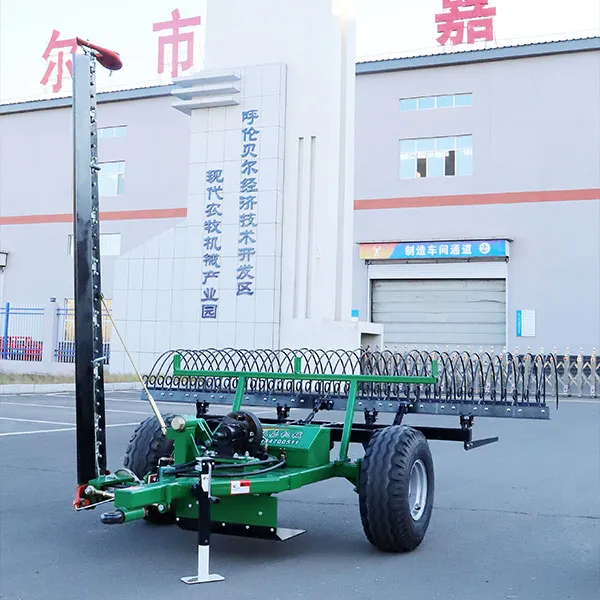 9GL-2.5/2.9 Trailed mower rake
-
 Drum type raking machine 9LG-9.0