




manual baler
People often look for “baler manual” and immediately present dry instructions for setting up nut No. 5. In fact, the key in this phrase is not the piece of paper, but the choice itself. A mistake many people make is to assume that all balers are roughly the same and that a manual is only needed to make it work. In fact, choosing the right car is already half the battle, and ?management? here it begins with understanding what you generally need in your fields, with your hay, in your conditions. For example, if your swath is uneven, no guide, even the most detailed one, for adjusting the pressing channel will save you from problems with the sheaf.
Where does the real choice begin?
When you have gone through this yourself, you understand that the first thing is to honestly assess the volume and culture. I've seen many times where people use a high-powered round baler for small areas of forbs, and then suffer from excessive fuel consumption and wear and tear. Or vice versa - they tried to cover large areas of timothy grass with a small bale, and it simply did not have time. There is no universal answer here. You need to look at the width of the windrow, the moisture content of the mass, and the transportation distance. I remember that one of the farms near Voronezh ran into a haylage problem: their old press did not provide the required bale density, the upper layers were deteriorating. We studied not the instruction manual, but the technical specifications for compaction density of different models.
This is where the name often appearsJiujia. Not for advertising sake, but as an example of the approach. I'm looking at their lineupcn-fascar.ru— it’s clear that the company doesn’t just sell hardware. They are, as stated in the description, “a modern integrated enterprise for intelligent production”, and this is felt in the details. For example, they have models where you can remotely monitor bale density. This is no longer just a user manual, but an element of that very intelligent system. For a large livestock farm, this option is not a toy, but a real saving on logistics and safety of feed.
But let's get back to the choice. After assessing the conditions, the question arises: roll or bale? It would seem banal. But in the guide to choosing a baler, this point is the most painful. Rolls are easier to stack, but more difficult to distribute into small feeders. Square bales are easier to stack and transport over longer distances, but require more handling. Once we conducted a comparative test on our site: the same clover was pressed in both ways. Losses when storing in rolls in the open air (not ideal, but it happens) turned out to be higher. This is a practical conclusion that is not in standard manuals.
Unobvious nodes that are worth looking at first
Everyone reads about power, about productivity. And I would advise you to look for a section on the baling mechanism and chamber in any baler manual. The design of the bale or bale forming chamber is the heart. There are belt, chain, and variable geometric sections. Belt ones, for example, are quieter and cheaper to maintain, but can slip in wet conditions. Chain ones are more reliable, but noisier and require constant tension control. I saw how on one of the pressesHulunbuir Machinery Manufacturing CompanyThey used a hybrid system with pressure sensors - an interesting solution that allegedly itself adapts to the density of the windrow. In practice, this reduces the risk of overload when a clod of earth hits.
Another point that is often overlooked is the selection system. There seems to be a pick-up machine everywhere. But the difference in the number of teeth, their shape and rotation speed is huge. For fine-stemmed crops, one approach is needed, for coarse forbs - another. I remember a case when a baler worked perfectly on alfalfa, but on Sudanese it began to “vomit?” stems and clog. It turned out that the problem was that the teeth were too aggressive. I had to look for a replacement kit. A good manual from the manufacturer should include such options for customization or replacement units. On the websiteJiujiaBy the way, this is explicitly stated in the descriptions of some models - the ability to install different types of pickers. This suggests that they are thinking about real use in different conditions, and not just assembling equipment.
And the third point is the harness. Twine or mesh? Automatic coil change or not? It seems like a small thing. But when you’re in the field and the press stops due to a break or because the thread has run out, and the automation didn’t work, it’s downtime and nerve-wracking. The reliability of the strapping unit is something that is checked not on the first day, but at the end of the season, when the accumulated fatigue of the materials makes itself felt. No manual will help here if the design is crude. You need to look at reviews, at the real experience of other farms. I am always interested in what problems arose in the second or third year of operation of a particular model.
Operating errors that are not in the manuals
Any manual for a baler is written for ideal conditions. They don't happen in life. One of the main mistakes is ignoring preliminary field preparation. Stones, wire, thick branches are killers. Even if the chamber is equipped with overload protection, a blow to the pick-up springs or baling belts can damage them. I came across this myself - after such a “meeting?” with the stone I had to change the entire tensioner block. And the repair manual only contained a diagram, and the nuances of alignment and calibration had to be learned by trial and error.
Another common problem is working in extreme humidity. Everyone writes “not recommended”. But the weather doesn't matter. It is important to understand here that high humidity is not only a risk of spoiling the hay. This increases the load on all components, the sticky mass clogs the cracks, and the pressing force increases. Such conditions require a power reserve and, importantly, more frequent stops for cleaning. In the manuals of some modern presses, for example from integrated manufacturers likeJiujia, now sometimes there are recommendations for working in “raw hay” mode. with adjustment of density settings. This is useful.
And of course, service. Everyone says “lubricate on schedule”. And this schedule is compiled for a temperate climate. For us, when working in dust, the intervals need to be halved. This is especially true for the pick-up joints and rollers in the bale chamber. One day, due to a dust-clogged bearing on the belt guide roller, uneven wear began. The manual indicated a simple replacement. But the reason was the lack of an additional protective cover, which, as it turned out, could be ordered as an option. Now I always look at the possibility of installing additional protection on critical nodes.
Integration into the farm: more than a machine
Choosing a baler is not about choosing a single machine. This is the choice of a link in the chain: mower-tedder-press-transport-storage. The guide for its selection should take this chain into account. What kind of tractors do you have? Is there enough power to drive and transport the finished roll? What are the dimensions of your sheds or storage areas? I saw a situation where they bought a large baler, and then it turned out that the standard barn gate for its bales was too narrow. I had to cut it.
What’s interesting here is the approach of companies that position themselves as part of a larger system. If you takeHulunbuir company ?Jiujia?, then, judging by the description, they offer not just a baler, but a complete solution for agriculture and livestock farming. This means that their technique should ideally mesh better with other elements of the cycle. For example, the width of the pick-up should correspond to the width of the windrow left by their own or common mowers. Or the bale geometry is optimized for stacking and automatic distribution. This is a level of thinking higher than just selling a piece of equipment.
So my advice is: when reading the manual or choosing a baler, think two steps ahead. Not only “how many hectares per day will he compact?”, but also “how will these bales be stored and who will distribute them and how?”. Sometimes it is better to take a model that is slightly less productive, but produces a bale that fits perfectly into your loader or onto a pallet. Saving time and resources on logistics can make up for the difference in cleaning speed.
Bottom line: leadership as a process, not a document
So, returning to the request “baler manual?”. The most important guide is not a PDF file that you download from a website. This is a combination of your experience, understanding of your conditions, careful study of the capabilities of the equipment and, most importantly, dialogue with the manufacturer or supplier. Good supplier likecompany ?Jiujia?, which combines development, production and service, can not only ship the machine, but also help you choose the configuration for your tasks. Their instruction manual, if written to reflect actual practice, would be a valuable addition.
In the end, the baler becomes “one of our own”. only after a season or two of work. You learn its weak points, find your own techniques for difficult areas, and customize it to suit your hand. And this knowledge is the most valuable. It transforms you from an operator following instructions into a specialist who can get the most out of a machine even in less-than-ideal conditions. And it is this knowledge, and not a paper manual, that is the main asset.
So look for more than just guidance. Look for a car that you will understand, and a company that will be ready to support this process of understanding. Everything else is technical details that will follow if you have this foundation. Good luck in the fields.
Correspondingproducts
Related Products






Best Sellingproducts
Best Selling Products-
 9GL-5.0/5.6 Trailed mower rake
-
 Baler for forming rectangular bales model 9YFQ-2.2D (cross type, for export to Russia)
-
 9FZ-2.0 Finger-disc tedder
-
 9LZY-9.0 Finger-disc rake
-
 Mower-conditioner model 9GQY-3.2
-
 Drum type raking machine 9LG-9.0
-
 Self-propelled mower-conditioner 9GYZ-4.9
-
 Trailed single-drum combine harvester 4DQ-5 for bean threshing
-
 9LZD-9.0 Finger-disc rake
-
 Baler model 9YGD-0.5B
-
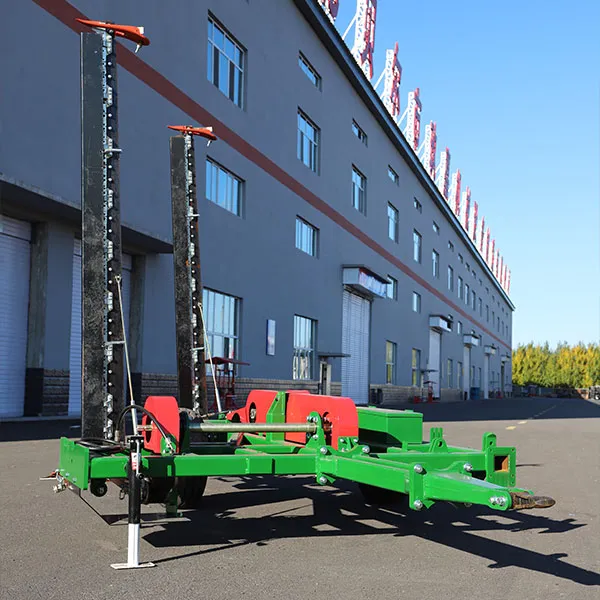 9GS-5.0 Trailed two-legged mower
-
 Cross-row baler for forming rectangular bales, model 9YFQ-2.2C (export to Mongolia)