




tractor-mounted square baler
When they talk abouttractor-mounted square baler, many people immediately think about price or power, but in reality the key is compatibility and understanding what you are going to press. Hay is one thing, but straw from the combine is another. A mistake in choosing the type of camera or drive can result in downtime in the midst of the harvest season.
Basic understanding and common mistakes
The market is full of offers, but not all balers are equally useful for every farm. They often take what is cheaper or what a neighbor recommended, without taking into account either the model of their tractor or the type of windrow. A classic miscalculation is when they try to combine a press with a low-power tractor that is not designed for the constant load from the pressing chamber. The result is overheating, breaks and lack of bale density.
Another point is the type of bale. The rectangular one seems more convenient for storage, but its formation requires a more complex and demanding machine. If it is not adjusted in time, you end up with loose, falling apart blocks. It would seem easier with a round one, but there are some nuances with winding mesh or twine. Sometimes, due to poor-quality twine, the entire bale unraveled during loading.
Therefore, the first thing to start with is not looking at catalogs, but assessing your conditions: what kind of feed supply, what kind of tractor fleet, who will service it. Without this, even the most advanced technology will remain idle.
Critical components and what to look for when buying
The heart of any baler is the bale chamber and the tying unit. You can't skimp on the camera. The thickness of the walls, the quality of the rollers, the shape of the teeth of the feeding apparatus - all this determines both the resource and the quality of the bale. I have seen cases where, due to the weak teeth of the pick-up, it simply did not pick up a layer from a dense windrow, especially after rain.
The tying knot (needle mechanism) is a completely different story. It must work like a clock, otherwise downtime is guaranteed. It is better if it is possible to quickly adjust the tension or replace needles without complete disassembly. In the field, every minute is precious. Please pay attention to the availability of spare parts for this particular model. Ordering a needle or belt from abroad is a waste of the season.
The third point is the drive. There are two main options: from the tractor PTO or with its own hydraulic circuit. The first option is simpler and cheaper, but imposes strict restrictions on the tractor. The second is more expensive, but provides more flexible options for controlling bale density. For large volumes and heterogeneous masses, the second option is perhaps more reliable.
Operating experience and non-obvious problems
In theory, everything is simple: pick it up, compress it, tie it up, throw it away. In practice, the “joys” begin. For example, humidity. Baling hay that is too wet risks a fire due to self-heating of the bale. But overdried mass may not be pressed well, and the bale will crumble. You need to feel the moment.
Another common problem is foreign objects in the mass. A stone or piece of metal can not only get stuck, but also damage the entire packing mechanism. Therefore, the quality of work of the mower and rake in the previous stages directly affects the work of the baler. Sometimes it's worth walking around the field before baling, especially if you know there are "surprises" there.
Service in the field is a separate ritual. It is necessary to constantly monitor the belt tension, lubricate the bearings (especially on the tension rollers), and clean the sensors. A minor malfunction, if not noticed in time, can lead to serious damage. Always carry with you a minimum set of keys and a supply of the most “last minute” ones. spare parts: the same needles, twine, safety pins.
About specific solutions and niche manufacturers
Among the many brands, sometimes those that focus on specific regions and conditions succeed. For example, if we consider supplies for our conditions, where the climate is harsher and the fields are not as flat as in Europe, then we can pay attention to such manufacturers asHulunbuir Machinery Manufacturing Company ?Jiujia?. Their approach is often based on adapting basic models to more stringent requirements for strength and maintainability.
I went to their websitecn-fascar.ru- it is clear that they position themselves as a modern integrated enterprise engaged in the development and production of equipment for agriculture and livestock farming. For me, the key in this description is “integrated”. This often means they have control over the process from drawing to assembly, meaning they can make design changes and ensure spare parts are available more quickly. This is important.
Of course, this is not a panacea. Any equipment, even from a highly specialized manufacturer, needs to be “run in”. in your own conditions. But the very fact that the company combines R&D, production and service already reduces risks. It’s easier to agree on modifications to the unit or get specific advice.
Final thoughts and personal conclusion
Choicetractor-mounted square baleris always a compromise between price, reliability and performance. There is no perfect car for all occasions. For a small farm with one tractor, a simple and repairable model may be optimal. For a large agricultural holding - a powerful unit with maximum automation.
The main advice that I would give based on my experience: do not chase maximum performance according to your passport. Assess your real service capabilities, the availability of a qualified operator and your fields. It’s better to underestimate a little in terms of tons per hour, but have stable working equipment, than to heroically try to squeeze everything out of the machine and constantly repair it.
And one more thing. Always leave a reserve of tractor power. If the press requires a minimum of 80 hp, take a tractor with 90-100. This will save both equipment and nerves at the most crucial moment. In the endsquare baleris a tool for work, not an object for constant repair. His job is to help, not create problems. And when all the factors come together - a suitable model, competent setup and timely service - working with it brings real satisfaction.
Correspondingproducts
Related Products





Best Sellingproducts
Best Selling Products-
 9GL-2.5/2.9 Trailed mower rake
-
 9JYY-4.5 Roll pick-up-conveyor
-
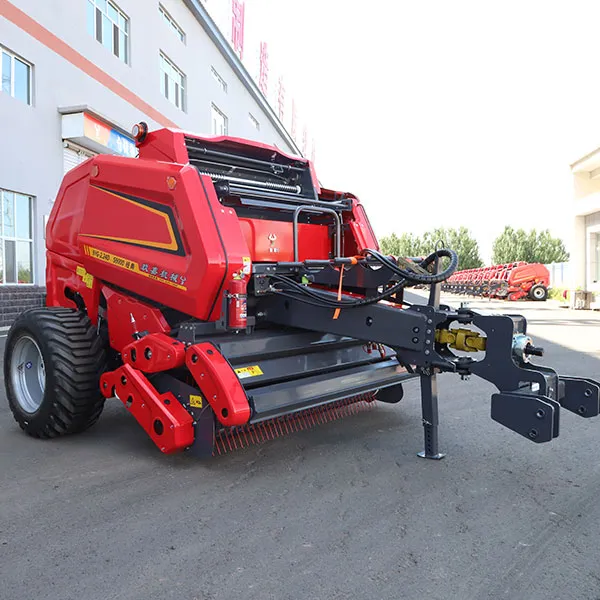 9YG-2.24D Round Baler (S9000 Classic)
-
 Cross-row baler for forming rectangular bales, model 9YFQ-2.2C (export to Mongolia)
-
 9YG-1.25 Round Baler
-
 4BYHD 4BYHS-3.9 Pulling machine for beans
-
 9YG-1.25A Round Baler FASCAR
-
 9YCM-850 Film wrapping baler
-
 9GD-2.5 Single-blade trailed mower (updated version)
-
 9YG-1.25 Round baler FASCAR
-
 9GL-5.0/5.6 Trailed mower rake
-
 Drum type raking machine 9LG-9.0