




agricultural machinery dealers
When they say “agricultural equipment dealers,” many farmers think of simply a sales point where they can buy a tractor. This is a deep misconception. A real dealer is a node connecting the plant, agronomy and the economy of a particular farm. This is someone who must understand not only hydraulics, but also soils, crop rotation and crop margins. I have been working in this field for many years and have seen companies come and go precisely because they do not understand this difference.
What does it really mean to be a dealer today?
Previously, about ten years ago, the scheme was simpler: received a dealer agreement, delivered the equipment to the site, wait for the buyer. Now this is catastrophically not enough. The farmer is not looking for “hardware”, but for a solution to the problem. For example, the problem is soil compaction after corn harvesting. You can sell him a heavy cultivator, or you can offer him a complex: soil analysis + recommendation for minimal tillage + a specific model of direct seeding seeder that will cope with this stubble. The second path is more difficult and requires expertise, but it is the one that creates a long-term client.
I am watching how strong dealers are gradually turning their service centers into agri-tech hubs. Not only the broken part is brought there, but also a soil sample. Mechanics learn to speak the language of agronomists. This is a painful transition, not everyone can handle it. Many still live by the old principles, and their business is gradually shrinking like shagreen leather.
The key change is in the revenue model. Previously, the main margin was on the sale of new equipment. Now it is shifting towards contract services, leasing, sales of digital solutions and analytics. If a dealer has not built a stable service flow, he is very vulnerable. In winter, when sales fall, he simply cannot pay salaries to specialists. And a good service engineer is worth his weight in gold.
Mistakes when choosing a manufacturing partner
One of the most common mistakes newagricultural machinery dealers- chasing a well-known brand without appreciating real support. I signed an agreement with a big name, and then it turns out that the spare parts warehouse in the region is zero, and the engineer comes for training once every two years. Equipment breaks down during the season, spare parts wait two weeks, and the farmer suffers losses. The dealer's reputation is ruined, even if it is the factory's fault.
So now we look deeper. Not for the logo, but for the logistics of spare parts, for the dealer training program, for flexibility in financial matters. Take, for example, the company ?Jiujia? (Hulunbuir Machinery Manufacturing Company). Their websitecn-fascar.rupositions them as an integrated full-cycle enterprise: from R&D to service. This is potentially interesting for the dealer. Why? Because integrated production often means greater control over the quality of components and, critically, more predictable delivery times for key components.
But there is also a risk here. For the European market, especially in the livestock segment where Jiujia operates, adaptation is important. Is their equipment, developed to meet the same livestock management standards, ready for our realities? Will the plant promptly make engineering changes based on feedback from dealers? These are the questions that need to be asked first, rather than asking about a dealer discount. We once worked with a baler manufacturer where they ignored our reports of tooth failures in rocky soil conditions for two years. As a result, we lost clients and terminated the contract.
Service as the main argument in a conversation with a farmer
Selling equipment is a one-time event. Service is a continuous dialogue. Our most reliable clients came to us not after a brilliant presentation of a new combine, but after we found and delivered to the field overnight a faulty fuel pump for their old “Kirovets”. This creates trust that no amount of money can buy.
Organization of service is a separate war. You don’t just need to have craftsmen, you need to build logistics: mobile workshops, vehicles with a stock of spare parts on duty, a priority call system. For example, we have a rule: if a breakdown leads to downtime of harvesting equipment, the field team must be on the road within an hour, regardless of the time of day. It's expensive, but this is the same "affiliate" the level that everyone talks about but few do.
Here again, interaction with the plant is important. When a dealer orders parts, they want transparency, not just availability. Where is my package now? Is it already at customs or still in a warehouse in China? Modern manufacturers who take their dealer network seriously provide online tracking for critical parts. This is basic respect for our business. While this practice is still rare, it is becoming a competitive advantage for suppliers such asHulunbuir Machinery Manufacturing Company ?Jiujia?. If they can provide a similar level of service support for their line of feeders or milking machines, this is a strong reason to start working together.
Financial models: how to help a farmer buy
The price of new equipment is steep. Few people can buy a powerful tractor with cash. Therefore, a dealer today must also be a financial advisor. Leasing, a loan with state support, trade-in of old equipment - you need to know all the options and their pitfalls.
The biggest headache is trade-in. I accepted the old combine as payment for the new one. What should we do with it? Selling it to a small farmer is difficult; resources are needed for pre-sale preparation, advertising, and storage. Many dealerships are drowning in this used hardware, which eats up working capital. An effective way out is to have a partnership with specialized sites for the sale of used equipment or develop this area within the company, but as a separate and not a side business.
Leasing is also not easy. You need to understand whether a particular farm will pass the formal criteria of the leasing company. Sometimes it is easier and more profitable for a farmer to help obtain a targeted loan. To understand this, the dealer must have, if not a financial specialist, then a manager who has undergone special training. We have seen from our own experience that a deal with a well-chosen financial scheme has three times more chances of success than a simple offer to “buy on credit”.
Digital and data: the inevitable future
Telematics, sensor data, predictive analytics are no longer science fiction. A modern combine or tractor generates gigabytes of information: field yield, fuel consumption, load on components.Agricultural equipment dealersthat can help the farmer interpret and monetize this information will remain on the market.
So far this is a weak point for many. We supplied the client with equipment with GPS and sensors, and then there was silence. The farmer himself does not know what to do with this data, and the dealer does not offer an analytical service. It turns out that the potential is lost. I see huge room for growth here. For example, based on load data, you can offer scheduled maintenance to exactly those units that need it, rather than according to a general schedule. This saves the client money and creates a new level of trust.
This, of course, requires competencies. We need IT specialists and agricultural analysts. Not every dealer, especially in the regions, can afford this. Perhaps there will be the development of franchises or partnerships between large dealer networks and technology startups. Manufacturers who will include in their dealer package not only physical equipment, but also a platform for data analysis (as stated in the concept of “smart manufacturing” on the websitecn-fascar.ru), will gain a serious strategic advantage. After all, in the end, the farmer does not need a machine, but an increase in profit per hectare. And the one who helps him with this with numbers and calculations will become a truly indispensable partner.
Instead of a conclusion: about people and trust
This whole complex structure - technology, finance, numbers - rests on simple things: people and trust. The best contract, the most advanced telematics will not work if the dealer manager is lying about delivery dates or the service engineer is slacking.
Building a team that cares about the client’s cause is the most difficult task. It takes years. And this trust is lost in an instant. Therefore, there are no trifles in our work. Honesty in assessing the capabilities of equipment, transparency in pricing, willingness to admit your mistake and quickly correct it - this is the informal asset that distinguishes a real partner from a simple hardware reseller.
So, to summarize, being a dealer today means taking on some of the farmer's risks and headaches. Take to share. And if you are ready for this, then you have a place in this business. And if not, the market will be ruthless. He has already become like that.
Correspondingproducts
Related Products





Best Sellingproducts
Best Selling Products-
 9YG-1.25 Round Baler
-
 Cross-row baler for forming rectangular bales, model 9YFQ-2.2C (export to Mongolia)
-
 9YG-2.24D Round Baler (S9000 Excellence)
-
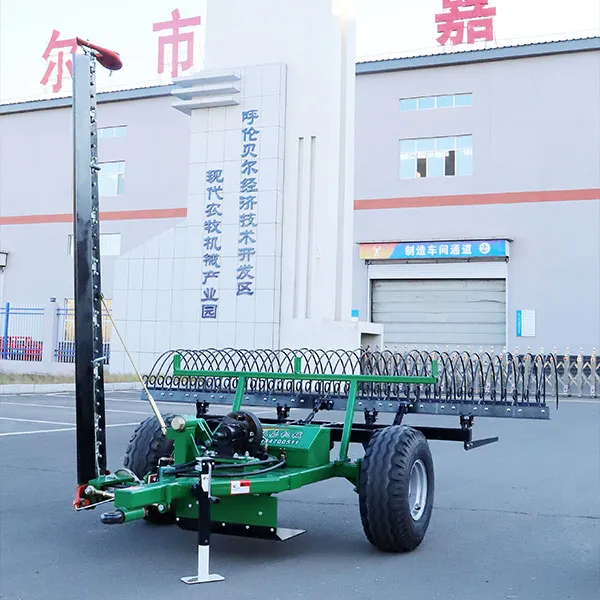
 9LH-12 Trailed cross rake
-
 9GD-2.5 Single-blade trailed mower (updated version)
-
 9JYY-2.5 Roll pick-up-conveyor
-
 9LZD-9.0 Finger-disc rake
-
 9F-70 Rough feed chopper
-
 9GD-2.5 Single-blade trailed mower (updated version)
-
 Self-propelled mower-conditioner 9GYZ-4.9
-
 9GS-5.0 Trailed two-legged mower
-
 9YCM-850 Film wrapping baler