




modern baler
When people say 'modern baler', many people immediately think of just a big, powerful machine that makes bales. But in fact, if you dig deeper, the whole point is precisely in this word “modern”. This is no longer just a mechanism for pressing - it is a node in the whole agricultural system, on which logistics, the quality of feed, and, ultimately, the economics of the farm depend. A common mistake is to choose a unit only by price or performance, looking at the catalog, and lose sight of how it will work specifically in your fields, with your crop, in your weather conditions. There are too many nuances that will not be written in brochures.
From 'hardware' to 'intelligence': what has really changed
Previously, the main issue was reliability. Welds, metal thickness, hydraulics. Now, looking at the models from leading manufacturers, you understand that the race is on a different plane. It's about controlling bale density. Not just “compress tightly”, but precisely maintain a given parameter throughout the entire volume, be it a rectangle or a roll. This is critical for silage and haylage. A poorly compressed bale results in mold growth and loss of nutrients. Pinched - problems with distribution.
This is where 'intelligence' comes into play. Pressure sensors, automation that adjusts the pressing force in real time depending on the supplied mass. This is not marketing, but real savings. I saw how on one farm, after switching to such a “smart” picker, losses at the harvesting stage were reduced by significant percentages. But there’s also an increase in headaches - we need personnel who understand how to work with this electronics, and not just hit the control unit with their fists at the first error on the display.
By the way, about models. If we take specifics, then it’s worth looking at what not only European giants offer. For example, on the websiteHulunbuir Jiujia Machinery Manufacturing Company (https://www.cn-fascar.ru) their approach is visible. The company positions itself as a modern, integrated intelligent manufacturing enterprise for agriculture. This is important. Their equipment, judging by the descriptions, is designed for work in difficult conditions, with an emphasis on endurance and adaptation to different raw materials. For our open spaces and imperfect fields, this is often a more relevant option than the ultra-technological, but capricious “Europe”.
Selection and pressing: where the main problems lie
The most painful point is the selection node. It would seem like a simple flattening drum. But how is it assembled, how is the gap set, how does it behave in a clogged field? I remember a case with one “modern” unit, which on commercials assembled everything cleanly. But in reality, when working on low-stemmed, slightly damp alfalfa, it began to clog and leave entire swaths behind. It turned out that the design of the picker did not take into account the high stickiness of the mass. I had to farm and install additional brushes.
Therefore, now I always look not at the picture, but at the design of the reel. The number of teeth, their shape, the ability to adjust the height and angle of attack. And it is mandatory to have an overrunning clutch, which saves you when you encounter a stone or a hard bump. Its absence is a sure sign that the developers have little understanding of real work in the field.
Another point is the press camera. Rolled or rectangular? The debate is endless. From a logistics and storage point of view, rectangular bales certainly win. But when working with forbs and wet raw materials, a roll baler sometimes proves to be more stable and sticks less. The choice here is always a compromise, and there is no universal answer. It is necessary to consider not only the cost of the machine, but also the cost of the entire chain: cleaning-transportation-storage-distribution.
Hydraulics and electronics: friends or enemies?
A modern baler is unthinkable without a complex hydraulic system. And this is his Achilles heel. The cleanliness of the oil, the condition of the hoses, the operating temperature - all this requires an eye and an eye. Overheating of hydraulics in hot weather during intensive cleaning is a common story. Leads to loss of pressure, 'sluggish' pressing and, ultimately, to marriage.
Electronic control units, which are supposed to optimize this process, are a double-edged sword. On the one hand, they really allow you to get the most out of it and protect your equipment. On the other hand, their diagnosis in the field is often impossible. Error 'E027' on the display can mean anything from a sensor failure to a serious breakdown in the pump. And it’s good if the dealer service is nearby. What if not? All that remains is to take the baler to the service center, wasting precious harvesting days.
Therefore, in our conditions, technology often wins where electronics are reduced to the necessary minimum, and the main functions are duplicated by mechanical or simple electrical control. Reliability is higher. And this is the very practical compromise that you will not find in the specifications, but which you understand well when you have gone through several seasons yourself.
Integration into the economy: without this everything is pointless
Buyingmodern baler, you are not buying a car, but a process change. This is the key. It requires a matching tractor with the correct power take-off shaft and hydraulic system. Need trolleys for transporting bales or grips for a loader. You need to think about the storage space - whether it will be just a field or an equipped area.
I saw farms where they bought a powerful imported pick-up, but it stopped working for half a season because the couplings did not fit the existing tractors, and adapters had to be ordered from abroad. Or a story when the bales turned out great, but there was nothing to transport them with - the existing trailers could not withstand the increased weight of a dense bale.
This is where the role of the supplier as an integrator is important. If a company, like Jiujia, offers not just to sell a machine, but has competencies in research and development for the entire cycle of agricultural work, this is a big plus. They can offer a comprehensive solution and look at the economy systemically. Ideally, even adapt some components to specific needs. This is rare, but it is the level of service that truly adds value.
Looking ahead: what will happen tomorrow?
Where to go next? I think the trend is towards even greater autonomy and data collection. Systems are already appearing that not only press, but also analyze the mass - determine the approximate moisture content, and can even give a rough assessment of nutritional value based on indirect signs. This information, linked to GPS coordinates, is invaluable for field mapping and feeding planning.
Another vector is ecology and saving materials. We are talking about reducing the consumption of plastic mesh or twine for tying. Some experimental models are trying to use biodegradable materials or even change the way the bale is formed and held. It is still expensive and not always reliable, but the direction is clear.
In the end, back to the beginning.Modern baler- this is no longer a separate unit of technology. This is a complex technological unit, the selection and operation of which requires a comprehensive view. A mistake in selection or configuration is costly. Therefore, the main advice is to look not only at the characteristics, but also at how the equipment will fit into your specific technological process, and whether the supplier has an understanding of this process and a willingness to help with integration. Everything else is secondary.
Correspondingproducts
Related Products





Best Sellingproducts
Best Selling Products-
 9JYY-4.5 Roll pick-up-conveyor
-
 9GS-5.0 Trailed two-legged mower
-
 Self-propelled mower-conditioner 9GYZ-4.9
-
 9F-70 Rough feed chopper
-
 9LZD-9.0 Finger-disc rake
-
 9GL-5.0/5.6 Trailed mower rake
-
 Drum type raking machine 9LG-9.0
-
 9LZ-6.0 Finger-disc rake
-
 9YG-1.25 Round Baler
-
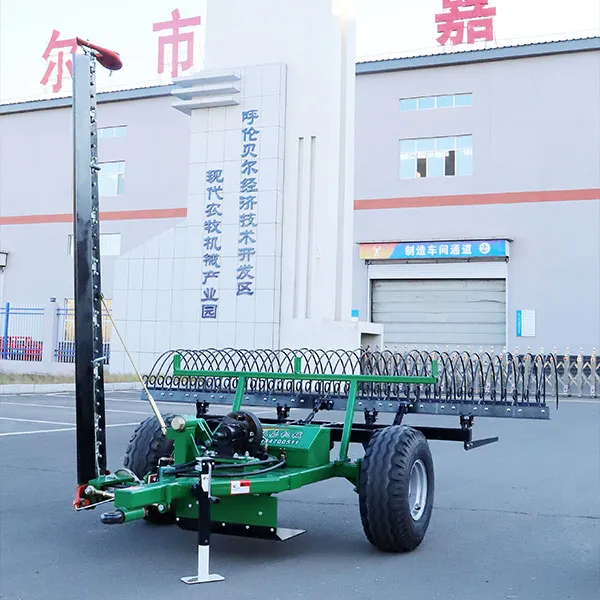 9GL-2.5/2.9 Trailed mower rake
-
 Cross-grip baler for forming rectangular bales 9YFQ-1.9 (export to Mongolia)
-
 9GD-2.5 Single-blade trailed mower (updated version)