




used mini press picker
When you hear about a used mini press picker, the first thing that comes to mind is a way to save money. But therein lies the main trap. Many people, especially beginning farmers or those who want to cultivate small plots, think that they bought old equipment, tweaked it, and it will plow for years. In fact, if you don’t know specific nodes and don’t know how to “read” them, you can throw money away. I went through this myself, more than once.
Why even consider used mini presses?
Everything is obvious here - the price. A new mini-press, especially from European brands, is a serious investment. For a small farm, where hay production volumes are not gigantic, such a purchase does not always pay off quickly. Therefore, the market for used equipment is alive and thriving. But it is important to understand: saving at the start can result in constant expenses later on spare parts and repairs. It’s like with a used car - if you’re lucky with the history, you’ll drive it, and if not, you’ll become a frequent visitor to the service center.
Another point is simplicity. Older models, especially those of Soviet or early Russian origin, often have less sophisticated hydraulics and electronics. For many machine operators who are used to fixing everything with their own hands, this is a plus. Sometimes spare parts can still be found at disassembly sites or even ordered to be manufactured. But on the other hand, the wear of these simple components can already be critical.
And yes, there is a category of people who specifically look for specific old models because they know their “character”. They know that this baler, produced about 15 years ago, if it was properly maintained, is practically eternal. But there are few such copies on the market, and they are quickly taken apart by their own.
Key inspection points: you can’t do without this
If you still decide to look at a used mini press, then the inspection should begin not with how it looks from above, but with the most important thing - the pressing chamber and the feed unit. Rust on the body is nothing, it can be cleaned and painted. But if the walls of the chamber have deep excavations or, worse, cracks welded by handicraft methods, this is an immediate failure. Repairing a camera is expensive and often unprofitable.
Be sure to check the pressing shaft and all bearings. Backlash, knocking, grinding are alarm bells. Replacing a bearing assembly is not the easiest job. Then we look at the conveyor belt (if there is one) and the picker teeth. They should not just be ground down, but relatively evenly worn. If the teeth are bent or a part is missing, it means that the equipment was working with stones or debris, and this could damage the internal mechanisms.
And hydraulics. You need to start it and listen to how the pump works, to see if there are any leaks from the hoses and cylinders. Cloudy oil in the hydraulic tank is a sign that it has not been changed for a long time, and there could be wear problems within the system. Check all functions: camera lifting, operation of the strapping mechanism. Often it is the binding unit (needles, knitting machine) in used equipment that is the most problematic. The needles bend, the mechanism loses its settings.
The story is most important: how to find it out?
Ideally, the seller is the first owner and can tell you where and how the car worked, what broke, what was changed. But this rarely happens. Often a technique passes through several hands. Therefore, we look at indirect signs. Condition of the tires - if they are “bald”? only on one side there may have been road mileage, and this is not the best mode for a baler. Traces of fresh paint in some places - perhaps something was hidden.
Ask to see old oils and filters. If a person has at least somehow serviced the equipment, they may be in the garage. The absence of any traces of maintenance at all is a bad sign. Another life hack is to look at the bolts and nuts on critical components. If the edges are torn off or traces of powerful wrenches are visible, it means that the assembly was often disassembled and repaired by hand. This is not always a death sentence, but it requires special attention.
And of course, a test run. Not just idling, but preferably with a small amount of material. This is the only way to see how the pressing works, how the twine is laid, and whether the bale is warped. Often all problems arise under load.
Alternative: when is the best time to think about something new?
There are situations when buying used equipment is simply throwing away money. For example, if you need a device for stable, annual work at serious volumes. Downtime during the season due to a breakdown of the old press can cost more than overpaying for a new one. Or if you do not have your own repair base and experience, and there is no good service nearby. Then every breakdown will be a disaster.
Interesting new solutions are now appearing on the market, especially from Asian manufacturers, which offer good value for money. For example, I see offers online fromHulunbuir Machinery Manufacturing Company ?Jiujia?. According to the description on their websitehttps://www.cn-fascar.ru, they are engaged in the intelligent production of equipment for agriculture and livestock farming - from development to service. For me, this is always an important sign when a company does not just sell, but runs a full cycle. This means there may be adequate spare parts and support.
Sometimes their new mini-presses can compete in price with their used European counterparts, but at the same time provide a guarantee and be more technologically advanced. Of course, you need to look at specific models and reviews, but you should not ignore this option. Especially if you take the equipment for a long time. The company positions itself as a modern, integrated enterprise, which suggests that they are investing in R&D. This means that their products can be adapted to modern requirements.
Personal experience: one failure and one success
I'll tell you about my case. A few years ago I bought an old mini baler, used, it seems, made in Poland. The condition seems to be decent; when examined in the garage, everything worked. But on the very first day of work in the field, the main shaft of the pick-up broke. It turned out that there was an old, unsuccessful weld, which was covered with sealant and paint on top. I had to urgently look for the shaft and grind it out, which cost half the cost of the press itself. The lesson was simple - don’t trust external gloss, look for hidden defects, especially in power elements.
But a successful purchase was with a Soviet-era mini-press. It was sold by an elderly machine operator who serviced it himself all his life. Everything was fair: he showed me a folder with receipts for spare parts and told me about each replacement. The equipment then worked for another five seasons with virtually no problems, until I sold the farm. Conclusion: the seller is sometimes more important than the car itself.
Final thoughts: Don't romanticize ?used?
In general, to summarize.used mini press picker- This is a tool for those who understand technology and have the time and resources for possible repairs. This is a lottery where the chances can be increased only by careful examination and the ability to ask the right questions. You shouldn’t buy the first cheap model you come across because of immediate savings.
Always consider the total cost of ownership: purchase price + potential repairs in the first year + your time. Sometimes this amount approaches the cost of a new entry-level device, for example, from the same?Jiujia?. Their approach is likeHulunbuir Machinery Manufacturing Company ?Jiujia?, where everything from research to service is rolled into one, many may find peace of mind.
In the end, technology should work and be profitable, and not be a headache. Therefore, look at the market broadly, weigh the pros and cons. and “cons”, and don’t be afraid to spend time searching and inspecting. It’s better to spend a month making a choice than the whole season fighting iron.
Correspondingproducts
Related Products




Best Sellingproducts
Best Selling Products-
 Mower-conditioner model 9GQY-3.2
-
 Cross-grip baler for forming rectangular bales 9YFQ-1.9 (export to Mongolia)
-
 9LZY-9.0 Finger-disc rake
-
 9YG-1.25 Round baler FASCAR
-
 Drum type raking machine 9LG-9.0
-
 9GD-2.5 Single-blade trailed mower (updated version)
-
 9GS-5.0 Trailed two-legged mower
-
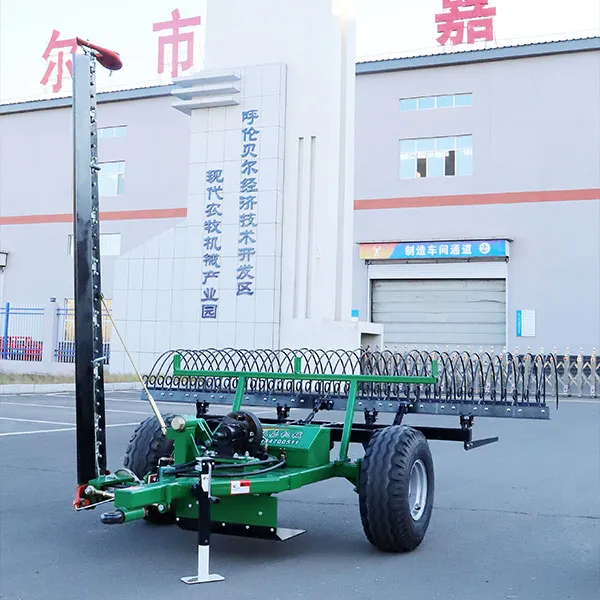 9GL-2.5/2.9 Trailed mower rake
-
 9YG-1.25A Round Baler FASCAR
-
 9LZD-9.0 Finger-disc rake
-
 4BYHD 4BYHS-3.9 Pulling machine for beans
-
 9JYY-4.5 Roll pick-up-conveyor