




baler columbia
When you hear “Columbia baler?”, the first thing that comes to mind is most likely American technology, old school, reliability. But in our market there is often confusion with this name. Many dealers or suppliers use this name as a brand that summarizes an entire class of round balers, sometimes not even directly related to the original factories. It is important to understand that today, under the Columbia brand, both genuine machines and adapted or even fully manufactured under license or specifications in other production facilities, for example, in China, can be offered. This is not necessarily a bad thing - you just need to clearly understand what exactly you are buying: an original, a licensed assembly or a high-quality analogue. I myself thought for a long time that Columbia was exclusively the USA, until I came across a batch of cars that, according to the passport, were Columbia, but according to the nameplate and components, they clearly had Asian roots. This is where we start.
What is behind the name today?
So, if we talk about the modern market, balers that are produced at the facilities of various international alliances often appear under the name Columbia. The key point is technology and quality control. I have seen how some farms bought such machines, expecting an “indestructible” one. classics, but received a device that required significant improvements after the first season. The problems were usually not in the concept, but in the little things: the quality of the steel in the pressing chamber, the hydraulic settings, the reliability of the strapping mechanism. It is these details that give away the origin.
Here it is worth paying attention to companies that do not just sell, but are engaged in deep adaptation of equipment to specific conditions. For example, I recently studied an offer fromHulunbuir Machinery Manufacturing Company ?Jiujia?. They position themselves as a modern integrated enterprise (https://www.cn-fascar.ru), which combines R&D, production and service in the field of agricultural machinery. What's important is that they often work with proven platforms, including technologies inherited from brands like Columbia. Their approach is not blind copying, but rather intelligent production, that is, intelligent modification of structures for other types of raw materials, for example, for wetter hay or straw with a high content of weeds.
Therefore, when they now say “Columbia baler?”, you need to clarify: we are talking about a historical brand, about a specific model produced under license, or about a modern device created on the basis of that same classic, proven circuit, but with new materials and, possibly, electronics. The latter option, by the way, may even be preferable for our farm, since it is easier to find spare parts and setup.
Field experience: where does the “indestructible” break down? classic?
Let's take for example the classic fixed chamber round baler that everyone thinks of when they hear the word Columbia. His main trump card is simplicity. But in our conditions, this simplicity has become an Achilles heel. It's about adjusting the roll density. On older models this is often a purely mechanical adjustment, a screw or hydraulic valve. If the operator is inexperienced or in a hurry, you can easily end up with either a loose roll that will fall apart during transportation, or an over-compacted one that animals will then not be able to sort out. I have seen how up to 15% of the feed mass was lost because of this - the rolls simply rotted inside.
Another point is the strapping. Old needle mechanisms with natural twine are, of course, the standard of reliability, but only if the twine is of high quality. And this has been a problem in recent years. We switched to synthetics, and problems began with needles breaking and clogging. On one of the machines we had to practically redo the harness assembly, install more powerful guides and change the tensioners. It was an emergency job that took almost a week of downtime during the height of the procurement.
And the third practical nuance is the picker. Working width, tooth shape. The original Columbias were designed for flat, well-groomed fields. We often have a field with hummocks, remnants of last year's stubble. The teeth bend, the belts slip. We had to strengthen the frame of the pick-up and install protective covers on the most vulnerable places. Without such modifications, the resource of key nodes dropped significantly.
Adaptation and modernization: a view from the manufacturer’s side
This is where the approach of such manufacturers as the mentioned “Jiujia” is interesting. Judging by their materials and cases that I studied, they take these field problems as a basis. TheirbalersBuilt on proven solutions, they often come with a stronger pick-up design, protected hydraulic lines and, critically, more flexible density control. Sometimes this is no longer just a mechanical regulator, but a system with load sensors, which allows you to maintain a given mode automatically, even when the supplied mass changes.
This is not an advertisement, but a statement of fact: a modern integrated enterprise, which itself conducts development, can quickly make changes to the design. Let's say a batch of low-quality twine has arrived from a new supplier - they can reconfigure or modify the strapping unit to suit its characteristics and send recommendations to service centers. With the classic "iron" Columbia, brought from overseas, this trick will not work - look for a solution yourself.
In addition, their service model, combining sales and service, often means they have more than just “original” products in stock. spare parts that can last for months, but a logistically justified set of the most consumable parts: the same pick-up teeth, belts, rollers. For real work during the season, this is sometimes more important than a big name on the hood.
Compare with others: it’s not the name, but the result
We tried to work with other European balers. They are certainly more technologically advanced, with a bunch of electronics and an air-conditioned cabin for the operator. But the price is different, and the complexity of repairs in the field is off the charts.Columbia baler, in its modern adapted version, in this regard represents a golden mean. Simple enough for an average mechanic to understand, but at the same time devoid of some archaic shortcomings of the original.
For example, one friend of mine has a device from a company on the website cn-fascar.ru. So, they note that the pressing chamber is made of a thicker sheet, with additional stiffening ribs in places where cracks appeared on older models. This is a direct consequence of feedback from operators. The manufacturer didn’t just sell the car, but analyzed where it was weak and strengthened it.
On the other hand, you shouldn’t expect miracles from such machines. It's still a heavy-duty machine, and it requires maintenance. But the predictability of breakdowns and the possibility of quick repairs is what they are valued for. There is no need to wait three weeks for a unique sensor from abroad; you can order an analogue or even manufacture it locally based on a sample.
Final thoughts: What to look for when choosing?
So what is it todayColumbia baler? For me, this is no longer so much a specific brand as a synonym for a certain, successful concept of a round baler, which continues to live and develop. When choosing such a technique, I would advise you to look first not at the name, but at three things. The first is who produces it and how. Does a company like Jiujia have its own developments and the ability to adapt, or is it just a trading company importing finished products.
The second is the service history. Are there engineers in the region who know this particular model, is there a spare parts warehouse with reasonable delivery times. And third, the most important thing is to talk with real farms that have already worked on this model for a couple of seasons. Find out what broke, how it was repaired, how the machine behaves on specific crops.
Ultimately correctbaler- this is one that allows you to carry out procurement calmly and predictably, without emergency downtime. And the modern heirs to the Columbia concept, produced by responsible full-cycle companies, may just be such a working tool. The main thing is to make a conscious choice, understanding that you are not buying a legend, but a specific device for a specific job, with its own strengths and, perhaps, requiring some significant modifications to suit your conditions. It is this approach, and not blind faith in the old trademark, that distinguishes a competent specialist in our field.
Correspondingproducts
Related Products





Best Sellingproducts
Best Selling Products-
 Baler for forming rectangular bales 9YFQ-1.9 (cross grip, export to Russia)
-
 9JYY-4.5 Roll pick-up-conveyor
-
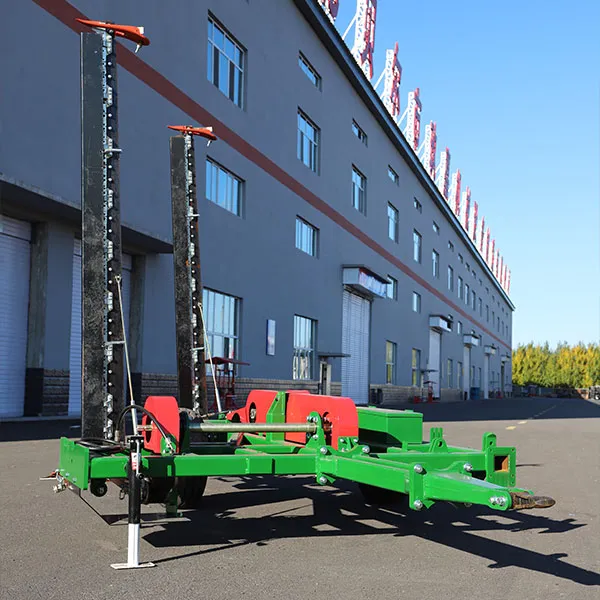 9GS-5.0 Trailed two-legged mower
-
 9F-70 Rough feed chopper
-
 Trailed single-drum combine harvester 4DQ-5 for bean threshing
-
 Drum type raking machine 9LG-9.0
-
 9YG-1.25 Round baler FASCAR
-
 9GL-2.5/2.9 Trailed mower rake
-
 Cross-grip baler for forming rectangular bales 9YFQ-1.9 (export to Mongolia)
-
 9YG-2.24D Round Baler (S9000)
-
 9YG-2.24D Round Baler (S9000 Classic)
-
 Baler for forming rectangular bales model 9YFQ-2.2D (cross type, for export to Russia)