




mini baler for sale
When you see the request 'sale of mini baler', you immediately imagine standard catalogs and prices. But in reality, it all comes down to details that are often kept silent on the Internet. Many people think that 'mini' simply means small and cheap, but in reality it is a matter of a specific task: a small hayfield, hilly area or working in a limited space between garden trees. A common mistake is to choose solely by engine power, forgetting about the type of pressing chamber (vertical or horizontal) and the possible moisture content of the selected mass. I went through this myself.
Key differences between mini balers and full-size models
The main thing is not the size of the bale, although that is important. Standard mini round balers produce bales weighing from 20 to 50 kg, which allows one person to handle loading. But there is a nuance here: if the mass is too dry and light, the small diameter of the roll can lead to its collapse when unwinding the mesh or twine. We have had to deal with complaints when farmers who previously worked only with large pickers did not take this into account.
Another practical point is the type of drive. Many mini-models are designed for low-power tractors, from 18-25 hp. But if there are even small rises in the area, this power may not be enough precisely at the moment the pressing begins, when there is a maximum load on the PTO. I have seen cases where a client, trying to save money, used an old walk-behind tractor - as a result, either the belt broke or the pick-up simply stopped at the most inopportune moment.
And of course, the strapping system. Mini balers often use netting rather than twine. It would seem like a small thing. But if the mesh is of poor quality or is not tensioned correctly, the roll simply will not hold its shape. One acquaintance from the Lipetsk region complained about the equipment for a long time, and the problem turned out to be a batch of substandard strapping mesh, which he bought “outside” to save money.
What to look for when choosing? Experience from the field
The first is not the price, but the availability of spare parts. Pickup shaft bearings, belts, rake fingers are consumables. If for the selected model you need to wait a month for them from abroad, the entire season may stop. Therefore, now I often advise you to pay attention to manufacturers who have localized their service in the Russian Federation or the CIS.
The second is versatility. A good mini-baler should work well not only with alfalfa or timothy, but also with chopped straw after the combine. Some models, especially those with a wide neck, clog when working with short, highly chopped mass. It's easy to check this - ask the dealer to do a demonstration on different materials. If he refuses, that’s a signal.
The third point that is often overlooked is adjusting the bale density. In mini format this option is not always available. But it is critical if you plan to transport rolls over long distances. A denser bale loses less volume and retains its feed value better. In practice, the difference in the final density between the simplest and most advanced model in the same class can reach 15-20%.
Case Study: Working with Integrated Manufacturers
Recently, companies have appeared on the market that offer not just the sale of equipment, but a full cycle from development to service. Here, for example,Hulunbuir Jiujia Machinery Manufacturing Company. Their website -https://www.cn-fascar.ru. They are positioned as a modern, integrated smart manufacturing enterprise for agriculture and livestock. What does this actually mean?
When we first tested their mini baler, what caught our attention was the design of the bale chamber. It was narrower than its European counterparts, but with more pronounced stiffening ribs. The engineer at the presentation explained that this was done to work with wetter raw materials - the deformation of the chamber at increased pressure is less. In practice, this was confirmed: when the humidity of the selected grass was about 18-20% (which is already the limit for many mini-models), their unit coped, although with some loss in speed.
Company'Jiujia'focuses on the full cycle: R&D, production, sales and service. In contextmini baler salesthis is important. For example, they had the opportunity to customize the binding mechanism for a specific type of mesh that the client had in the region. Not all importers are ready to make such small but important improvements.
However, it was not without difficulties. In one of the first batches, play was detected in the twine tension unit - vibration on uneven surfaces led to failure of the knitting machine. The company's response was prompt: they did not just send new parts, but provided an updated unit reinforcement circuit for all units already sold. This is an indicator of an integrated approach, and not just trade.
Typical operating mistakes and how to avoid them
The most common is untimely cleaning. After work, the mini-baler must be cleaned of plant residues, especially in the area of the baling chamber and the knitting apparatus. Otherwise, the next day the mass will dry out, become cemented and may block the mechanisms. I know of a case where because of this I had to disassemble half of the unit.
The second mistake is ignoring adjustments before the start of the season. Belt tension, pressure in the hydraulic system (if any), clearances in the pick-up - all this needs to be checked. Especially after a long period of inactivity. It often seems that “it worked last year - and it will work now.” But sediment and corrosion are doing their job.
And the third is an attempt to work 'to the limit'. If the passport says that the maximum swath width is 1.2 meters, there is no need to try to grab 1.5. This leads not only to overloading the tractor engine, but also to uneven bale density and increased wear on the pick-up teeth. Saving ten minutes a day can result in costly repairs mid-season.
Prospects and where the market is heading
Now there is a clear trend towards 'smart' functions even in mini appliances. We are not talking about full-fledged telemetry, but about simple sensors for the mass level in the chamber or monitoring for broken twine. For a small farm, this may be overkill, but for those who have several units and hired workers, such options help control the process.
Another vector is the use of more wear-resistant materials for critical components. For example, some manufacturers, including the one mentionedHulunbuir Jiujia Company, began to use composite inserts in the pressing chamber. They reduce the friction of the mass against the walls, which reduces the required power and, as a result, the fuel consumption of the tractor. At first glance, it’s a trifle, but over the course of a season, there’s a decent amount of savings.
Finally, adaptability is becoming increasingly important. I would like to use the same mini-baler both for making hay on a hillside and for harvesting straw on a flat field after the combine. Therefore, in developments there is a tendency towards more flexible settings of working bodies and the ability to quickly change the type of harness. This is no longer the future, but the present. When choosing equipment today, it is worth looking at whether the model has the potential for modernization, or whether it is a “closed” design that cannot be adapted to changing conditions.
As a result,mini baler for saleis not just a transaction. This is the selection of a tool for specific, often very different conditions. The main thing is to look not at pretty pictures in the catalog, but at the opportunity to get support, the availability of spare parts and the willingness of the manufacturer or supplier to take into account your real tasks. As practice shows, sometimes it is better to choose a less advertised but more responsive model from an integrated manufacturer than to chase a big name whose service center is a thousand kilometers away.
Correspondingproducts
Related Products




Best Sellingproducts
Best Selling Products-
 9GL-2.5/2.9 Trailed mower rake
-
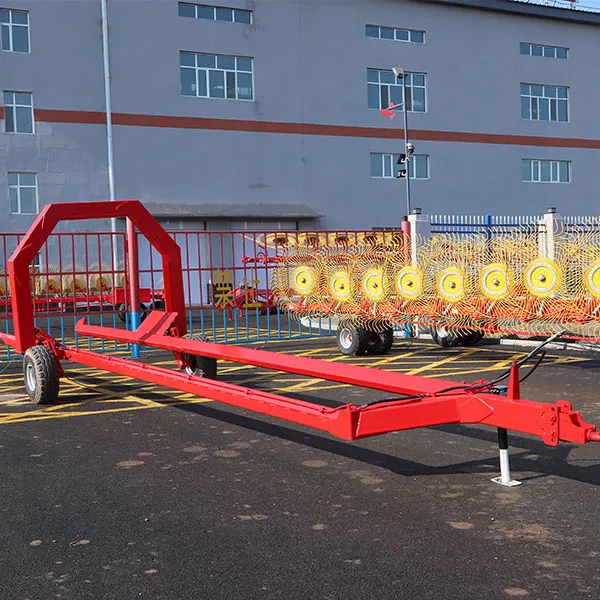 9JYY-2.5 Roll pick-up-conveyor
-
 9JYY-4.5 Roll pick-up-conveyor
-
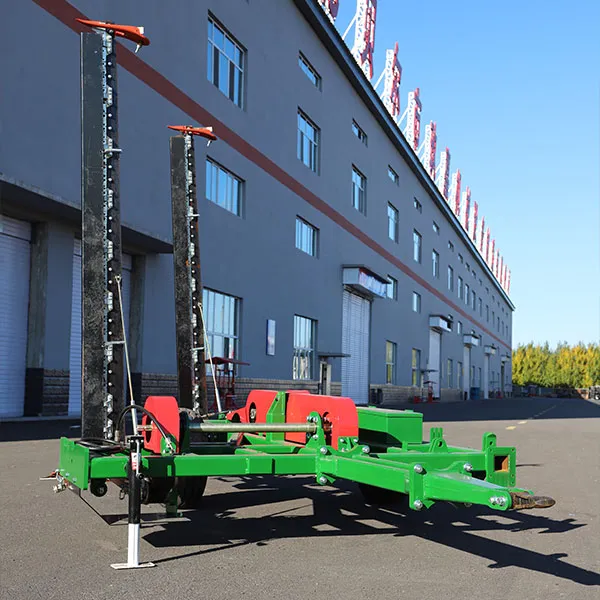 9GS-5.0 Trailed two-legged mower
-
 Drum type raking machine 9LG-9.0
-
 9YG-1.25 Round Baler
-
 Trailed single-drum combine harvester 4DQ-5 for bean threshing
-
 9F-70 Rough feed chopper
-
 9LH-12 Trailed cross rake
-
 Baler for forming rectangular bales 9YFQ-1.9 (cross grip, export to Russia)
-
 9YCM-850 Film wrapping baler
-
 Cross-row baler for forming rectangular bales, model 9YFQ-2.2C (export to Mongolia)