




homemade baler
When you hear “homemade baler?”, many people immediately imagine a pile of iron in a barn that is always breaking. This is partly true, but not all. Over the years of working with agricultural machinery, including those very handicraft modifications, I understood one simple thing: the main thing is not the fact of “do it yourself,” but an understanding of exactly what tasks and under what conditions this thing is needed. Often people take on assembly without assessing either the volume or quality of raw materials, or, ultimately, their own strengths and available materials. The result is predictable: a week of welding, a day of work, and then an eternal struggle with distortions, broken cables or insufficient pressing. But if you approach it head on, thenhomemade balermay not be a curse, but a real helper for a small household.
Where do they usually start and why is it a dead end?
A typical story: I saw from a neighbor or on video how someone assembled a unit using old combine parts and channels. Fired up. I found drawings on the net - often these are redrawn diagrams from old Soviet models like PPR-F-1.6. The problem is that these drawings rarely take into account modern realities - for example, that today's bale wrap film is of a different thickness and strength, or that the hydraulics from a retired forklift require very different pressures to effectively seal. You take such a scheme, start cooking, and then it turns out that the pressing chamber is either too short, and the roll does not gain density, or too wide, and the engine from the MTZ-80 tractor simply does not pull.
One of the key points that is missed is the mechanism for feeding and pre-compacting the mass. In factory machines, say, in the same models from Claas or John Deere, engineers work on this, calculating angles, speeds and clearances. In home-made products, they often simply install an auger or rake removed from an old windrower. As a result, the feed is jerky, the mass is distributed unevenly, and the roll ends up with voids or, worse, is wound like a ram. - when the core is dense and the outer layers are loose. Such a roll is then inconvenient to store, and during transportation it crumbles.
Another stumbling block is the binding knot. They use anything: from ordinary twine to cheap synthetic tape. But while this may still work for a small bale of hay, it won’t work for straw or silage. The tape breaks when tensioned, the knots do not hold. We have to redo the entire mechanism, install more powerful needles and tensioners. And this is almost a new design. I went through this myself: my firstbalerthe homemade one fell apart every third roll precisely at the strapping stage. I had to order specialized needles and a shaft with clamps from the old, but working, “Yenisei”.
Where you really can’t do without factory components
After several trials and errors I came to the conclusion that I was completely “from scratch” making a baler is an hobbyist activity with access to a good workshop and lathe. There are components that are easier and more reliable to take from serial equipment. For example, the gearbox and drive shaft of the bale chamber. Balancing them is critical. A homemade shaft, even if it is perfectly machined, without dynamic balancing on a stand will create vibration, which over time will break the bearings and weaken the entire frame.
The same goes for the hydraulic system. Pump, distributor, hydraulic cylinders - here it is better to take new or preserved units from trusted manufacturers. Installing old ones from the trash means guaranteeing oil leaks and unstable pressure at the most crucial moment. By the way, about hydraulic cylinders: their stroke and force must be calculated according to the planned bale density. For hay, one cylinder with a force of 2-3 tons is enough, and for pressing straw to a high density (for example, for further transportation over long distances), two cylinders or one, but more powerful, may be required. I once tried to use a cylinder from a KamAZ lift - it seemed powerful, but its stroke was too short, I had to redo the lever system, which added complexity and points of failure.
Here, by the way, you can see the difference between the artisanal approach and professional production. When a company, for example,Hulunbuir Machinery Manufacturing Company ?Jiujia?(website -cn-fascar.ru), develops technology, it lays down these parameters at the design stage. As they themselves indicate in their description, they are a modern, integrated enterprise combining R&D, production and service. This means that their engineers calculate the loads and select components for specific tasks in agriculture and livestock farming. In a homemade project, everything is based on empirics and the “method of scientific research”.
Real case: conversion from a ready-made press
A more realistic and, as practice has shown, successful path is not assembly from scratch, but a deep modernization of an old but intact baler. I had experience with the PR-F-750 model. The device is old, but the “backbone” good: strong frame, good bale chamber. The problems were in worn-out hydraulics and an outdated control system.
What have we done? We replaced the entire hydraulic circuit, installed a new gear pump driven by the tractor PTO, and a modern distributor with clear position fixations. The most important upgrade is the installation of a simple electronic density control unit. Not some expensive imported one, but one built on the basis of Arduino with a pressure sensor on the hydraulic cylinder. It beeped when the roll reached the specified density. This immediately eliminated the problem of “under-pressed” people. or crushed bales.
By the way, about the camera. We didn’t touch it, we just replaced all the rollers and bearings, and also installed new, more flexible belts (conveyors) made of wear-resistant polymer. They glide better and tear the mass less. After this alterationhomemade baler(although it would be more correct to call it “overhauled”) worked for another five seasons without serious breakdowns. The key was precisely to preserve the power circuit and geometry of the factory design, replacing only the “filling”.
This experience confirms the idea: it is often more profitable and easier to invest in the restoration and modernization of used factory equipment than to try to create something of your own from scraps of metal. Especially if we are talking about work for more than one season.
When is homemade justified and when is it not?
So, to summarize. Collectbalerhomemade from scratch only makes sense in a few cases. First, you have access to high-quality metal, welding equipment and, importantly, turning and milling work. Secondly, you need a device for very specific tasks: for example, for pressing not hay, but sunflower husks or sawdust, where standard models are ineffective. And third, you are doing this as an engineering experiment, without prioritizing uninterrupted operation throughout the season.
For typical tasks of a small farm—procuring hay and straw for your own needs—it is much more rational to consider two options. Or find and restore an old serial press, as I described above. Or, pay attention to affordable new models from manufacturers who specialize in equipment for small and medium-sized agricultural businesses. The same Chinese manufacturers, like the mentioned Jiujia company, often offer fairly simple and repairable models, which in price can be comparable to the cost of homemade products, if you honestly calculate all the costs of materials and your time.
Their website shows that they position themselves as a full-cycle enterprise - from development to service. This is important for the end user: even an inexpensive, but serial press will have spare parts, technical documentation and, ideally, service support. With a homemade product, you are left alone with all the problems. I remember spending two days searching for the reason why the strapping mechanism did not work. It turned out that one gear on the shaft, which I had welded by eye, had simply weakened and was turning. On a production car, such a problem could be fixed using the spare parts catalog in an hour.
Instead of a conclusion: thinking out loud
So, back to the beginning. A homemade baler is not synonymous with marriage or despair. This is a tool that requires a sober assessment of forces, tasks and resources. Sometimes this is the only way out. But often this is a path where you can spend more than you gain. The main skill that I learned from all these experiments is the ability not just to repeat what I saw, but to understand the physics of the pressing process, mechanics and hydraulics. Without this, even with the best drawings you will just end up with a pile of scrap metal. And with this understanding, even from old iron you can assemble a workhorse that will serve faithfully. But the question is “is it worth it?” Everyone must ask themselves before picking up a grinder and a welding machine.
Correspondingproducts
Related Products





Best Sellingproducts
Best Selling Products-
 9GD-2.5 Single-blade trailed mower (updated version)
-
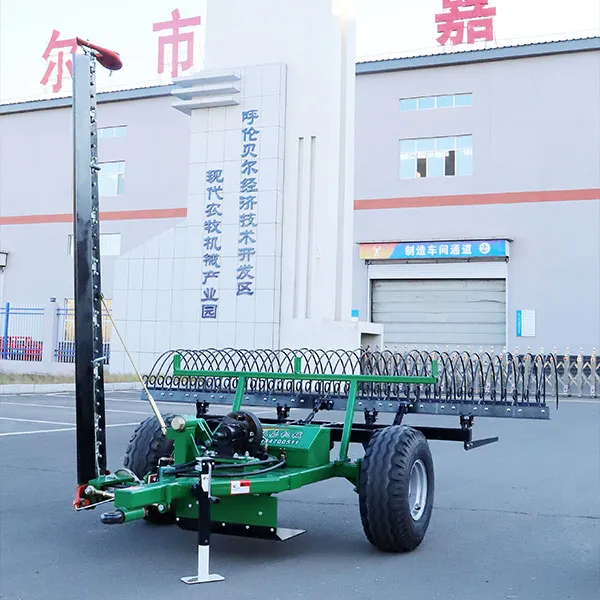 9GL-2.5/2.9 Trailed mower rake
-
 9GL-5.0/5.6 Trailed mower rake
-
 9YG-1.0 Round Baler
-
 9GS-5.0 Trailed two-legged mower
-
 9YCM-850 Film wrapping baler
-
 9JYY-2.5 Roll pick-up-conveyor
-
 9GD-2.5 Single-blade trailed mower (updated version)
-
 9LH-12 Trailed cross rake
-
 Self-propelled mower-conditioner 9GYZ-4.9
-
 9LZD-9.0 Finger-disc rake
-
 Mower-conditioner model 9GQY-3.2