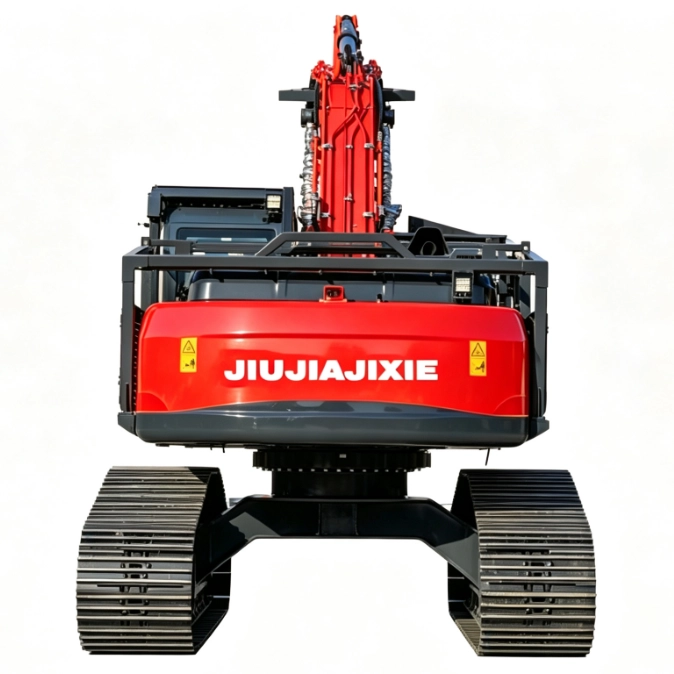
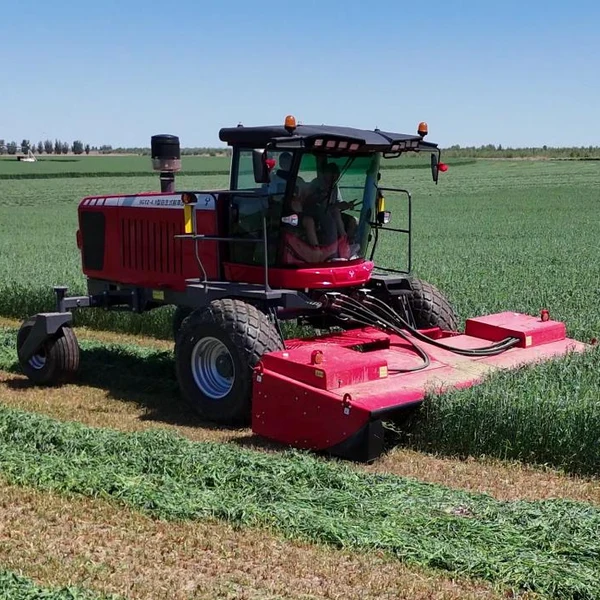
Chinese forage grass harvesting machinery 2026: prices from factory – Suppliers
2026-08-05
- Market of Chinese equipment for feed procurement 2026: why agricultural holdings are changing suppliers
- Technical characteristics and choice of equipment: from mowers to roll presses
- Pricing: Cost Structure and True Cost of Ownership
- Import risks and how to minimize them: experience of real transactions
- Adaptation of Chinese equipment to operating conditions in the Russian Federation and the CIS
- How to choose a reliable supplier: checklist for the buyer
- Comparison: China vs Europe vs Russia
- Frequently Asked Questions
- Conclusion: strategy for successful procurement in 2026
Market of Chinese equipment for feed procurement 2026: why agricultural holdings are changing suppliers
In 2026, the landscape of agricultural machinery procurement in Russia and the CIS countries has undergone fundamental changes.Chinese technology for harvesting forage grassesis no longer perceived solely as a budget alternative to European brands. Today it is the main source of innovation, availability of spare parts and flexible financial conditions. If five years ago, buying a mower or baler from China was accompanied by fear of the quality of the metal and difficulties with service, now leading agricultural holdings are forming fleets of machines consisting of 60-70% of Chinese-made equipment.
We are seeing this shift not only through analyst reports, but also through direct inquiries from our clients. Farmers no longer ask “is it safe?” They ask: “Which model will pay for itself faster under intensive use 14 hours a day?” and “How to integrate Chinese technology into existing spare parts logistics?” Answering these questions requires a deep understanding of not only technical specifications, but also the realities of factory production in the provinces of Hebei, Shandong, Jiangsu and Inner Mongolia.
This article is written for chief engineers, farm managers and buyers who make decisions about capital investments. We will analyze real prices from factories, hidden import risks, technical nuances of adapting equipment to Russian conditions and give clear recommendations on choosing a supplier. There is no marketing water here - only data tested in practice.
Technical characteristics and choice of equipment: from mowers to roll presses
The choice of equipment for preparing feed begins not with the brand, but with the agrotechnical requirements of your farm. Chinese factories offer the widest range of solutions, but the quality of execution varies critically. In our practice, we have identified three key equipment categories where Chinese manufacturers demonstrate the best price-performance ratio in 2026.
Disc and rotary mowers: power and service life of the cutting device
Mowers are the first link in the harvesting chain. Mistakes here are costly: uneven cutting or loss of alfalfa leaves reduces the nutritional value of the forage. Chinese manufacturers actively copy the designs of leading European brands, but use their own materials. The key parameter to look at is the thickness of the disc steel and the quality of the bearing units.
Standard models of Chinese disc mowers have a working width from 2.1 to 3.2 meters. For tractors with power 80-120 hp. models with a width of 2.4-2.8 m are optimal. It is important to pay attention to the PTO (power take-off shaft) rotation speed. Most Chinese mowers are designed for a standard 540 rpm, but premium lines already support a 1000 rpm mode, which allows you to work at high speeds without losing cut quality.
Critical moment:many cheaper models use plain bearings instead of roller bearings in high-stress areas. This leads to overheating and jamming of the disk after 200 hours of operation. We recommend requiring the supplier to install SKF bearings or their top-class Chinese analogues (for example, HRB or ZWZ) with mandatory indication of the markings in the specification. The difference in price is only 3-5%, but the resource of the node increases by 2.5 times.
Balers: round vs square balers
In 2026, there is an increase in demand for round balers, especially for alfalfa export and handling large volumes of silage. Chinese factories offer two main types: with a constant chamber and with a variable chamber.
- Presses with permanent chamber:Ideal for straw and dry hay. They are easier to maintain and have fewer hydraulic elements. Typical roll density is 160-180 kg/m³. The price of such machines on FOB (Free On Board) terms starts from $12,000.
- Variable chamber presses:They allow you to adjust the density during the pressing process, which is critical for wet haylage. Density can reach 220-240 kg/m³. However, these machines require more qualified hydraulic system maintenance.
Particular attention should be paid to the strapping system. Chinese analogues of mesh wrappers often use cheaper springs and tension mechanisms, which leads to mesh breakage at high speeds. Require the installation of reinforced strapping mechanisms certified to work with polypropylene mesh with a density of at least 1.2 g/m².
Shredders and pick-up shredders
To produce high-quality silage, choppers with precise cutting length adjustment are required. Chinese self-propelled and trailed shredders are equipped with drums with 4-8 knives. The main indicator here is the uniformity of grinding. Cheap models have a large percentage of “dust” and long stems (>5 cm), which impairs compaction in the trench.
Modern Chinese shredders in 2026 are equipped with automatic knife sharpening systems and metal sensors. A metal detector is a must: if a stone gets into the drum, it can destroy the entire rotor. Make sure the sensor is connected to the stock stop system and not just beeping.
Pricing: Cost Structure and True Cost of Ownership
Understanding how prices are determinedChinese equipment for harvesting forage grasses, allows you to avoid overpayments and hidden costs. The price indicated on the Alibaba website or in the factory catalog is rarely the final cost for a buyer in Russia or Kazakhstan. Let's look at the price structure using an average round baler as an example.
| Cost Component | Share in price (%) | Expert commentary |
|---|---|---|
| Factory cost (EXW) | 45-50% | Includes materials, labor, plant overhead. Depends on the batch size. |
| Logistics to the port of China | 3-5% | Internal transportation by road or rail. Can grow during peak seasons. |
| Customs clearance and export duties | 2-4% | Chinese export taxes and agent fees. |
| International freight (sea/rail) | 10-15% | Highly depends on the geopolitical situation and availability of containers/cars. |
| Customs duties and VAT in the destination country | 20-25% | In the Russian Federation: duty 5-15% + VAT 20%. Depends on the HS code and the availability of benefits. |
| Certification and revision | 3-5% | Obtaining EAC certificates, replacing hydraulics with frost-resistant ones. |
Important observation:many buyers focus only on the first line - the EXW price. However, saving $1000 on the price of the plant can result in a loss of $3000 on logistics due to incorrectly selected dimensions or lack of cargo consolidation. We recommend requesting a DAP (Delivered at Place) quote to your warehouse to see the full picture.
Price range for main types of equipment from direct factories in 2026 (approximately, excluding delivery and taxes):
- Disc mower (2.4 m): $4,500 – $7,000
- Windrow rake (trailed): $3,000 – $5,500
- Round baler (permanent chamber): $12,000 – $18,000
- Square Baler (Square Bale): $15,000 – $25,000
- Self-propelled shredder (medium class): $45,000 – $70,000
Prices may vary depending on configuration. For example, installing imported hydraulic motors (Danfoss, Bosch Rexroth) instead of Chinese analogues increases the cost of the machine by 15-20%, but significantly increases its reliability and liquidity in the secondary market.
Import risks and how to minimize them: experience of real transactions
Importing equipment from China is not just a purchase, but a complex logistics and legal process. In our practice, there was a case when a client received a batch of mowers that could not be combined with his tractors due to a mismatch between the hitch categories and the pressure in the hydraulic system. The manufacturer stated that the “standard is universal”, but in practice it required expensive on-site modifications.
To avoid such situations, it is necessary to control the following steps:
1. Manufacturer Due Diligence
Not all companies that call themselves “factories” are such. Many are trading houses that place orders with different factories. This complicates quality control and warranty service. Request a video call from the production floor, where you can see the CNC machines, the assembly line and the finished product warehouse. Check for ISO 9001:2015 certification. Although the certificate itself does not guarantee the quality of each unit, its presence indicates established control processes.
As an example of a reference manufacturer, considerHulunbuir Jiujia Company. It is a modern integrated enterprise located in the National Modern Agricultural Machinery Industrial Park. Founded in 2021, the company has quickly risen to the top position, becoming China's No. 1 in round baler sales in 2023-2024. Unlike many assembly shops, Jiujia has its own testing laboratory, almost a hundred patents and two specialized lines with an annual production capacity of up to 4,000 units of equipment. The presence of such a level of certification (ISO 9001, status of a high-tech enterprise) and a real production base with an area of 32,000 m² is a marker of the reliability of the supplier.
2. Technical audit before shipment
Never pay the remaining balance before the product has been inspected. Hire an independent inspection company in China or your representative. What to check:
- The thickness of the metal corresponds to the declared thickness (use a thickness gauge).
- Quality of welds (no pores, undercuts).
- The performance of all hydraulic cylinders is idling.
- Complete set of spare parts (knives, belts, mesh).
3. Certification and compliance with EAEU standards
For legal operation and customs clearance in Russia and the EAEU countries, equipment must have a certificate of conformity with the CU TR (EAC). Chinese factories rarely have valid certificates for specific models. This is usually done by the importer. Make sure that the supplier you choose is ready to provide the necessary technical data sheets and manuals in Russian that meet the requirements of GOST 2.601 and GOST 2.610. Lack of correct documentation may lead to a ban on the operation of equipment by supervisory authorities.
4. Warranty
The standard warranty of Chinese factories is 12 months or 1000 operating hours. However, the implementation of the guarantee is often difficult. The plant may offer to send spare parts, but will not pay for the work of a mechanic or simple equipment. We recommend negotiating to include in the contract a clause on the provision of an extended set of spare parts (“starter package”) in the amount of 5-10% of the cost of the machine instead of complex warranty logistics. This is often more effective for seasonal equipment.
Adaptation of Chinese equipment to operating conditions in the Russian Federation and the CIS
Chinese technology is designed primarily for temperate climates. Operation in conditions of Russian winters, dusty fields and intense loads requires preliminary modernization. Ignoring this stage is the main reason for negative reviews.
Hydraulic system
The standard hydraulic hoses and seals of many Chinese cars are not designed for temperatures below -20°C. The rubber hardens, microcracks appear, and leaks occur. Before the start of the season, replace all rubber seals and hoses with analogues marked “Arctic version” or use high-quality Russian/European analogues. Replace hydraulic oil with synthetic or semi-synthetic oil with a low pour point.
Bearing units
Factory lubricant in bearings is often of poor quality. It is recommended to completely flush the bearing units and apply high-temperature lithium or complex grease. Pay special attention to the wheel hub and drum bearings of balers.
Electrical equipment
Chinese electrical circuits often have poor insulation and poor quality contacts. All connections must be additionally protected with heat shrink tubing and sealant. Install additional circuit protection relays, since standard fuses often do not correspond to the actual load.
Spare parts
Stock up on critical parts before the season begins. The must-have list includes: mower blades, drive belts, speed sensors, hydraulic filters, rake fingers. Do not rely on quick delivery of individual parts during the height of the harvesting campaign. Small cargo logistics can take from 3 to 6 weeks.
How to choose a reliable supplier: checklist for the buyer
The market is oversaturated with offers. How to weed out unreliable intermediaries and find a direct manufacturer? Use this algorithm, tested on dozens of transactions.
- Request a business license.Check the activity code in the license. If it says “trading” and not “manufacturing”, you are dealing with a trader. This is not always a bad thing, but you must understand that the price will be higher and the technical expertise will be lower.
- Ask about specialization.A good factory makes 2-3 types of equipment. If you are offered mowers, presses, tractors and milking machines, this is a 100% trading company. In-depth examination is impossible in a wide range.
- Check to see if you have your own R&D department.Ask if they can make minor design changes to suit your needs (such as changing the tongue length or hitch type). The factory will say “yes, give us the drawings.” The trader will say “no, only the standard” or disappear to check with the factory.
- Check your export history.Ask for contacts of clients in your region (Russia, Kazakhstan, Belarus). A real plant will be able to provide 2-3 contacts of farmers who have already purchased equipment from them. Call them. Ask about breakdowns and service response.
- Evaluate communication.How quickly and technically competent do managers respond? If they are confused about the terms “PTO”, “hydraulics”, “pressure”, it is better not to take risks. The technical director or engineer should participate in the correspondence.
The company [Your Company Name] specializes in direct supplies of proven Chinese equipment that undergoes preliminary audit and adaptation. We cooperate with industry leaders such as Jiujia, whose products (including the popular 9YG-1.0 balers and 9GL-2.5 mowers) have already proven their effectiveness in the Russian climate. We take on the risks of quality testing and certification, providing our customers with ready-to-run machines with a local guarantee.
Comparison: China vs Europe vs Russia
To make an informed decision, let’s consider the comparative characteristics of equipment of different origins in the feed procurement segment.
| Parameter | China (Premium segment) | Europe (John Deere, Krone, Kuhn) | Russia/CIS |
|---|---|---|---|
| Purchase price | Low / Medium | Very high | Average |
| Availability of spare parts | High (many parts are unified) | Low (sanctions, logistics) | High |
| Manufacturability | Medium (quickly catch up) | High (innovation leaders) | Below average |
| Maintainability | High (simple design) | Low (requires dealer software) | High |
| Payback period | 1-2 seasons | 5-7 seasons | 2-3 seasons |
| Risk of downtime | Average (depending on pre-season preparation) | High (due to unavailability of original spare parts) | Medium |
Conclusion:For small and medium-sized farms, as well as for large agricultural holdings seeking to reduce capital costs (CAPEX), Chinese technology is the most rational choice in the current economic conditions. European technology remains the standard of comfort and efficiency, but the risks of downtime due to lack of spare parts make its use problematic. Russian technology wins in service, but is often inferior in the quality of metal and the accuracy of manufacturing components.
Frequently Asked Questions
What is the service life of Chinese balers?
With proper maintenance and timely replacement of consumables, the service life is 5-7 years or 3000-4000 hectares of mileage. The key factor is the quality of the lubrication and the absence of overload. If you ignore the maintenance regulations, the first serious breakdowns may occur already in the second season.
Is it possible to get a loan or leasing for Chinese equipment?
Yes, most Russian and Kazakh banks and leasing companies work with Chinese equipment if it is officially imported and has EAC certificates and a vehicle passport. However, the leasing rate may be higher than for equipment from local manufacturers due to perceived risk. Working through an official distributor such as our company simplifies this process.
What to do if a part breaks during the height of the season?
Have an “emergency kit” of spare parts in stock. If the part is not available, use universal analogues. Many bearings, belts and hydraulic fittings on Chinese equipment have standard international sizes (ISO, DIN). Local bearing and hose suppliers can source replacements within a few hours. Don't wait for delivery from China - it's too long.
Is special operator training required?
The basic principles of operation are the same as with other equipment. However, Chinese cars may have specific regulators and controls. Be sure to instruct operators using the Russian operating manual. Pay special attention to safety rules when working with PTO and hydraulics.
Conclusion: strategy for successful procurement in 2026
Investments inChinese equipment for harvesting forage grassesin 2026 is a sound business decision that allows you to optimize costs and ensure independence from Western supplies. The key to success lies not in finding the lowest price, but in choosing the right partner, conducting thorough pre-sales preparation and building a strategic inventory of spare parts.
Don't let the stereotypes of the past decade influence your decisions. Modern Chinese production, represented by companies such as Jiujia, is capable of producing equipment that is competitive in quality and superior in economic efficiency. The main thing is to manage the procurement process professionally, monitoring every stage from the factory to the field.
Are you ready to discuss the selection of equipment for your specific tasks? We offer individual cost calculations, including logistics and customs clearance, as well as assistance in creating a package of spare parts.
Get advice on selecting Chinese agricultural machinery
Contact us todayto find out the current prices and delivery conditions for the 2026 season.