Buy a baler for a tractor: prices from the manufacturer 2026
2026-08-18
Buy a baler for a tractor: current prices and delivery conditions from the manufacturer in 2026
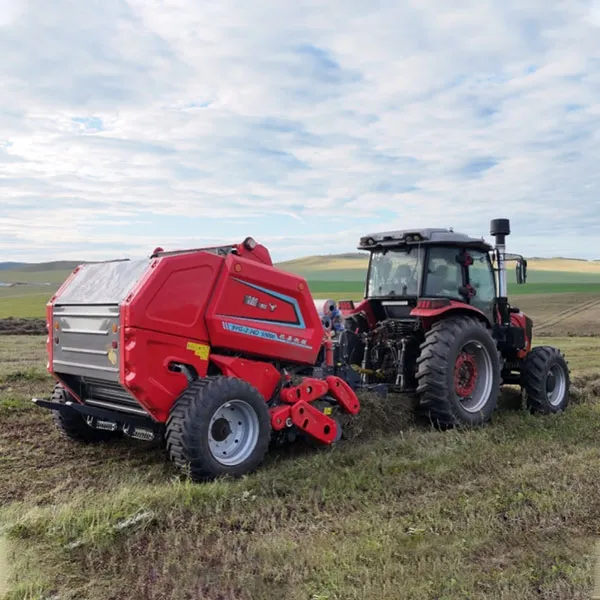
If you are planningbuy a baler for a tractor, the key success factor is not only the basic cost of the unit, but also its suitability for specific agronomic tasks, the power of your traction class and the logistics of feed procurement. In 2026, the agricultural machinery market offers a wide range of solutions: from compact roll models for small farms to heavy industrial complexes for agricultural holdings. Direct purchase from the manufacturer allows you to avoid intermediary markups, receive a factory warranty, individual tuning for your tractor (MTZ, John Deere, Case IH, Kirovets) and prompt technical support.
This material provides a detailed guide to the selection, technical evaluation and purchase of balers. We'll explore the impact of current economic conditions on pricing, critical technical parameters that are often overlooked in selection, and real-world operating scenarios. Our goal is to help you make informed engineering decisions that maximize your return on investment (ROI) and minimize downtime during peak harvest periods.
Baler Market in 2026: Trends and Pricing
The situation on the agricultural machinery market in 2026 is characterized by stabilization of component supply chains after periods of instability in previous years, but structural changes in the production economy remain significant. When prompted "buy a baler for a tractor price“It is important to understand what the final figure in the commercial proposal consists of.
Factors shaping the cost of equipment
The price of a baler is not a static value. It depends on a complex of technical and commercial variables:
- Bale formation type:Roll (round) presses are generally cheaper to manufacture and easier to maintain than square (rectangular) presses. Square presses require a more complex pressing and strapping mechanism, which increases their cost by 30–50% for similar productivity.
- Capacity and working width:Models with a working width of 1.2–1.5 m belong to the light class. Industrial models with a grip of 2.1–2.4 m and the ability to operate at high speeds (up to 15–18 km/h) require reinforced frames, more powerful power take-off shafts (PTO) and complex density monitoring systems, which significantly increases the cost of the design.
- Strapping system:Basic models use mesh or twine. Advanced versions of 2026 are equipped with combined systems (mesh + twine) or automatic preservative application systems, which adds electronic control units and additional pumps to the cost.
- Material consumption and steel:The use of high-strength steels for compression chambers and plungers increases service life, but directly affects the cost. Cheap analogues often skimp on metal thickness in areas of high friction, which leads to rapid wear.
- Logistics and customs duties:For imported components or finished equipment, the logistics component can reach 15–20% of the price. Buying from a local manufacturer or assembly plant reduces these risks.
Estimated price range (2026)
Below is the average market price range for new balers. Please note: prices do not include VAT and delivery, as these parameters are individual for each region.
| Vehicle class | Press type | Required tractor power (hp) | Price range (RUB) | Target use |
|---|---|---|---|---|
| Light/Mini | Roll | 40–80 | 850,000 – 1,400,000 | Small farms, private farms, small volumes of hay for cattle. |
| Medium/Universal | Roll (with fixed or variable chamber) | 80–120 | 1,500,000 – 2,800,000 | Medium-sized agricultural enterprises, universal use (hay, straw, silage). |
| Heavy/Industrial | Square (small bale) | 120–180 | 3,200,000 – 5,500,000 | Intensive livestock production, the need for stacking and long-term storage. |
| Super heavy | Square (large bale High Density) | 250+ | From 7,000,000 | Large agricultural holdings, export operations, biomass. |
Important:If you see an offer well below the market minimum, this often indicates used units, lack of service support, or hidden frame defects. Engineering practice shows that savings on initial purchases often result in double repair costs in the first season.
Specifications: What to Look for Before Buying
To competentlybuy a baler for a tractor, it is necessary to deeply understand its technical specifications. Marketing brochures often highlight overall performance only, but to the engineer or chief agronomist, other parameters are critical.
1. Baling chamber type
This is the fundamental difference that defines the nature of the work:
- Fixed Chamber:The bale is formed immediately to its full diameter. The density remains unchanged throughout the volume. Advantage: simple design, fewer moving parts, lower price. Disadvantage: soft bale core (if the mass is wet), it is more difficult to achieve high density in the center.
- Variable Chamber:It begins to form a bale of small diameter, which gradually increases. Belts or chains are tensioned hydraulically. Advantage: high and uniform density throughout the bale, better suited for wet feed (silage, haylage). Disadvantage: more complex tensioning mechanism, higher maintenance requirements for belts/chains.
2. Feeding and grinding system
For high-quality workpieces, not only the press itself is important, but also the pick-up. The cutting width must correspond to the width of the windrow left by the mower. The 2026 standards require:
- Gauge wheels:Allow the pick-up to smoothly follow the topography of the field, preventing the raking of earth and stones, which is critical for maintaining the cutting unit and the quality of the forage.
- Chopper:Optional shredding system with cutting length 40–120 mm. Necessary to improve bale compaction and speed up silage fermentation. Requires additional tractor power (approximately +15–20 hp).
3. Requirements for the tractor (Hydraulics and PTO)
Not every tractor can work effectively with a modern press. Before placing an order, please check:
- Power at the power take-off shaft (PTO):Most presses require a standard 540 rpm, but heavy duty models may require 1000 rpm to provide flywheel inertia. A lack of power will cause the flywheel to stall in a dense mass and break the safety clutch.
- Hydraulic system:Tractor hydraulics are required to control the chamber cover, belt tension and bale ejection. Oil consumption is usually 15–25 l/min at a pressure of 16–20 MPa. Make sure your tractor has free hydraulic outlets of sufficient capacity.
- Unit weight:A fully loaded press can weigh between 2 and 4 tons. The tractor must have sufficient weight for traction and safe transportation on public roads.
Comparison of round and square balers: engineering analysis
The choice between roll and square versions is a choice between storage technology and logistics. There is no “best” type, there is one that best suits your infrastructure.
| Parameter | Round baler | Square Baler |
|---|---|---|
| Bale density | Medium (150–220 kg/m³). Depends on humidity. | High (250–350 kg/m³ and above). Ideal for transportation. |
| Outdoor storage | Worse. Water rolls off, but can penetrate through the ends and bottom. Careful winding is required. | Better when stacked. The top rows protect the bottom ones. Smaller contact area with the ground. |
| Transportation | More difficult. The round shape is unstable and takes up a lot of space in the body. Low truck loading density. | Perfect. The rectangular shape allows for dense stacking of cargo. Maximum vehicle load. |
| Maintenance cost | Below. Fewer rubbing parts, simple camera design. | Higher. Complex crank mechanism, high loads on the plunger, rapid wear of the piping needles. |
| Feed loss | Minimal. Careful attitude towards the leafy parts of plants. | Higher. Aggressive pressing can cause leaf loss in legumes. |
| Versatility | High. Suitable for hay, straw, silage, even for collecting recyclable materials. | Specialized. Works best with straw and dry hay. Wet silage requires special models. |
Engineering opinion:If your farm is focused on selling straw to third parties or exporting, a square press will pay for itself due to logistical efficiency. If the goal is to prepare feed for your own cattle stock with storage in piles or under a canopy, a roll press with a variable chamber will provide better fermentation quality and less nutrient loss.
How to choose a supplier: reliability criteria in 2026
Solutionbuy a baler for a tractormust be accompanied by a thorough check of the counterparty. The market is saturated with offers, but not all suppliers are able to ensure long-term performance of equipment.
Manufacturer/dealer inspection checklist
- Availability of our own service center and spare parts warehouse:During the harvesting season, simple equipment even for 2 days is critical. Find out if critical components are available: belts, chains, knives, density sensors. If you have to wait 3-4 weeks for parts from abroad, such a supplier poses high operational risks for your business.
- Warranty conditions:Research not only the length of the warranty (12-24 months is standard) but also its coverage. Many manufacturers exclude wear parts (belts, sprockets) from the warranty. An honest manufacturer clearly regulates these conditions.
- Possibility of test drive or demonstration:A reliable supplier is ready to show the equipment in action, possibly at a reference facility. Pay attention to the quality of welds, edge processing, and the thickness of the metal in the pick-up area.
- Adaptation to Russian conditions:The equipment must have EAC certificates. Electrical equipment must be protected from dust and moisture (IP67 standard for sensors). Hydraulic hoses must be resistant to temperature changes.
- Staff training:A modern press is a complex unit. The supplier is obliged to instruct machine operators on density adjustment, correct tying and daily maintenance.
An example of a reliable manufacturer: the experience of Jiujia
As an example of a modern approach to the production of forage harvesting equipment, we can consider the activities of the Hulunbuir Jiujia Machinery Manufacturing Company. It is an integrated enterprise located in the National Modern Agricultural Machinery Industrial Park (China), which successfully combines scientific development, mass production and direct sales.
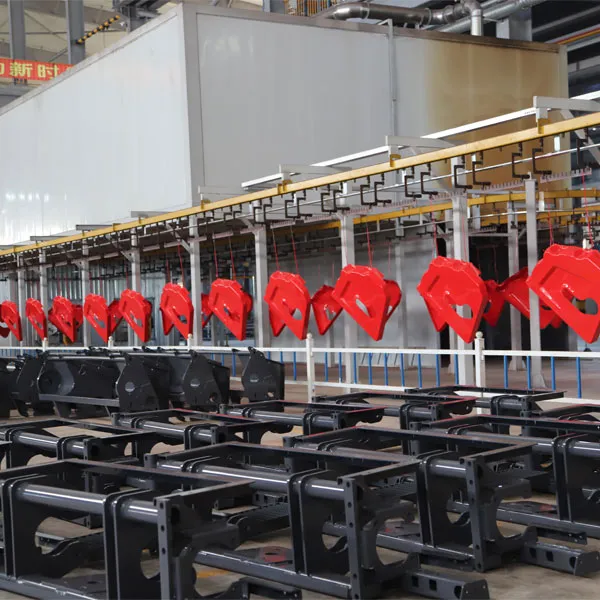
Founded in 2021, Jiujia has quickly risen to the top position, becoming China's No. 1 round baler sales volume in 2023-2024. This result was achieved thanks to strict quality control (ISO 9001 certification) and the use of advanced technologies: CNC laser cutting, automated welding and our own testing laboratory allow us to produce up to 2000 units of balers annually on one line.
The following aspects of Jiujia’s work are especially important for the Russian market:
- Product adaptation:The line includes models such as the 9YG-1.0 round baler and 9YCM-850 film wrap baler, which are designed to suit a variety of climate zones, including operating conditions in Russia and Mongolia.
- Direct deliveries:The company has the right to independently export and has already established logistics chains in the Russian Federation, which allows it to avoid unnecessary intermediary markups.
- Technological stock:Nearly one hundred patents and national high-tech enterprise status ensure that you are purchasing modern, not outdated, equipment.
By focusing on such manufacturers, the buyer receives not just hardware, but a technological solution with proven reliability and available service support.
Real application scenarios and efficiency calculations
To understand the economic effect, let's consider two typical cases of using balers in the Russian agroclimate.
Case 1: Dairy farm for 200 heads (Central Russia)
Task:Harvesting haylage from alfalfa and clover to provide forage for the winter.
Technique:Tractor MTZ-82 (90 hp) + Round baler with variable chamber, working width 1.5 m.
Process:
— Cleaning is carried out in the budding phase.
— Humidity of the mass: 55–60%.
— Productivity: 8–10 hectares per 10-hour shift.
— Formation of bales with a diameter of 1.2 m, weighing 450–500 kg.
— Wrapping with mesh (2-3 turns) to maintain shape.
Result:The high density of the bale allows them to be stored in 2-3 tiers under a canopy without significant deformation. Nutrient losses are minimal due to gentle formation. The payback period for equipment due to reduced purchases of feed is 1.5–2 seasons.
Case 2: Agricultural holding, crop production (Southern Federal District)
Task:Collection and pressing of grain straw for subsequent sale as biomass or litter.
Technique:Heavy tractor 200+ hp + High pressure square baler.
Process:
— Work at high speeds (12–14 km/h).
— Straw moisture content: 12–14%.
— Productivity: 20–25 hectares per shift.
— Formation of bales 120×90 cm, weight 350–400 kg.
Result:The square shape allows bales to be loaded efficiently into trucks and containers. Dense packaging reduces transport costs per unit weight. The product is easily sold externally. The main risk is the plunger breaking when stones hit, so strict control of the cutting height of the combine is required.
Typical mistakes when choosing and using
An analysis of service requests shows that most breakdowns are not related to workmanship, but to operating and selection errors.
- Ignoring Density Setting:Too high a density on wet material will cause the belts to break or the frame to deform. Too low - the bale will fall apart during transportation. Adjustments must be made daily depending on the humidity of the windrow.
- Operating at inappropriate speeds:Moving too slowly leads to uneven filling of the chamber and “traffic jams”. Too fast - the PTO will be overloaded and the pick-up will miss weight. The optimal speed is selected experimentally for each field.
- Lack of lubrication:The baler operates in conditions of extreme contamination with dust and abrasive particles. All bearings and joints should be lubricated every 8 to 10 hours of operation. Saving on lubrication causes the bearing to fail in 2–3 days.
- Incorrect choice of strapping material:Using cheap netting or twine with low tensile strength causes the bales to fall apart during unloading. Always use materials recommended by the manufacturer, taking into account UV stabilization.
Logistics and export opportunities
For large farms and dealers, the issue of delivery is important. Modern balers are often shipped partially disassembled to optimize shipping costs. Make sure the supplier has assembly and pre-sales (APP) experience.
If you are considering exporting equipment or feed, pay attention to compliance with CE safety standards (for Europe) or similar requirements of the CIS countries. The presence of a vehicle passport in Russian and English, as well as clear marking of components, simplifies customs clearance and further operation.
FAQ: Frequently asked questions about purchasing balers
1. Which baler is better to buy for the MTZ-80/82 tractor?
For tractors of the MTZ series with a power of 80–90 hp. The optimal choice is light and medium-sized roll presses with a fixed or variable chamber, a working width of up to 1.5 meters. They do not overload the hydraulics and PTO of the tractor. Square presses are not recommended for this capacity due to high peak loads.
2. Can one baler be used for hay and straw?
Yes, most universal balers can handle both crops. However, straw requires a higher bale density, and hay requires a more gentle treatment. You will need to reconfigure the pressure in the hydraulic cylinders and, possibly, change the type of binding (for hay, a net is often used, for straw, twine is used).
3. How much does it cost to maintain a baler per year?
Basic maintenance includes changing the oil in gearboxes (if any), lubricating bearings, replacing belts/chains (every 2-3 seasons) and knives. On average, operating costs are 3–5% of the cost of the machine per year, provided there are no serious emergency breakdowns.
4. Does grass moisture affect bale quality?
Critically influences. For hay, the optimal moisture content is 15–18%. For haylage - 45–55%. Baling too wet a mass without a preservative will cause the bale to burn (spontaneous combustion) or rot. Material that is too dry will not hold its shape well. Use moisture meters to monitor.
5. Why is it worth buying a baler from the manufacturer and not from a reseller?
Purchase from the manufacturer (see product catalog) guarantees no hidden extra charges, access to original spare parts at factory prices, direct technical advice from engineers and official warranty support. Resellers often do not have the technical expertise to solve non-standard problems.
Conclusion and recommendations for placing an order
Investing in a baler is a strategic decision to make your farm more self-sufficient. In 2026, technology allows you to choose reliable, efficient and cost-effective equipment. The main thing is to clearly define your tasks, evaluate the resource of the tractor fleet and choose a supplier capable of providing long-term support.
Don't make a decision based solely on price. Calculate 5-year cost to owner (TCO) including consumables, fuel and possible downtime.
Ready to find the perfect solution for your farm?
Our engineers will help you calculate the required model based on the area of your fields, the type of crops and the available tractor fleet. We offer flexible leasing terms, delivery throughout Russia and the CIS countries, as well as full service support.
→Receive a customized quote and technical consultation today.
Contact our sales department or view the detailed specifications of our models in the sectionProducts. Make the right choice -buy a baler for a tractorfor professionals means ensuring the smooth operation of your agribusiness.