Agricultural machinery suppliers 2026: prices from the factory
2026-08-23
- Farm Equipment Suppliers 2026: Direct Access to Factory Prices and Purchasing Strategy
- Market landscape: who are modern suppliers of agricultural machinery
- Case of a successful manufacturer: the experience of the Jiujia company (Hulunbuir)
- Key pricing factors: what makes up the cost in 2026
- How to choose reliable suppliers of agricultural machinery: Due Diligence checklist
- Tech trends 2026: what to look for when purchasing
- Comparative analysis: Direct factory vs Dealer network
- Logistics and import: features of working with suppliers in 2026
- Typical mistakes when choosing a supplier of agricultural machinery
- Recommendations for negotiating with suppliers
- FAQ: Frequently asked questions about agricultural equipment suppliers
- Conclusion: A partnership strategy instead of a simple purchase
Farm Equipment Suppliers 2026: Direct Access to Factory Prices and Purchasing Strategy
Choosing reliableagricultural machinery suppliersin 2026 determines the profitability of the agricultural enterprise for the next 5–7 years. In the context of global transformation of supply chains, sanctions and logistics restructuring, traditional purchasing models from dealers are losing efficiency. A direct contract with a manufacturing plant or an authorized export division allows you to reduce capital costs (CAPEX) by 15–25% by eliminating intermediary markups. However, this approach requires a deep understanding of technical specifications, customs regulations and after-sales service.
Modernagricultural machinery suppliersThey offer not just hardware, but comprehensive technological solutions: from precision seeding systems to autonomous harvesting robots. The key challenge for the buyer in 2026 is the balance between cost of ownership (TCO), availability of spare parts and integration of equipment into a single digital ecosystem of the farm. This article is a technical guide to selecting partners, analyzing pricing and assessing the reliability of manufacturers, based on real experience in industrial imports and operation of heavy agricultural machinery.
Market landscape: who are modern suppliers of agricultural machinery
The term “supplier” has evolved in the agricultural machinery industry. If ten years ago it was exclusively a trading house, today an effective partner serves as a system integrator. Market analysis for 2025–2026 shows a clear division of players into three categories, each of which has its own economic and technical characteristics.
1. Direct Manufacturers (OEM)
These are factories with a full production cycle: from casting housings to assembling electronic control units (ECUs). Working directly with OEM (Original Equipment Manufacturer) ensures maximum purchase margins. You receive equipment without the distributor's markup, which is usually 10–18%. However, direct factories often have a high minimum order quantity (MOQ) entry threshold and may be less flexible when it comes to small-scale customization to meet the specific requirements of a single farm.
2. Authorized export hubs
In 2026, many large factories delegated foreign trade operations to specialized subsidiaries. Theseagricultural machinery suppliershave all the advantages of the plant (warranty, original spare parts, engineering support), but at the same time are focused on international logistics, certification (EAC, GOST) and work with foreign exchange contracts. For medium and large agribusinesses, this is the optimal balance of risk and price.
3. Technology integrators
A new class of suppliers that do not produce hardware, but provide turnkey solutions, including navigation equipment, precision agriculture software and service contracts. Their value lies not in the low price of the tractor, but in increasing overall farm performance (KPI) through the synergy of mechanics and numbers.
It is important to understand: when choosing a partner, you need to verify his status. Having a dealer certificate does not always mean having a spare parts warehouse in the region where the client is present. Engineering practice shows that 40% of equipment downtime is not due to a breakdown, but to waiting for a component. Therefore, the criterion of “warehouse availability” should be on a par with price.
Case of a successful manufacturer: the experience of the Jiujia company (Hulunbuir)
To illustrate the modern OEM model, consider the example of a company"Jiujia", located in the National Modern Agricultural Machinery Industrial Park in Hulunbuir. Founded in 2021, the company demonstrates how an integrated enterprise can operate effectively in the international market by combining R&D, mass production and direct export.
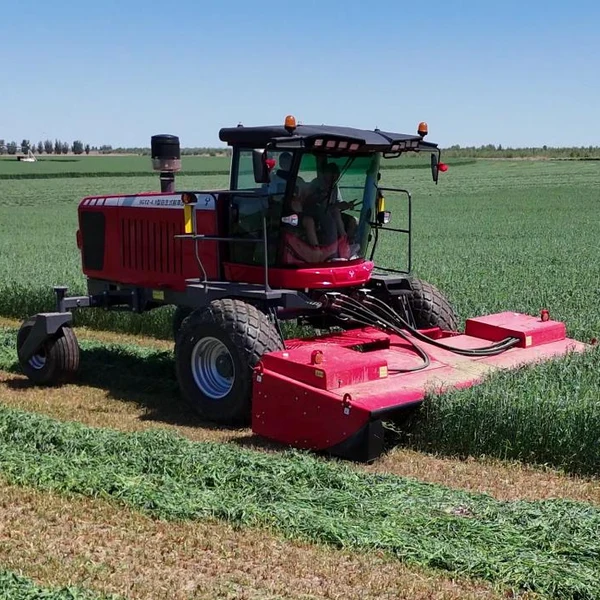
The Jiujia company specializes in equipment for feed preparation and harvesting, a segment where equipment reliability is critically important. The production base of the enterprise with an area of more than 32,000 m² is equipped with advanced equipment: CNC laser systems, automated welding complexes and electrostatic spraying lines. Two specialized lines provide an annual production capacity of up to 4,000 units of equipment, including round balers and mower rakes.
The key advantage of working with such a manufacturer is quality control at all stages. Our own testing laboratory and almost a hundred technological patents allow us to adapt products such as the 9YG series round balers or the 9GL mower rake to difficult climatic conditions. ISO 9001 certification and the status of a national high-tech enterprise confirm compliance with international standards.
Jiujia pays special attention to export infrastructure. The company has the right to independent foreign trade operations and has already successfully supplied equipment to Russia and Mongolia (through a subsidiary in Choibalsan). The leadership in sales volumes of round balers in China in 2023–2024 indicates that direct contracts with such factories allow Russian farmers to receive a competitive price with high quality assembly, bypassing unnecessary intermediaries.
Key pricing factors: what makes up the cost in 2026
The request “factory price” often hides a complex cost structure. Understanding these components allows for meaningful negotiations withagricultural machinery suppliersand avoid hidden fees during delivery and commissioning stages.
| Cost Component | Share in price (guideline) | Possibility of optimization | Engineer's note |
|---|---|---|---|
| Production cost | 45–55% | Low | Depends on the rate of metals and electronics. Factories rarely give a discount here. |
| Logistics and insurance | 12–20% | High | Can be reduced by 5–7% when consolidating cargo or choosing multimodal transportation. |
| Customs duties and VAT | 15–25% | Average | Depends on the HS code. Errors in classification can cost millions of rubles in fines. |
| Certification (EAC/GOST) | 2–4% | Low | Mandatory expenses. Check whether they are included in the invoice or paid separately. |
| Dealer margin | 10–18% | Maximum | Excluded when working directly with a factory or export hub. |
Impact of exchange rates and commodity exchanges
Commodity market volatility remains high in 2026. Prices for steel, copper (for electrical wiring and motors) and rare earths (for magnets and electronics) are directly translated into factory price lists. Experienced buyers fix the price at the time of signing the contract using currency risk hedging, or requireagricultural machinery suppliersfixing the exchange rate for the period of production.
Hidden costs of onboarding
Often the ex-factory price is for the basic configuration. For Russian operating conditions, a winter package is required (engine heaters, reinforced batteries, special low-temperature class hydraulic oils). These options can increase the final cost by 3-5%. Always request a turnkey specification for your climate zone.
How to choose reliable suppliers of agricultural machinery: Due Diligence checklist
Choosing a partner is all about risk management. Error in choiceagricultural machinery supplierscan lead not only to financial losses, but also to disruption of the sowing or harvesting campaign, which is more critical than the price of the machine itself. Below is an algorithm for technical and commercial verification of a counterparty.
1. Verification of production capacity
Don't trust the sites. Request a video tour of the assembly facility or a pre-shipment test report on a specific piece of equipment. Please note:
- Availability of our own foundry or long-term contracts with metallurgical plants.
- Level of automation of welding work (robotic lines ensure stability of the seam, which is critical for the frames of heavy machines).
- Own testing site. Equipment must be run-in under load before being sold.
2. Service infrastructure audit
Ask the supplier three specific questions:
- What is the average response time of the service team to a request in your region?
- Where is the critical parts warehouse (filters, belts, sensors) physically located?
- Is remote diagnostic support provided via telematics?
If a vendor can't give clear numerical answers (e.g., "we'll respond within 24 hours"), that's a red flag. Reliableagricultural machinery suppliersoperate SLA (Service Level Agreement) - a service level agreement.
3. Analysis of financial stability and reputation
Check the company's history through public registries and industry forums. Look for reviews not about a “beautiful office”, but about resolving warranty disputes. The presence of lawsuits from large agricultural holdings is a serious signal for caution.
Tech trends 2026: what to look for when purchasing
Agricultural technology in 2026 is a symbiosis of mechanics, hydraulics and IT. When communicating withagricultural machinery suppliersIt is necessary to consider the following technological shifts that affect the long-term efficiency of the fleet.
Electrification and hybrid powertrains
Although diesel engines remain the standard for heavy equipment (tractors over 200 hp), the light and medium equipment segment is actively moving towards hybrid designs. This allows you to reduce fuel consumption by 15–20% due to energy recovery when braking the attachment. However, when purchasing such equipment, make sure that the supplier has trained your mechanics to work with high-voltage systems.
Precision farming and ISOBUS
The ISOBUS standard has become a mandatory requirement. The new technology should be compatible with universal terminals and yield mapping software. Ifagricultural machinery suppliersoffer equipment with a closed proprietary data system that does not export information to your accounting systems (for example, 1C:Agro or foreign analogues), refuse to purchase. Data is a new business asset, and you need to have full access to it.
Autonomy and telemetry
Modern combines and tractors are equipped with second-generation GPS/GNSS modules with positioning accuracy of up to 2 cm. This allows you to work at night and reduces operator fatigue. When choosing a supplier, check whether a subscription to satellite corrections is included in the cost of the equipment or whether it is an annual payment.
Comparative analysis: Direct factory vs Dealer network
For clarity, let's compare the two delivery models so you can make an informed decision for your business.
| Criterion | Direct Factory / Export Hub | Local dealer |
|---|---|---|
| Equipment price | 15–25% lower | Market, with a markup |
| Delivery times | Long-term (4–8 weeks + logistics) | Short (from stock or 1–2 weeks) |
| Configuration flexibility | High (assembled to order) | Low (only what is in the catalog) |
| Service support | Remote + departure under contract (SLA) | Local, fast response |
| Warranty cases | Takes longer to resolve, requires expertise | Resolved promptly on site |
| Staff training | Online courses, documentation | In-person training at the dealer |
Engineering opinion:For farms with a fleet of more than 10 units of heavy equipment, direct work with the plant is economically justified, even taking into account the costs of its own service center. For small farms (up to 3 units), an overpayment to the dealer is an insurance premium for the speed of solving problems.
Logistics and import: features of working with suppliers in 2026
Physical delivery of equipment is the most vulnerable stage of the transaction.Agricultural Equipment Suppliersin 2026 they work in conditions of complicated logistics routes. Here are the key aspects to monitor:
- Packaging and preservation:Request a photo report on the preservation of hydraulic systems and electronic units before loading. Sea moisture and temperature changes during transit through several climatic zones can cause corrosion of the contacts even before the equipment arrives.
- Insurance coverage:Make sure your insurance covers the full cost of replacement, not just the cost of repairs. Practice shows that if the frame or cab is damaged, it is cheaper to replace the entire module than to repair it in the field.
- Customs clearance:Work only with those suppliers who provide a full package of documents for certification in the GLONASS system and obtaining a vehicle type approval (OTTS) or a TR CU declaration of conformity. The absence of these documents will make the operation of the equipment illegal.
Typical mistakes when choosing a supplier of agricultural machinery
Analysis of hundreds of transactions allows us to identify repeated mistakes that buyers make. Avoid them to save your budget and nerves.
Mistake 1: Focusing Only on the Starting Price
Buying the cheapest tractor often results in high repair costs. Cheap analogues use low quality components (Chinese non-branded hydraulic pumps, weak electronics). Calculate TCO (Total Cost of Ownership) for 5 years, including fuel, maintenance and possible repairs.
Mistake 2: Ignoring attachment compatibility
When changing the brand of equipment, check the compatibility of the existing fleet of attachments. Different hitch standards (categories I, II, III) and types of hydraulic connectors may require the purchase of adapters or new implements, which will eat up all the savings from a direct purchase.
Mistake 3: Lack of safety margin in the service contract
Many people buy equipment without an extended warranty or service package. In the first year of operation (“run-in period”), up to 60% of assembly defects are detected. The lack of priority access to spare parts during this period is critical.
Recommendations for negotiating with suppliers
To get the best conditions fromagricultural machinery suppliers, use the following tactics:
- Combining orders:Cooperate with neighboring farms to form a container or wagon lot. This gives leverage over logistics costs and priority in the production queue.
- Seasonality:Order equipment in the off-season (autumn-winter). Factories often offer discounts of up to 10% to keep production lines busy during periods of low demand.
- Demo version requirement:Before making a large shipment, request a test drive of one unit in your actual field conditions. Actual performance may differ from that stated in the booklet by 10–15% due to the characteristics of the soil and topography.
FAQ: Frequently asked questions about agricultural equipment suppliers
How to check the reliability of an agricultural machinery supplier?
Request a reference list (list of clients) for the last 2 years and contact them. Check for current dealership certificates on the manufacturer's official website. Use counterparty verification services to analyze financial statements.
Does the payment method affect the price from the factory?
Yes. Paying 100% in advance or using a letter of credit often allows you to get an additional 2-3% discount, since the plant receives free financing for its working capital. Installment plans from the factory usually include an interest rate built into the price.
What to do if the supplier misses delivery deadlines?
The contract must specify penalties for each day of delay (usually 0.1–0.5% of the contract amount). Also require the inclusion of a clause on compensation for losses associated with equipment downtime if the delay exceeds 30 days.
Can I buy spare parts directly from the same supplier?
Yes, most factories have separate price lists for spare parts with a discount for the owners of their equipment. This is more profitable than buying through third-party dealers. Check the availability of an online catalog of spare parts with VIN reference.
What guarantees do direct suppliers provide?
The standard warranty for new equipment is 1–2 years or 2000–3000 operating hours. Direct suppliers often offer an extended warranty of up to 5 years, subject to maintenance by authorized specialists.
Conclusion: A partnership strategy instead of a simple purchase
In 2026, the success of an agricultural enterprise depends not only on the availability of land and seeds, but also on the technological superiority of the machine fleet. Choosing the right onesagricultural machinery suppliersis an investment in business stability. Direct contracts with factories provide access to advanced technologies and optimal prices, but require highly qualified purchasing and logistics departments.
Don't view the supplier as a one-time seller. Look for a partner who is willing to share data, train your staff, and tailor products to your unique needs. Only this approach will ensure the long-term competitiveness of your farm.
Are you ready to optimize your fleet renewal costs and receive a personal commercial offer from the manufacturer?
→ Get a cost estimate and technical specifications for your tasks
Contact a supply expert
Additional materials:Catalog of agricultural machinery | Terms of service | Logistics solutions for agribusiness