Baler manufacturer 2026: prices from the factory
2026-09-03
- Baler manufacturer 2026: direct prices from the factory and technical solutions for agribusiness
- Why It's Important to Choose a Baler Manufacturer Directly in 2026
- Technological features of modern balers from the plant
- Equipment classification: which baler to choose
- Factors influencing the price of a baler from the manufacturer
- An engineering view: what to look for when inspecting
- Comparison of our models
- Logistics, service and export opportunities
- Frequently asked questions (FAQ)
- Recommendations for preparing for the cleaning season
- Conclusion: Investing in Reliability with a Baler Manufacturer
Baler manufacturer 2026: direct prices from the factory and technical solutions for agribusiness
Choosing a Reliablebaler manufacturerin 2026 is a critical step to ensure profitable feed procurement. The agricultural machinery market has undergone significant changes: the emphasis has shifted from simple mechanical reliability to the integration of precision farming systems, energy efficiency of hydraulic circuits and adaptation to difficult climatic conditions. When an agronomist or farm manager searches for the query “baler manufacturer, pr,” he expects to see not just a catalog, but an engineering solution that can reduce dry matter losses to a minimum and ensure stable bale density.
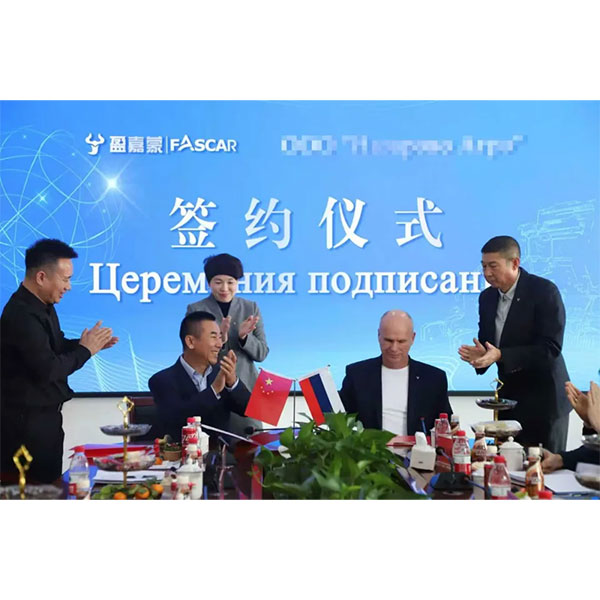
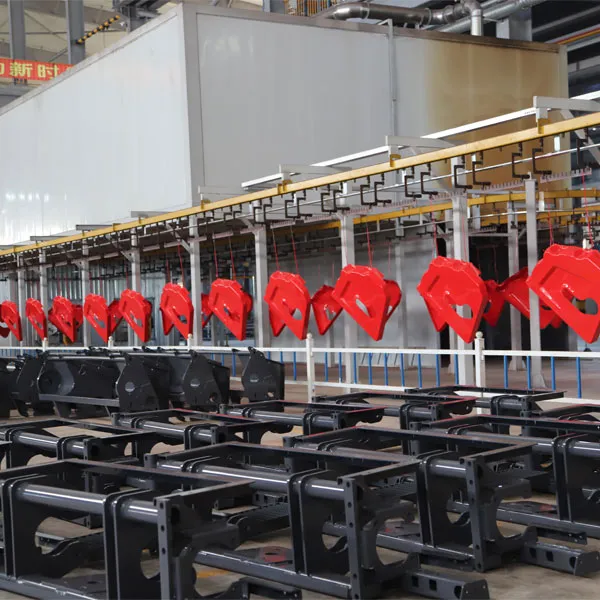
In this context, modern integrated enterprises such as Jiujia (Hulunbuir) play a special role. Founded in 2021 and located in the National Modern Agricultural Machinery Industrial Park, this company integrates the functions of R&D, serial production and service. The plant, with an area of more than 32,000 m², is equipped with advanced CNC laser systems and automated welding lines, which allows the production of up to 2,000 units of round balers annually. The status of a national high-tech enterprise and the presence of almost a hundred patents confirm the plant’s ability to offer not just hardware, but technological solutions adapted to the realities of the Russian and international agricultural sector.
We understand that the factory price is not only the cost of metal and assembly, but also an investment in uninterrupted operation during a short cleaning window. In this review, we will examine in detail why direct cooperation with a manufacturer such as Jiujia is more profitable than intermediary schemes, what technical parameters really affect the quality of a roll or bale, and how to choose a model for the specific tasks of your tractor fleet. We avoid marketing slogans, focusing on the facts: the strength of steel, the algorithms of PLC controllers and real performance in the field.
Why It's Important to Choose a Baler Manufacturer Directly in 2026
In conditions of economic volatility and supply chains, the model of purchasing equipment through second- and third-level dealer networks becomes economically unjustified for large and medium-sized farms. A direct contract with the manufacturer eliminates the markup of intermediaries, which can reach 15–25% of the final cost of the machine. However, financial benefits are just the tip of the iceberg. The main value of working with a baler manufacturer is technical support and customization.
In 2026, standard models often require adaptation to specific crops. For example, harvesting alfalfa requires a different approach to setting the pressure in the bale chamber than harvesting wheat straw. A dealer rarely has the competence to deeply engineer equipment, while Jiujia's factory engineering department, relying on its own testing laboratory, can quickly make changes to the design of a picking device or knot tying system. In addition, direct access to the manufacturer guarantees the availability of original spare parts. Practice shows that the downtime of equipment during the harvesting season is more expensive than the machine itself. The wait for a part through the supply chain can take weeks, while shipment from the factory warehouse occurs within 24–48 hours.
Also worth noting is the software update aspect. Modern balers are equipped with humidity, density sensors and GPS monitoring systems. The manufacturer has the ability to remotely update controller firmware, optimizing the operation of the automation to meet new requirements, which is not possible when purchasing from resellers.
Technological features of modern balers from the plant
As a manufacturer with a leading sales position in China (according to 2023–2024 data) and actively developing exports to Russia, we are introducing technologies that meet the challenges of modern agribusiness: increasing field sizes, shortage of qualified operators and the need to maintain maximum nutritional value of feed. Let's look at the key components that determine the efficiency of our machines, such as the popular models 9YG-1.0 and 9YCM-850.
Material selection and supply system
The heart of any baler is the picking device. In the 2026 models, we use reinforced skids that ensure constant contact with the ground, eliminating soil from getting into the bale. Contamination of feed with soil reduces its quality and can cause digestive problems in cattle. Our engineers, using computer simulation (CAD), calculated the optimal angle of attack of the pick-up drum tines, which allows you to effectively pick up even lying, wet straw without loss. The working width ranges from 2.1 to 2.4 meters, which matches most standard windrows.
Baling chamber and density control
Bale density determines logistic efficiency: the higher the density, the more mass is placed in the vehicle and in the warehouse. However, excessive pressure increases the load on the tractor and fuel consumption. Our presses are equipped with a hydraulic or mechanical (depending on the model) pressure regulation system. Sensors transmit real-time data to a monitor in the tractor cabin, allowing the operator to adjust parameters on the fly. We guarantee stable density along the entire length of the roll, avoiding “loose” ends, which are often destroyed during transportation.
Tie and cut system
The reliability of the tie knot is a sore subject for many farmers. Breaking twine or netting in the field leads to loss of time and material. Our baler manufacturer uses heavy-duty, heat-treated alloy steel tying mechanisms. The operation algorithm of the scissors is optimized to minimize the risk of material wrapping around the cutting elements. Net models (eg 9YCM-850) feature a tension control system to prevent the bale shell from sagging or breaking.
Equipment classification: which baler to choose
Before requesting a quotation, it is necessary to clearly define the type of equipment required. An error in choosing the type of press leads to a discrepancy between the equipment and the tasks of the farm. As a manufacturer, we offer two main categories:
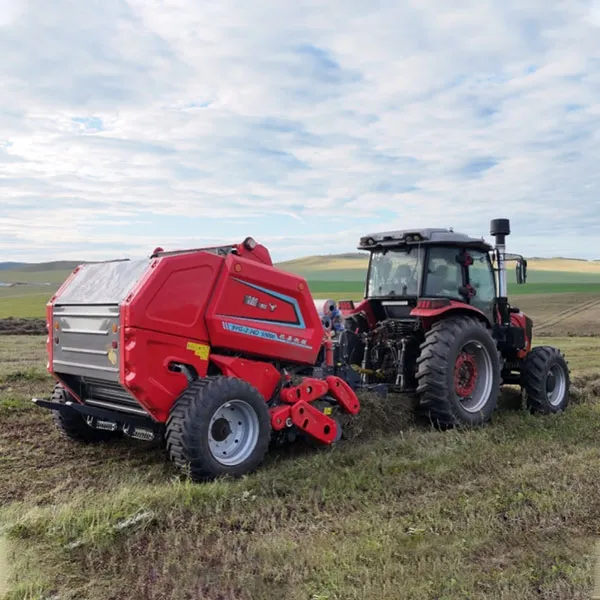
- Round Balers:Cylindrical bales are formed. Ideal for silage and hay, as the round shape promotes natural moisture drainage and better conservation of feed. They are easier to operate and require less maintenance. Suitable for farms with a small fleet of equipment and limited storage space. Model 9YG-1.0 is a prominent representative of this class.
- Square Balers:Bales of rectangular cross-section are formed. The main advantage is high packaging density and ease of stacking when transporting over long distances. This is the choice of large export-oriented farms and livestock complexes with large procurement volumes. However, they are technically more complex and require more powerful tractors.
When searching for “baler manufacturer pr”, it is important to clarify which modification you are interested in, since the production lines and components for these types of machines differ significantly.
Factors influencing the price of a baler from the manufacturer
Pricing in 2026 is formed under the influence of several objective factors. Understanding these components will help you adequately evaluate commercial offers and avoid hidden fees.
| Cost factor | Impact on price | Engineer's comment |
|---|---|---|
| Bale chamber type | High | A fixed chamber is cheaper but is limited in bale size. A variable chamber (with belts or chains) is more expensive, but allows you to form bales of different diameters, which is more versatile. |
| Materials and steel | Medium | The use of high-strength Hardox steel or analogues increases the service life of the housing and parts subject to abrasive wear, but increases the cost of production by 10-15%. |
| Control system (Electronics) | High | Basic models with mechanical control are cheaper. Models with ISOBUS-compatible terminals, humidity sensors and GPS tracking are much more expensive, but pay for themselves due to the accuracy of metering. |
| Working width and presence of cutter | Medium | The integrated chopper (cutter) increases the length of the roller and speeds up drying, but adds complexity to the maintenance of the knife block. |
| Logistics and customs duties | Variable | When exporting or delivering to remote regions of the Russian Federation, the logistics component can reach 5-10% of the cost of the machine. Working directly with a factory that has the right to independently export allows you to optimize this process. |
It is important to understand: a low price is often achieved by saving on bearings, the quality of welds, or the use of cheap hydraulics. Jiujia, an ISO 9001 certified company, adheres to the strategy of “reasonable economy”: we do not install excessively expensive components where standard ones are sufficient, but we never skimp on critical friction and load units.
An engineering view: what to look for when inspecting
As a specialist with many years of experience in industrial production, I recommend that potential buyers pay attention to details that are not visible in advertising brochures. The first is the quality of the welds on the frame. Uneven seams or traces of rust under the paint indicate a violation of the metal preparation technology. Our plant uses automated welding systems that ensure ideal seam geometry. The second is the accessibility of lubrication points. In the field, the operator must be able to quickly service the machine. If half the press needs to be disassembled to lubricate any component, this is a design flaw.
The third point is balancing the rotor and drums. The imbalance causes vibrations that damage the bearings and frame of the tractor. Our factory dynamically balances all rotating elements on stands before assembly. The fourth is the quality of hydraulic hoses and fittings. Use only original high-pressure hoses (HHP) designed for impulse loads. Cheap analogues often burst at peak moments of hydraulic cylinder operation.
Limitation of any technique: No baler will operate effectively on excessively wet material (above 20-25% moisture for hay). Attempts to press wet grass lead to rotting of the bale from the inside and failure of the mechanism due to increased resistance. This is a physical limitation, not a design flaw.
Comparison of our models
For clarity, here is a comparison of the two flagship lines that our baler manufacturer will produce in 2026. This will help you make informed choices.
| Parameter | Model "Agro-Standard" (based on 9YG-1.0) | Model "Agro-Profi" (based on 9YCM-850) |
|---|---|---|
| Camera type | Fixed | Variable (belt) |
| Bale diameter | 1.2 – 1.5 m (fixed) | 1.2 – 1.8 m (adjustable) |
| Required tractor power | from 80 hp | from 120 hp |
| Control system | Mechanical indication | Electronic monitor + ISOBUS |
| Productivity (ha/hour) | up to 1.5 ha/hour | up to 2.5 ha/hour |
| Target Audience | Small farms, private owners | Large agricultural holdings, contractors |
| Service | Minimal, simple | Requires qualified service |
The Agro-Standard model is chosen by those who value simplicity and reliability. There are fewer electronics that can be “killed” by dust or moisture. The Agro-Profi model is a tool for business where time is money. The ability to change the bale size allows you to adapt to different feed buyers or storage conditions.
Logistics, service and export opportunities
Working with a manufacturing plant implies transparent logistics. The Jiujia company organizes the delivery of equipment throughout the Russian Federation and the CIS countries, using its own experience in export operations and partner transport companies. Each machine undergoes pre-sale preparation: inspection of all systems, test run and packaging of vulnerable components. When exporting, we undertake the preparation of all necessary documents, including EAC certificates of conformity and customs declarations.
Service support is provided according to the “single window” principle. You are not running between the engine supplier, the hydraulic supplier and the assembler. All issues are resolved by one manager and one service team. We provide an extended warranty for the main components (frame, bale chamber) for up to 2 years, which confirms our confidence in the quality of products created on lines with a capacity of 4,000 units of equipment per year. The service of supervising installation and training of customer personnel directly in the field at the beginning of the season is also available.
Frequently asked questions (FAQ)
Below are answers to the most common questions our baler manufacturer receives from customers.
What is the actual productivity of a baler per hour?
Productivity depends on crop yield, swath width and tractor speed. On average, our roll presses process 1.5 to 3 hectares per hour. Rectangular presses can achieve better results due to the continuous cycle of operation, but require more powerful traction.
Can the baler be used for straw and haylage?
Yes, our machines are universal. However, for haylage (wet material), it is recommended to use models with the possibility of applying a preservative or carefully wrapping them with film/mesh to prevent air from entering. Density settings should be increased.
What is the advantage of buying from a manufacturer rather than a dealer?
The main advantage is the price without markups and direct access to engineering support. You receive information first-hand, and not retold by sales managers. Also, a manufacturer such as Jiujia is interested in the long-term reputation of the brand in the international market, so the quality of control is higher.
What maintenance is required during the season?
Daily lubrication of all points (according to the lubrication chart), cleaning of sensors, checking chain/belt tension and visual inspection of knives. It is recommended to tighten bolted connections every 50 operating hours.
Is the equipment suitable for small tractors?
We have a line of lightweight balers, coupled with tractors from 50-60 hp. However, for full-fledged work with high bale density, we recommend tractors from 80 hp. with good hydraulic performance.
Recommendations for preparing for the cleaning season
To keep your baler manufacturer running smoothly, start preparing a month before harvesting. Check the condition of the tires (the pressure must correspond to the load), replace the filters in the tractor hydraulic system (dirty oil kills the hydraulic motors of the press), purchase consumables (twine, netting, oil) in advance. Don’t wait for the first breakdown in the field - carry out complete maintenance at the base.
Engineering tip: Pay attention to the pick-up height setting. It should not “plow” the ground, but it should not hang in the air either. Optimally, the slides slide over the surface with a light touch. This will keep the knives and feed clean.
Conclusion: Investing in Reliability with a Baler Manufacturer
The choice of equipment for harvesting feed is a strategic decision. In 2026, the market demands not just hardware, but a comprehensive solution that ensures efficiency, cost-effectiveness and durability. Cooperation with directbaler manufacturer, such as Jiujia Company, gives you these advantages: fair price, national high-tech enterprise level technical expertise and reliable support. We don't just sell machines, we help your business grow by ensuring an uninterrupted supply of quality feed.
Don't risk the season by buying equipment of dubious origin. Trust professionals who know every screw in their machine and have a verified AAA rating. Contact us today to receive an individual commercial offer, payback calculation and consultation with an engineer on selecting a model for your needs.
Ready to discuss the details?
Get a full catalog of technical specifications and current prices from the factory.
→Request a quote and engineer consultation
→Watch a video of balers working in the field