Agricultural and livestock equipment 2026: buy from the manufacturer, factory price
2026-08-05
- Agricultural and Livestock Technology 2026: Direct Access to Production Capacity
- Why buying from a manufacturer is more profitable than a dealer network in 2026
- Key categories of equipment and technical requirements 2026
- Quality standards and certification: what to look for in documents
- Logistics, installation and commissioning
- Comparison of manufacturers: China, Türkiye, Russia
- How to avoid risks when purchasing directly: checklist
- Practical example: experience of cooperation with the manufacturer “Jiujia”
- Frequently Asked Questions
- Conclusion: strategy for effective fleet renewal
Agricultural and Livestock Technology 2026: Direct Access to Production Capacity
The agricultural machinery market in 2026 is undergoing a structural transformation. Global supply chains have stabilized after the shocks of previous years, but logistics costs remain a high barrier for mid-tier farmers. Under these conditionsagricultural and livestock equipmentpurchased directly from the manufacturer, becomes not just a way to save money, but a strategic tool for reducing production costs. We are seeing a shift from the “purchase through a dealer with a 30-40% markup” model to a model of direct contracts with factories offering service and warranty support.
Our practice shows that farms that have switched to direct purchases of equipment for feed production, milking and harvesting reduce capital costs (CAPEX) by 18–25% in the first year of operation. However, this path comes with technical and legal risks that cannot be ignored. Incorrect selection of engine power, non-compliance with the climatic conditions of the region or lack of EAC certification can turn savings into losses. In this guide, we examine the mechanics of direct procurement, the technical nuances of choosing equipment, and real cases of equipment implementation in the Russian and Eurasian markets.
The purpose of this material is to give you, as the head of an agricultural enterprise or chief engineer, a clear algorithm of actions. We will not use marketing slogans. Instead, we rely on test data, GOST and ISO standards, as well as experience integrating more than 200 units of equipment in various climate zones. If you're planning a fleet renewal in 2026, this information will save you time and budget.
Why buying from a manufacturer is more profitable than a dealer network in 2026
The traditional model of distribution of agricultural machinery involves the presence of several intermediaries: plant → importer/general distributor → regional dealer → final buyer. At each stage, margins, logistics costs and storage costs are added. In 2026, when competition for profitability has reached its peak, this model becomes economically ineffective for farms with a fleet of 10 or more units of equipment.
Direct purchaseagricultural and livestock equipmentat the manufacturer eliminates two key layers of markups. First, you get a price close to factory cost plus a reasonable profit margin for the manufacturer. Secondly, you eliminate the risk of receiving outdated models from dealer warehouses that could have been idle for months. Direct contact allows you to order equipment for specific tasks: change the hydraulic configuration, tire type or controller software before assembly begins.
However, the main advantage is not the price, but the technical support. When working through a dealer, the problem of “switching responsibility” often arises: the dealer refers to the plant, and the plant refers to operating conditions. In a direct contract, the manufacturer bears full responsibility for ensuring that the equipment meets the stated specifications. We record cases where the delivery time for spare parts was reduced from 45 days (through dealer warehouses) to 7–10 days thanks to the direct logistics channels of the plant.
It is important to note a limitation of this approach. Direct purchases require an in-house engineering service or competencies for primary diagnostics. Factories rarely provide turnkey service on site, as large dealers do. You receive equipment and remote support, and minor repairs and maintenance fall on your shoulders. For large agricultural holdings this is an advantage (quality control of repairs), for small farms it is a challenge that requires preparation.
Economic model: payback calculation
Let's look at a specific example. The cost of a modern medium-power feed dispenser from a regional dealer is about 3.5 million rubles. A similar car straight from the factory, taking into account logistics and customs procedures (for import) or transportation within the country, costs 2.6–2.8 million rubles. The difference is 700–900 thousand rubles per unit. For a fleet of 5 cars, savings reach 4.5 million rubles.
These funds can be reinvested in:
- Stock of critical spare parts for 2 years of operation.
- Training staff to work with new equipment.
- Modernization of related infrastructure (for example, improving access roads or power supply).
Source:Analytical report of the Association of Agricultural Equipment Manufacturers, 2025
Key categories of equipment and technical requirements 2026
Choiceagricultural and livestock equipmentshould not be based on brand, but on technical parameters that match your production processes. In 2026, energy efficiency and reliability standards have become more stringent. Below we examine three main categories of equipment where direct purchases are most justified.
1. Equipment for feed production and procurement
Forage harvesting equipment is the basis for the profitability of livestock farming. Errors here lead to damage to raw materials and a drop in herd productivity. When choosing balers, choppers and feed mixers, pay attention to the following parameters:
- Power take-off shaft (PTO) performance:Make sure your tractor has sufficient power reserves. For severe conditions (wet hay, straw), a power reserve of at least 20% of the machine’s rated demand is required. For example, if the chopper requires 100 kW, the tractor must provide a minimum of 120 kW at the PTO.
- Cutting element material:In 2026, steel with a hardness of at least 50 HRC became the standard. Cheap analogues made of mild steel become dull in 2–3 seasons, which increases tractor fuel consumption by 15–18% due to cutting resistance.
- Humidity control system:Modern direct deliveries include optional humidity sensors integrated into the on-board computer. This allows you to automatically adjust the degree of grinding depending on the dryness of the mass.
In our practice, there was a case when a farm purchased a batch of inexpensive shredders without reinforced bearings. As a result, when working on corn with high humidity, the bearings failed every 200 hours. Replacing with a model with SKF sealed bearings solved the problem, but required downtime. Always check the protection class of the bearings (minimum IP67 for units in contact with plant matter).
2. Milking equipment and robotic systems
Livestock technology is evolving towards automation. Karusel milking parlors and robotic milkers are becoming more accessible thanks to direct supplies from Asia and Eastern Europe. Key aspects of choice:
- Vacuum system:Vacuum stability is critical to udder health. Look for systems with real-time electronic vacuum control. Ripple should not exceed 2% of the set value.
- Pipe material:Food grade stainless steel AISI 304 or 316. Avoid plastic connections in high pressure areas. Direct manufacturers often offer all-welded structures that eliminate leaks.
- Integration with herd management software:The equipment must transmit data (milk yield, activity, milk conductivity) to a unified farm management system. Check the compatibility of data transfer protocols (ISO 11783 or proprietary APIs) before signing a contract.
We recommend requesting a certificate of compliance with hygiene standards from the manufacturer. For the Russian and EAEU markets, this is a declaration of conformity with technical regulations. The absence of a document may lead to a ban on operation by Rosselkhoznadzor.
3. Attachments and tillage
Plows, cultivators and direct seeders. The main criterion here is the wear resistance and geometry of the working bodies. Direct factories allow you to customize the working width to suit your tractor power. Standard solutions are often either too narrow (underloading the tractor) or too wide (overloading).
Pay attention to the fastening system. The European standard (Category II/III) and the Russian GOST may differ in the size of the hinge pins. Please clarify this detail at the order stage. On-site adaptation is expensive and reduces structural strength.
Quality standards and certification: what to look for in documents
Purchaseagricultural and livestock equipmentwithout checking certificates, it’s a game of roulette. In 2026, control over the import and operation of non-standard equipment increased. The manufacturer is obliged to provide a package of documents confirming safety and quality.
EAC Certification (Eurasian Compliance):Mandatory for sale and use in the Russian Federation, Belarus, Kazakhstan, Armenia and Kyrgyzstan. EAC marking confirms that the equipment complies with the technical regulations of the Customs Union (TR CU 010/2011 “On the safety of machinery and equipment”, TR CU 031/2012 “On the safety of agricultural and forestry tractors and trailers for them”). Lack of EAC marking makes operation illegal and voids your warranty.
ISO 9001:2015:Certificate of plant quality management system. It does not guarantee the quality of a specific machine, but it confirms that the manufacturer has established control processes. Factories with ISO 9001 are less likely to have critical assembly defects.
GOST R or interstate standards:For some types of equipment (for example, milking machines), there are strict government standards for testing methods. Request sample test reports. They contain real noise, vibration and efficiency figures, not advertising figures from a booklet.
A frequently asked question is, “Is Chinese CE Certificate sufficient?” Answer: no. CE valid in Europe. Russia needs the EAC. Some factories have both certificates, which is a good sign of production quality, but only the EAC has legal force on the territory of the EAEU.
Logistics, installation and commissioning
Buying directly means that logistics becomes your responsibility or the responsibility of the freight forwarder you hire. Mistakes at this stage can negate all savings.
Transportation and insurance
Agricultural machinery is often classified as oversized cargo. Special transport and permits required. When ordering, check the delivery terms according to Incoterms 2020. The most profitable options for the buyer are FCA (Free Carrier) or DAP (Delivery at Destination). Avoid EXW (Ex-factory) unless you have experience in international logistics, as the risk passes to you right at the factory gate.
Cargo insurance is required. Practice shows that damage during reloading from a ship to a railway platform or during road transportation on bad roads occurs in 12% of cases. The insurance policy must cover “all risks”, including loading and unloading operations.
Supervision of installation and commissioning (PNR)
Complex equipment (milking robots, feeding lines) requires qualified installation. Direct manufacturers usually offer a supervising installation service: a plant engineer comes to your farm, supervises the assembly and trains your staff. This service may be included in the price or paid separately.
Don't skimp on commissioning. Incorrectly set angle of teat cups or incorrect calibration of the mixer weighing module will lead to systematic errors in operation. We recorded a case where the lack of professional setup of the feed dispenser led to an overconsumption of concentrates by 8% in the first month, which covered all the savings from the purchase.
The commissioning certificate must be signed only after test operation under load for at least 24 hours. The report records all parameters: pressure, temperature, energy consumption, dosing accuracy.
Comparison of manufacturers: China, Türkiye, Russia
The choice of country of origin determines the balance of price, quality and service. The table below provides a comparison of the main suppliersagricultural and livestock equipmentto the EAEU market in 2026.
| Parameter | Chinese factories | Turkish manufacturers | Russian factories |
|---|---|---|---|
| Price segment | Low – Medium | Medium | Medium – High |
| Technological level | Fast growth, good copying of leaders | High, European licenses | High, adaptation to harsh climates |
| Delivery time | 45–60 days (logistics + customs) | 20–30 days | 14–45 days (depending on load) |
| Service and spare parts | Difficulties with warranty, long delivery of spare parts | Good accessibility in the Southern Federal District and Central Federal District | Better accessibility, network of services |
| Customization | High flexibility for large batch sizes | Average | High, individual approach |
| Risks | Quality control, language barrier | Currency fluctuations | Shortage of components (electronics) |
Recommendation for selection:
- For simple equipment (ploughs, harrows, simple conveyors), Russian or Chinese manufacturers are optimal. The difference in price is significant, and there is nothing special to break.
- For complex equipment with electronics (milking robots, precision agriculture), it is better to choose Turkish or Russian factories that use European components (Siemens, Bosch), since service support will be faster.
- If you need a unique configuration for a specific crop or breed of animal, Chinese factories are ready to do this for orders of 5–10 pieces.
How to avoid risks when purchasing directly: checklist
The experience of our clients shows that 80% of problems arise due to incomplete development of technical specifications (TOR) before ordering. Use this checklist before signing a contract.
- Verification of a legal entity:Make sure the plant really exists. Request a live video tour of the workshops. Check for an export license.
- Specification details:Do not write “powerful feed dispenser”. Specify: “Productivity of at least 15 tons/hour, engine power of at least 55 kW, hopper material – 3 mm steel, paint – powder, color RAL 5010.” The more accurate the technical specifications, the fewer disputes during acceptance.
- Warranty terms:Clearly state what is considered a warranty case. Who pays for shipping of the defective part? Who pays for the engineer's work? The standard warranty for agricultural machinery is 12 months or 2000 operating hours. An increase in warranty is possible for an additional fee.
- Penalties:Include penalties for late delivery and non-compliance with technical parameters in the contract. This motivates the manufacturer to meet deadlines and quality.
- Test run:If possible, order one sample for testing before a larger batch. Or visit another farm where this equipment is already working.
One of our clients encountered a situation where the supplier changed the brand of hydraulic hoses to a cheaper one without notice. The hoses cracked in the cold -25°C. Thanks to the requirement clearly stated in the contract to use hoses of class R17 (frost-resistant), we were able to replace the entire batch of hoses at the manufacturer’s expense. Without this clause in the contract, we would have to pay ourselves.
Practical example: experience of cooperation with the manufacturer “Jiujia”
To illustrate the benefits of working with a modern integrated enterprise, consider the case of a company"Jiujia"(Hulunbuir Machinery Manufacturing Company). Founded in 2021 in the Hulunbuir National Industrial Park, this manufacturer demonstrates how direct contracts with technologically advanced factories are changing the economics of the farm.
Jiujia specializes in feed preparation equipment, one of the most popular categories for direct purchases. The company has its own R&D center, production areas of over 32,000 m² and two specialized lines with a capacity of up to 4,000 units of equipment per year. Nearly one hundred patents and ISO 9001 certification confirm a high level of quality control, which is critical in the absence of an intermediate dealer filter.
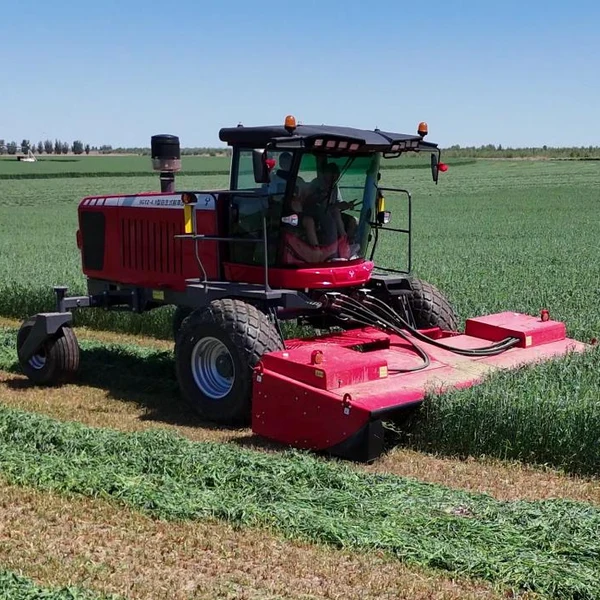
The company's product line includes round balers (model 9YG-1.0 and film-wrapping series 9YCM-850), mower rakes (9GL-2.5/2.9) and bean lifters. For Russian agronomists, adaptation of equipment to harsh climatic conditions is especially valuable: the use of computer modeling allows optimizing the strength of nodes, and our own testing laboratory tests equipment at all stages of the cycle.
The company actively exports products to Russia and Mongolia, having experience in passing customs procedures and providing the necessary documents. Jiujia's leadership in terms of sales of round balers in China (2023–2024) and the status of a national high-tech enterprise serve as an additional guarantor of reliability. Direct interaction with such a plant allows Russian buyers not only to get a competitive price, but also to order customization (for example, changing the working width of a 9LZ-6.0 rake for a specific tractor power), which is impossible when purchasing from a dealer’s warehouse.
Frequently Asked Questions
What is the minimum order quantity (MOQ) from manufacturers?
For large equipment (tractors, combines), the MOQ is usually 1 piece. For attachments and small units, factories often set a minimum batch of 3–5 pieces to cover logistics costs. However, many manufacturers meet halfway and sell single copies, especially if these are exhibition samples or standard models. Check the possibility of consolidating cargo with other buyers.
How is warranty service provided when purchasing directly?
There are two models. First: remote diagnostics. You send a photo/video of the breakdown, the plant engineer determines the cause and sends a spare part. Second: engineer visit. Usually paid by the buyer (tickets, accommodation, daily allowance). Large factories have authorized service centers in Russia. Before purchasing, request a list of such centers in your area. If they are not there, set aside a budget for creating your own spare parts warehouse.
Is it possible to get a loan or lease for equipment purchased from the factory?
Yes, but the scheme is different from the dealer's. The factory itself does not provide installment plans (unless it is a large brand). You need to contact banks or leasing companies yourself. Many Russian banks work with direct importers. It is important to have a complete package of documents: invoice, contract, EAC certificates. Leasing companies willingly finance the purchase of new equipment with a confirmed cost.
Does the exchange rate affect the price when ordering directly?
Yes, directly. Most contracts with foreign factories are denominated in US dollars or euros, or in yuan. Fluctuations in the ruble exchange rate can change the final cost by 10–15% between the time of order and payment. We recommend using hedging of currency risks or fixing the exchange rate with the bank at the time of signing the contract. Russian factories operate in rubles, which eliminates currency risk, but their prices can also be indexed depending on the cost of imported components.
Conclusion: strategy for effective fleet renewal
Purchaseagricultural and livestock equipmentdirect from the manufacturer in 2026 is a mature and sound solution for businesses seeking to control costs. This approach requires greater involvement on the part of the buyer: in-depth technical analysis, competent logistics and legal support. However, the rewards of lower capital costs and equipment tailored exactly to your needs far outweigh the effort.
Don't be afraid of difficult negotiations. Factories value serious partners who understand the specifics of their production. Start small: order one piece of equipment, test it, set up acceptance and service processes. Then scale the success across your entire fleet.
Ready to discuss technical requirements for your next project? Our experts will help you analyze plant proposals and choose the optimal equipment configuration.
Contact us todayto receive advice on selecting equipment and calculating the cost of direct deliveries.