




roll baler for used mini tractor
When you are looking for a roll baler for a used mini tractor, you immediately come across a bunch of ads where everything is “in perfect condition” and “inexpensive.” But from experience I will say: with used equipment the main thing is not the price, but the residual life of the components. Many people think that since the unit is for a mini tractor, then the requirements are lower - this is the first mistake. In fact, a mini tractor often works to the limit, and the attachment must not only be compatible, but also withstand cyclic loads. This is especially true for pick-ups with a chain or belt drive, plus bale chambers - their wear is critical.
Key components to look for when choosing a used pick-up
The first thing is the bale chamber. A roll press for a mini tractor usually has a variable chamber. It is necessary to check whether the belts or chains are “tired” or whether there is any deformation on the shafts. They often sell units where everything looks intact on the outside, but under load the belts begin to slip and the bale density drops. I myself saw how, on an old Polish machine, after half an hour of operation the roll turned out to be loose, like a down pillow. The reason is wear on the pulleys, which you won’t notice at first glance.
The second point is the picker. Needle or drum? For mini tractors there are often models with a narrow grip, about 1.2-1.5 meters. You need to inspect the pick-up fingers - if they are bent or badly worn, there will be hay loss around the edges. And be sure to check the pick-up drive mechanism from the PTO. It happens that the gears in the gearbox are chipped, and when the speed of the mini tractor increases sharply, a crunching sound is heard. This is a direct path to expensive repairs.
The third aspect that many people miss is the roll wrapping and unloading system. In used presses there are often problems with small things: soured bearings on the mesh rollers, weakened springs on the tensioners. It's easy to check: if possible, bring with you a piece of old film or some straw - ask the seller to make a 'blank' winding. You will see how the mesh fits, whether there are any distortions. I remember a time when I bought something that seemed to be in good working order.round press, and during the first unloading the roll fell apart. It turned out that the mechanism for fixing the mesh was worn out, and it simply did not hold its shape.
Compatibility with mini tractor: not only PTO power
Everyone looks at the required power from the power take-off shaft, and often stops there. But more important is the weight of the unit and weight distribution.For mini tractorWith low power (25-35 hp), a heavy used pick-up can create control problems, especially on slopes. It is necessary to take into account not only the passport weight, but also how it is distributed. If a large mass is shifted forward, the front axle of the mini tractor will be overloaded. This affects maneuverability and, critically, safety.
Another nuance is hydraulics. Some used models require not only a PTO, but also a connection to the tractor’s hydraulic system to control the bale chamber or unloading. Many older mini tractors have weak hydraulics or no free sections on the distributor. You will have to either modify it or look for a model with mechanical control. I came across this myself: I bought a pick-up, but it turned out to have a hydraulic cylinder to change the bale density. My mini tractor couldn’t pull, I had to install an additional pump - extra trouble and expense.
And of course, fastening. The rear linkage of mini tractors comes in different categories, most often I or II. Used pick-ups often come with Euro-pallet couplings or outdated hooks. You need to either look for an adapter, or rework the coupler itself. This is not always easy, especially if the pick-up frame is already a little “tired” and the metal is difficult to weld. It’s better to immediately look for a model that exactly fits your equipment, or be prepared for metalwork.
Where and how to look for a good used unit: non-obvious sources
Everyone knows the main platforms like Avito or 'From Hand to Hand'. But from my own experience I will say: sometimes it is more profitable to search not specificallyused round press, but pay attention to the farmers who are renovating the park. Often they sell equipment as a 'package', and you can agree to select the required unit. Plus, such sellers usually have a complete operating history - you know in what conditions the machine was operated.
An interesting option is to look at offers from companies that provide comprehensive equipment for farms. They sometimes take equipment in trade-in and sell it as used. For example, I once came across the siteHulunbuir Jiujia Machinery Manufacturing Company. This is not an advertisement, just an example. The company positions itself as a modern integrated enterprise for intelligent production in the field of agriculture and livestock farming. They usually have sections with leftover, demo or short-term used equipment. Such units are often in better condition than 'off the field' because they were serviced on time. Although, of course, the price may be higher.
Another tip is to look not only in your region. Sometimes it is cheaper to buy a picker in another area and pay for delivery than to buy a local one, but it has been killed. This is especially true for specific models that have proven themselves, for example, some compact presses for mini tractors. But here it is important to either go for inspection yourself, or have a very reliable intermediary. Photos and videos can hide a lot.
Condition assessment: practical checklist on site
When you come to look, don’t rush to start it. First a 'cold' inspection. Climb under the unit, look at the frame: there are no cracks, especially in the places where it is attached to the hitch. Tap the frame with a key and the sound should be clear; a dull sound indicates internal corrosion. This is a common problem with used equipment that has been stored outdoors.
Then there are the rotating parts. Manually rotate the PTO and check for play in the bearings. Rock the shaft - if you feel a noticeable gap, the bearings will soon require replacement. Inspect the gear teeth in the pick-up gearbox (if there is access through the inspection window). Worn teeth are a sign of operation with overload or without oil.
And only then ask to run it. Listen to how it works at idle and under load. Extraneous knocks and vibrations are warning signs. Pay attention to how the mesh or belts move in the pressing chamber - they should move smoothly, without distortions or jerks. Ask the salesperson to demonstrate the process of winding and resetting the roll layout. If he refuses or says that “he’s not in the mood right now,” this is a reason to be wary.
After purchase: what to do first
Let's say I bought it. Don't rush into the field right away. Even if the seller swore that he had serviced everything. The first step is a complete replacement of all oils and lubricants. In gearboxes, in bearing units. Often used equipment is filled with oil of unknown origin or it has already expired. This is cheaper than replacing failed gears later.
The second is belts and chains. Even if they look normal, evaluate their age and degree of stretching. For a belt drive, correct tension is critical. It is better to buy a new set as a spare, so as not to stand in the midst of preparation. Do you remember the story with the collapsed roll? So, after that incident, I now always change the winding units and their drive first.
Third, customize it to suit your mini tractor and your conditions. Roll density, picking speed, reel sensitivity - all this is adjustable. Take some material and make a few test rolls on a flat area. Write down which settings produce what results. This will save time and nerves in the field. And yes, don’t forget to check and, if necessary, tighten all bolted connections. Vibration is their main enemy.
Instead of a conclusion: is it worth it?
Purchaseused roll pick-up press for mini tractor- there is always a compromise between price and risks. If you are lucky enough to find a well-maintained specimen with a clear history, you can save a significant amount and get a reliable assistant for several seasons. If you take “whatever is cheaper” without delving into the details, there is a chance of getting a bunch of problems and downtime at the most crucial moment. My approach is a thorough inspection, a checklist and a willingness to invest in initial maintenance. Sometimes it is easier and more reliable to consider the option of a new unit from a trusted manufacturer, the sameHulunbuir Jiujia Machinery Manufacturing Company, where the equipment comes with a warranty and service. But this is a matter of budget and plans for the future. In any case, the decision should be balanced and not spontaneous. Good luck in your search.
Correspondingproducts
Related Products






Best Sellingproducts
Best Selling Products-
 9GL-5.0/5.6 Trailed mower rake
-
 9GD-2.5 Single-blade trailed mower (updated version)
-
 Baler for forming rectangular bales model 9YFQ-2.2D (cross type, for export to Russia)
-
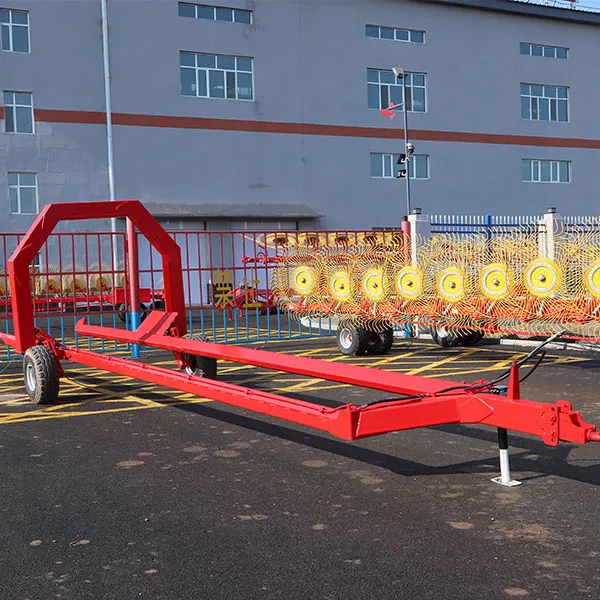 9JYY-2.5 Roll pick-up-conveyor
-
 Drum type raking machine 9LG-9.0
-
 9YG-1.25 Round Baler
-
 9GD-2.5 Single-blade trailed mower (updated version)
-
 9FZ-2.0 Finger-disc tedder
-
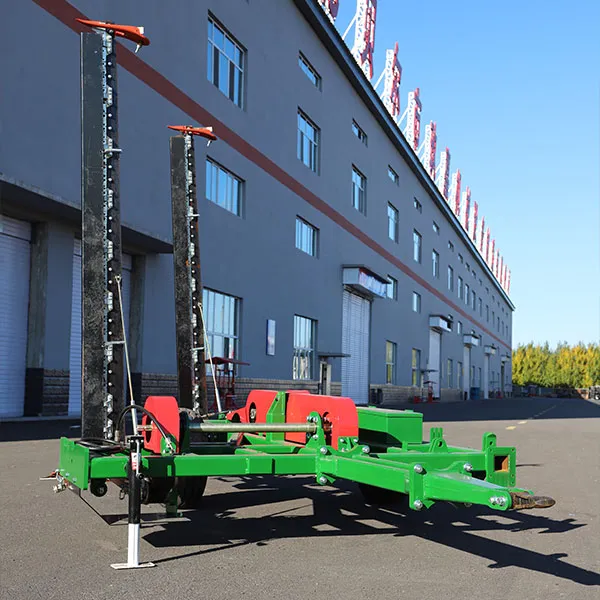 9GS-5.0 Trailed two-legged mower
-
 9LZD-9.0 Finger-disc rake
-
 Baler model 9YGD-0.5B
-
 9JYY-4.5 Roll pick-up-conveyor