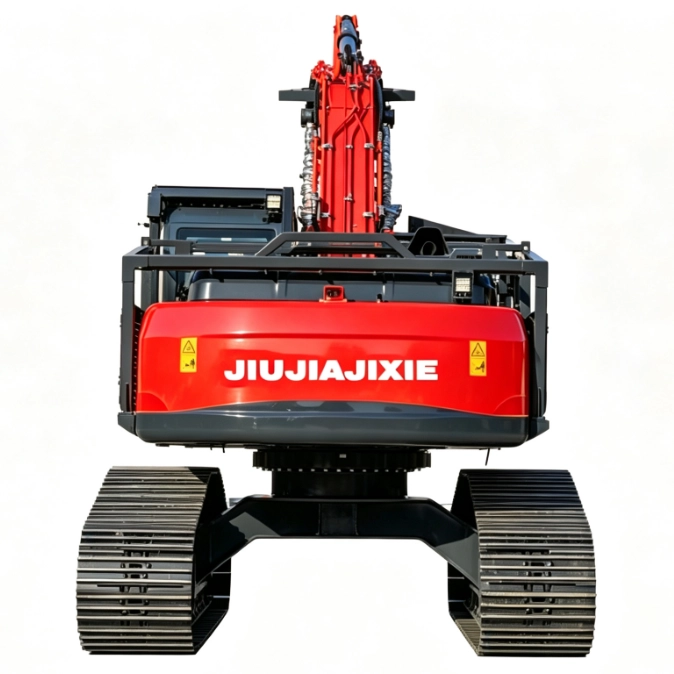
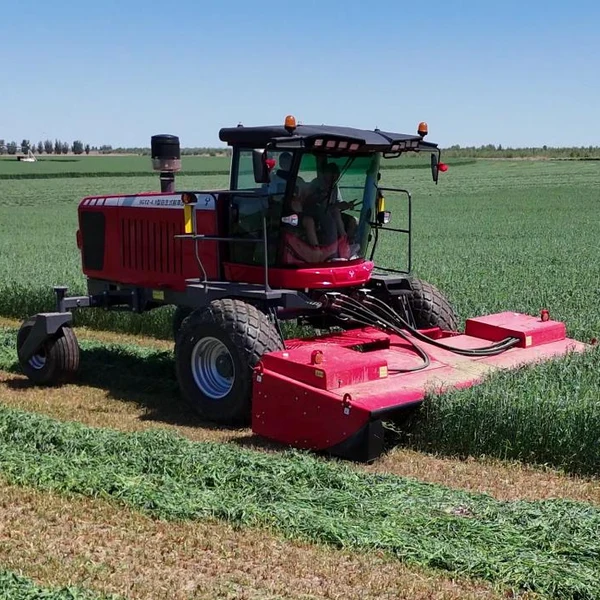
Chinese equipment for harvesting forage grasses: prices from the factory 2026
2026-08-17
Chinese equipment for harvesting forage grasses: prices from the factory 2026
Chinese technology for harvesting forage grassesin 2026 represents the optimal solution for agricultural complexes seeking to reduce capital expenditures (CAPEX) without a critical loss of productivity. The Chinese agricultural machinery market has reached a level of maturity that allows it to offer mower-choppers, balers and roll forming machines that meet EAC standards and are adapted to the harsh climatic conditions of Russia and the CIS. Direct deliveries from manufacturers eliminate the markup of dealer networks, providing savings of up to 35–40% compared to European analogues.
The main value of this equipment segment lies in the balance between the reliability of hydraulic systems, the quality of steel of cutting units and the availability of spare parts. Modern Chinese brands such as Lovol, Zoomlion and specialized factories from Henan Province and Inner Mongolia have introduced laser cutting and robotic welding technologies, which significantly increased the life of friction units. For farms with a capacity of 500 to 5,000 heads of cattle, choosing Chinese equipment becomes a strategic step that allows them to recoup their investments within one harvesting season. In this review, we will analyze in detail the technical characteristics, logistical nuances and the real cost of owning equipment in the current economic realities.
What is Chinese technology for harvesting forage grasses and its evolution by 2026
The term “Chinese technology for harvesting forage grasses” refers to a set of units designed for mowing, flattening, chopping, drying and pressing plant mass (alfalfa, clover, cereal grasses) in the field. By 2026, this segment has gone from copying outdated Soviet and European models to developing its own engineering solutions that take into account the specifics of high loads.
The key difference between modern equipment from China is modularity and unification of components. If earlier buying a Chinese baler meant the risk of being left without spare parts due to unique threaded connections or non-standard bearings, today most factories use components from global suppliers (Bosch Rexroth hydraulics or analogues, SKF/FAG bearings, knives made of German or Swedish steel). This is critically important to ensure uninterrupted operation during the short harvesting window, when equipment downtime costs equal to the loss of the entire harvest.
The technical base of 2026 is characterized by the introduction of electronic systems for monitoring the load on the engine and hydraulics. Even budget models now have pressure sensors in the bale chamber and automatic chain lubrication systems. This translatesChinese equipment for harvesting forage grassesfrom the category of “risky purchase” to the category of “rational choice” for medium and large agribusiness.
Main types of equipment in the supply line
- Disc and drum mowers:Designed for primary mowing. Disc models provide a clean cut and high speed (up to 15-18 km/h), while drum models are cheaper to maintain and cope better with lodged grass.
- Rake-tedder:Necessary for speeding up drying of windrows. Modern Chinese models have hydraulic lifting of sections, which reduces damage to the soil cover and the plant itself.
- Balers (round and square):The heart of the procurement complex. Roll machines are easier to set up and cheaper, while square ones provide better logistics when transporting over long distances.
- Shredder-loaders:For preparing silage and haylage directly into trenches or feed mixers.
Market leaders: an example of integrated production
To understand how the quality of Chinese technology has changed, it is advisable to consider the example of a modern enterprise that sets trends in the industry. A prominent representative of the new generation of manufacturers is the company"Jiujia", located in the National Industrial Park of Hulunbuir City. Founded in 2021, this company has quickly risen to the top position, becoming China's No. 1 in round baler sales in 2023-2024.
Unlike the old assembly workshops, Jiujia is an integrated intelligent manufacturing enterprise with a premises area of over 32,000 m² and a staff of 180 employees. The plant is equipped with more than a hundred high-tech machines, including CNC laser cutting machines and automated welding systems. The presence of two specialized lines (for balers and mower rakes) allows us to produce up to 4,000 units of equipment per year, undergoing strict control in our own testing laboratory.
The company's products, which include models such as the 9YG-1.0 round baler, 9GQY-3.2 mower-conditioners and 9LZ-6.0 rakes, are designed using computer-aided modeling (CAD). This ensures the adaptation of equipment to difficult climatic conditions, which is especially important for export to Russia and Mongolia. ISO 9001 certification and the status of a national high-tech enterprise confirm that modern Chinese factories operate according to international quality standards, offering global partners not just cheap, but technologically sophisticated equipment.
Where is Chinese technology used for harvesting forage grasses: industry specifics
The use of equipment varies depending on the size of the farm and the type of crops grown. Market analysis for 2026 shows clear segmentation:
- Small farms (up to 200 hectares of arable land):Compact round balers with a minimum tractor power of 80 hp dominate here. Chinese technology benefits here due to its low entry price. Farmers often choose power-driven models because they are easier to repair with an in-house mechanic.
- Medium agricultural holdings (200–1000 ha):They use complexes of disc mowers (working width 2.7–3.2 m) and semi-variable balers. An important factor is the presence of an air conditioner (conditioner) on the mower, which speeds up the drying of the grass by 30-40%. Chinese manufacturers have begun to massively install grooved rollers made of hardened steel, which was previously the prerogative of expensive European brands.
- Large dairy complexes (over 1000 hectares):They purchase high-performance square balers and self-propelled forage harvesters. In this segmentChinese technology for harvesting forage grassescompetes not on price, but on the availability of service and the speed of delivery of consumables. Large players require a spare parts warehouse in the Russian Federation or Kazakhstan, which is becoming the standard for serious Chinese exporters.
Engineering experience shows that Chinese equipment works most effectively in regions with a temperate climate. In conditions of extreme dust (for example, the Astrakhan region), enhanced filtration of hydraulic oil and more frequent replacement of tractor air filters are required, since Chinese boots are sometimes inferior in wear resistance to their premium counterparts.
Technical characteristics and selection parameters in 2026
When assessing a potential purchase, you need to look not at advertising brochures, but at the physical parameters of the units. Below are the critical characteristics that determine the longevity of the machine.
Cutting apparatus and materials
The quality of the cut determines the preservation of the grass' nutrients. Modern Chinese factories use 65Mn steel or imported Hardox steel. The thickness of the disc should be at least 4-5 mm. It is important to check the protection system: the presence of safety couplings or shear bolts is mandatory. The 2026 models feature tool-free quick-change blades that reduce field maintenance time from 2 hours to 15 minutes.
Hydraulic system
This is the “weak link” of cheap technology. High qualityChinese technology for harvesting forage grassesequipped with hydraulic valves with proportional control. The pressure in the system should be stable in the range of 16–20 MPa. Pay attention to the quality of the hoses: they must be marked R13 or higher, resistant to abrasion from stubble. The presence of individual filters on the oil return for each hydraulic cylinder of the baler is a sign of a high-quality assembly.
Baling chamber and density
For round balers, the key parameter is maximum bale density. A good indicator for alfalfa is 180–220 kg/m³. Chinese cars in 2026 are equipped with CVTs with electronic control of belt or chain tension. This allows you to automatically maintain a given density regardless of the moisture content of the grass. Mechanical systems (springs) are considered obsolete for intensive use, as they require constant manual adjustment.
| Parameter | Budget segment (China) | Premium segment (China/Europe) | Impact on work |
|---|---|---|---|
| Knife material | Steel 65Mn (China) | Hardox / Borox (Sweden/Germany) | Sharpening life: 40 ha vs 100+ ha |
| Hydraulics | Chinese brands (Hanli, Yonggong) | Bosch, Danfoss, Parker | Risk of overheating and leaks during continuous operation |
| Bearings | HC/UCP series | SKF/FAG/Timken | Replacement frequency per season: 2-3 times vs 0 times |
| Lubrication system | Manual / Drip | Automatic oil | Risk of chain downtime due to human factor |
| Electronics | Basic sensors | ISOBUS compatibility, monitors | Operator control of the process |
How to choose Chinese equipment for harvesting forage grasses: a step-by-step algorithm
Selecting a supplier and model is a risk management process. An error at the procurement stage leads to losses during the harvesting campaign, when the cost of downtime amounts to thousands of dollars per day. Follow this algorithm:
Step 1: Energy supply audit
Check the rated power of your tractor. Chinese manufacturers often specify a “minimum required” power, which is only sufficient for ideal conditions. For real work with wet grass, add a margin of 15-20%. For example, if your baler requires 80 HP, your tractor should produce a minimum of 95-100 HP. on the PTO (power take-off shaft).
Step 2: Check attachment compatibility
Make sure the hitch category (Cat. II, Cat. III) matches your tractor. Chinese equipment often comes with universal adapters, but their quality may vary. It is better to order original traction eyes for a specific tractor model immediately upon purchase.
Step 3: Service Support Analysis
Ask the supplier three questions:
1. Is there a spare parts warehouse in your country?
2. What is the delivery time for critical components (chains, belts, knives)?
3. Are video instructions for adjustment provided in Russian?
If the answers are evasive, consider another supplier. AvailabilityChinese technology for harvesting forage grassesWithout a guaranteed supply chain of spare parts, it’s a ticking time bomb.
Step 4: Metal Capacity Test
Ask for the weight of the machine. Compare it with analogues. There are no miracles: if a Chinese baler weighs 300 kg less than its European counterpart, it means that the manufacturer has saved on the wall thickness of the frame pipes or the size of the gearbox gears. In feed production, weight = reliability.
Price Range and Cost Factors in 2026
Pricing in the Chinese agricultural machinery market has stabilized in 2026 after fluctuations in previous years. The cost is formed not only from the cost of production, but also from logistics, customs duties and exchange rates.
Estimated prices FOB (Free On Board) China
- Disc mower (2.7 m reach):$3,500 – $5,200. The difference depends on the presence of air conditioning and the brand of hydraulic motors.
- Rake-tedder (6-rotary):$2,800 – $4,000.
- Round baler (fixed chamber, 1.2×1.2 m):$6,500 – $9,500. Models with a mesh wrap are $1,000 more expensive.
- Square baler (small format):$12,000 – $18,000.
- Complex “Mower + Tedder + Baler”:$15,000 – $22,000 per package offer.
It is important to understand that the price “from the factory” is not final. Need to add:
– Logistics to the border of the Russian Federation/Kazakhstan: $1,500 – $3,000 per unit (depending on the volume of the lot).
– Customs duty and VAT: varies, but is usually 15-20% of the invoice value.
– EAC certification: about $500–$1,000 per model (if you have a ready-made certificate from the dealer, it’s free).
What affects the cost?
The main price driver is components. A machine assembled entirely from Chinese components will be 25% cheaper than an analogue with European hydraulics and bearings. However, savings on hydraulics are often illusory: repairing one hydraulic cylinder in the field can cost more than the difference in price.
The second factor is order volume. Container shipping (40 feet HC can accommodate 2-3 large vehicles or 5-6 small ones) reduces the unit cost of logistics significantly. Purchasing one unit through intermediaries will always be unreasonably expensive.
Logistics and export: features of supplies in 2026
The logistics chain has become more complex, but more predictable. Main supply routesChinese technology for harvesting forage grassespass through railway crossings (Zabaikalsk, Manchuria) or by road through Kazakhstan.
Railway delivery:The most reliable option for heavy machines. Delivery time to Central Russia is 25–35 days. Requires proper packaging (anti-corrosion treatment, removal of protruding parts). The risk of cargo damage is minimal.
Motor transport:Faster (15–20 days), but more expensive. Suitable for urgent deliveries of spare parts or small machines. In winter, the risk of delays at the border increases.
Customs clearance:Make sure that the HS code is defined correctly. For agricultural machinery, preferential VAT rates or duty exemptions are often provided if certain documents are available (for example, confirmation of use in the agricultural sector). Working with a professional customs broker is mandatory.
Typical mistakes when choosing and using
Based on an analysis of equipment failures in the first two quarters of 2026, the following system errors by customers can be identified:
- Ignoring run-in:Chinese gearboxes and chains require careful running-in. Operating at full power in the first 10 hours leads to microcracks in the metal and rapid stretching of the chains. It is necessary to work at 70% load for the first 20 hectares.
- Incorrect tension adjustment:In balers, excessive belt tension leads to deformation of the bale (pear-shaped) and overloading of the bearings. Insufficient - leads to slippage and uneven density.
- Savings on lubrication:Using cheap lithium greases instead of special adhesives for open circuits. Dust adheres to the greasy lubricant, forming an abrasive paste that “eats” the chain star in one season.
- Lack of humidity control:Pressing grass with a moisture content above 18% without a preservative leads to spontaneous combustion of the bales. Chinese moisture sensors often require calibration for a specific type of grass.
Engineering opinion: limitations and prospects
As a specialist with many years of experience, I must note:Chinese technology for harvesting forage grassesis not a panacea. It has clear limitations. Electronic control units (ECUs) are still inferior to European ones in terms of immunity to interference and moisture protection. In severe thunderstorm conditions or when working near powerful power lines, sensor failures may occur.
There is also the problem of unifying fasteners. Despite progress, some bolted connections remain with inch threads, and some with metric threads. This creates confusion in the service. I recommend immediately upon receiving the machine to make a complete list of fastener specifications and purchase a repair kit.
However, for standard harvesting tasks (hay, haylage), the service life of modern Chinese machines (3–5 years with intensive use) is comparable to budget lines of European brands, while the cost of ownership is significantly lower.
FAQ: Frequently asked questions
Q: How reliable are Chinese hydraulics on balers?
A: The hydraulics of leading Chinese factories (for example, Hengli) have reached the world level. Provided that filters are regularly replaced and high-quality oil is used, the service life is 2000+ operating hours. Problems arise more often due to contamination of the system when connected to a dirty tractor than due to the quality of the cylinders themselves.
Q: Can I buy spare parts locally or do I have to wait from China?
A: Consumables (knives, needles, threads, belts) must be in stock at the dealer or in your warehouse. It is better to have critical components (gearboxes, cardans) in reserve. Small fasteners and bearings can often be selected from analogues (SKF, INA), since the Chinese use standard sizes.
Q: Is it suitableChinese technology for harvesting forage grassesfor working on slopes?
A: Yes, but with restrictions. Most Chinese mowers have an adaptation angle of up to 15–20 degrees. For steep slopes, special models with pendulum suspension are required, which are more expensive. Always check the rated tilt angle before purchasing.
Q: What kind of oil should I pour into the gearboxes of Chinese mowers?
A: Use 80W-90 or 75W-90 GL-5 gear oil recommended by the manufacturer. Do not mix synthetics and mineral water. The first oil change is after 50 hours of operation (break-in), then every season or every 500 hours.
Buying recommendations and final verdict
PurchaseChinese technology for harvesting forage grassesin 2026 is an informed investment decision. The market offers products that cover 90% of the needs of medium-sized agribusinesses. The key to success is not in finding the cheapest car, but in choosing a supplier with a transparent history, a spare parts warehouse and technical support.
We recommend the following strategy:
1. Start small: buy one mower or rake to evaluate the quality of the metal and workmanship.
2. Request an extended warranty on hydraulics and gearboxes (minimum 1 year or 1000 ha).
3. Create a stock of critical spare parts for 15% of the cost of the machine immediately upon ordering.
4. Teach mechanisms about the adjustment features of Chinese units (they often have different tolerances than European ones).
If you are ready for competent operation and timely maintenance, Chinese equipment will allow you to significantly reduce the cost of a feed unit and increase the profitability of the livestock complex.
Are you ready to optimize your feed procurement costs?
Receive an individual calculation of the cost of a set of equipment for your tasks and arable area. Our engineers will help you choose a configuration based on the power of your tractors.
→Request a commercial offer and catalog 2026
→Contact a technical expert