Buy a baler in the Tambov region 2026: prices from the factory
2026-08-07
- Why Tambov agricultural holdings choose direct supplies of balers in 2026
- Classification of balers: which type to choose for your farm
- Technical parameters that determine price and reliability
- Comparison of manufacturers: China, Russia or Used Europe?
- How to buy a baler in the Tambov region and avoid hidden costs
- Financial instruments and government support in 2026
- Frequently Asked Questions
- Conclusion: Make the right choice today
Why Tambov agricultural holdings choose direct supplies of balers in 2026
The agricultural machinery market in the Tambov region is undergoing a structural transformation. If five years ago farmers focused exclusively on brands from Europe, then in 2026 priorities have shifted towards reliability, availability of spare parts and the ratio of price to service life. Key request of the season -buy a baler in the Tambov regionat a price that pays for itself in one or two harvests, not five years.
We have been working with farmers of the Central Black Earth Region for more than ten years. Our practice shows that the main mistake when purchasing is choosing a machine based only on the power of the tractor, ignoring the type of bale being formed and the moisture content of the crop being harvested. In this article, we will analyze the technical nuances that affect the durability of the equipment, compare cylindrical and rectangular models, and also explain why direct purchase from the manufacturer in the current economic conditions is more profitable than purchasing through dealer networks with a markup of up to 40%.
The Tambov region has specific soil and climatic conditions. The high density of chernozem requires the equipment to have an increased safety margin for the gripping units and the pressing mechanism. We have seen cases where imported analogues, designed for light soils in Western Europe, failed already in the second week of intensive alfalfa harvesting due to overheating of the bearing units. The Russian and adapted Asian models offered by us are designed taking into account these realities: reinforced frames, increased shaft diameters and an automatic lubrication system that operates in highly dusty conditions.
In 2026, logistics and customs clearance costs have stabilized, but delivery times remain a critical factor. Purchasing from a warehouse in the Russian Federation or direct shipment from the factory allows you to start the season on time. Waiting for parts from abroad during the mowing period can cost the farm millions of rubles in losses due to the loss of nutritional value of feed. Therefore, the availability of service and a spare parts warehouse program in the region becomes a decisive argument when choosing a supplier.
Classification of balers: which type to choose for your farm
Before placing an order, you must clearly define the task. Balers are divided into two main classes according to the shape of the bale being formed: cylindrical (roll) and rectangular (bale). Each type has its own advantages and limitations, which directly affect the economics of your enterprise.
Cylindrical Balers (Round Balers)
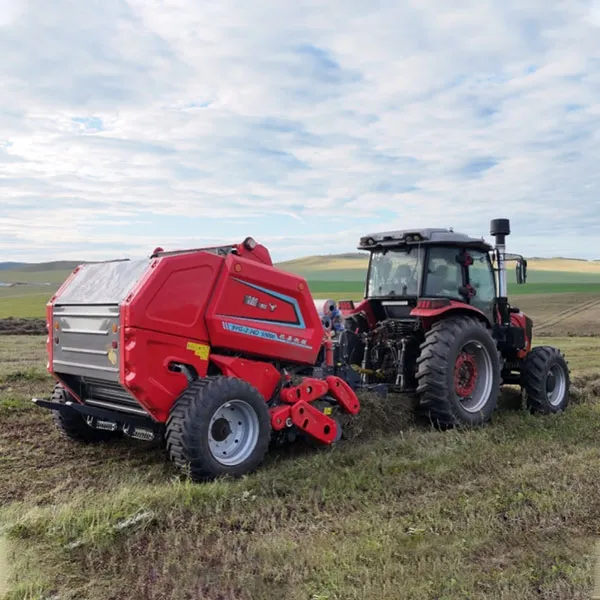
This is the most popular type of equipment in small and medium-sized farms in the Tambov region. They form round bales that are easy to transport and convenient for storage under sheds. Main advantages:
- Simplicity of design.Fewer moving parts mean less risk of breakdown and lower maintenance costs. In our practice, repairs to a cylindrical press can often be carried out by a farm mechanic on his own in the field.
- Versatility.Suitable for harvesting hay, straw, silage crops and even corn (if equipped with a chopper).
- Pressing quality.Modern models with variable pressure allow the formation of high-density rolls, which is critical for long-term storage and preventing self-heating of the mass.
However, there are also disadvantages. Transporting round bales requires special trailers or handlers, and their stacking is less compact than rectangular bales. If you plan to sell feed for export or transport it over long distances, logistics costs can eat up the savings on the cost of the machine itself.
Rectangular balers (bales)
These machines are designed for large agricultural holdings with large volumes of feed procurement. They form parallelepiped-shaped bales that can be tightly packed into trucks or railway cars.
- High performance.Rectangular presses are capable of operating at high speeds, processing up to 15-20 hectares per shift.
- Logistics efficiency.Dense stacking of bales reduces transportation costs by 30-40% compared to rolls.
- Automation.Top models are equipped with automatic knot tying and moisture control systems, which minimizes operator participation.
The main barrier to entry is the high price and complexity of maintenance. The drives of such machines operate under extreme loads, requiring qualified service and original spare parts. For a small farm with up to 100 heads of cattle, such equipment often turns out to be redundant and economically ineffective.
Recommendation:If your goal is to meet your own feed needs and sell to neighboring farms, choose a cylindrical press. If you work for a large sales market and have your own fleet of trucks, consider rectangular models.
Technical parameters that determine price and reliability
When you're looking for an opportunitybuy a baler in the Tambov region, managers will ask you about the characteristics of the tractor. This is not a formality. A discrepancy between the tractor power and the resistance of the press leads to PTO (power take-off shaft) failure or slipping, which reduces the quality of pressing.
Tractor power and equipment class
For light cylindrical presses (working width 1.2–1.5 m), a tractor with a power of 80–100 hp is sufficient. (for example, MTZ-82 or similar Chinese models). Heavy roll presses with a constant pressure chamber and a working width of 2.1 m require a tractor of 120–140 hp. Small-format rectangular presses require a thrust class of 3.0–4.0 (from 150 hp), and large ones from 200 hp. and higher.
It is important to consider not only engine power, but also the hydraulic system of the tractor. Modern presses require hydraulic connections to control the chamber, knitting unit and pick-up lift. Check the availability of free hydraulic outlets and their capacity (l/min) before purchasing.
Knitting system: twine or mesh?
The choice of material for tying affects the cost of feed preparation. Twine is cheaper, but the knitting process is mechanically more complicated. The mesh is more expensive, but provides better ventilation of the roll and is faster to install. Most modern models support both options or allow a quick change of knitting knot.
We recommend using a net for wet crops (silage, early hay), as it holds its shape better and prevents the bale from falling apart during transportation. For dry straw, cheap polypropylene twine is sufficient. Check with the manufacturer whether the selected press is compatible with both types of materials without complex reconfiguration.
Pick-up mechanism and cutting height
The width of the pick-up device should match the width of the mower you used to cut the grass. If the width of the press is smaller than the width of the roll, the operator will have to make additional passes, which increases fuel consumption and operating time. The standard for most farms is 1.8–2.1 meters.
The cutting height is adjusted by support wheels or skids. It is important that the mechanism is protected from winding the stems around the wheel axles. In 2025-2026 models, manufacturers are installing special scrapers and seals that significantly reduce the frequency of cleaning stops. Pay attention to the presence of a chopper knife. It is necessary if you are making silage or want to reduce the bale volume. For hay, the knife is usually turned off to maintain stem length.
Comparison of manufacturers: China, Russia or Used Europe?
In 2026, the market offers three main ways to purchase equipment. Let's compare them objectively, without marketing slogans.
| Criterion | New Chinese presses | Russian analogues | Used equipment from Europe |
|---|---|---|---|
| Price | Low / Medium | Average | High (depends on condition) |
| Warranty | 1-2 years (depending on the dealer) | 1-2 years + available service | Missing or limited |
| Spare parts | Available, but subject to delays | Available in the Russian Federation, unified | Shortage, high prices, long delivery |
| Manufacturability | Quickly catching up with the leaders, a lot of electronics | Simple, reliable, repairable | High ergonomics, proven solutions |
| Risk of breakage | Medium (depends on the build quality of the batch) | Low (simple design) | High (wear of hidden components) |
| Payback | 1-2 seasons | 2-3 seasons | Unpredictable |
Chinese manufacturers:Over the past five years, the quality of Chinese agricultural machinery has increased exponentially. Factories operating for export implement European quality control standards. The main advantages are modern equipment and low price. Disadvantages: unstable metal quality in some components and the need for careful input diagnostics. We recommend paying attention to brands that have assembly sites in the Russian Federation or large spare parts warehouses in Moscow and Rostov.
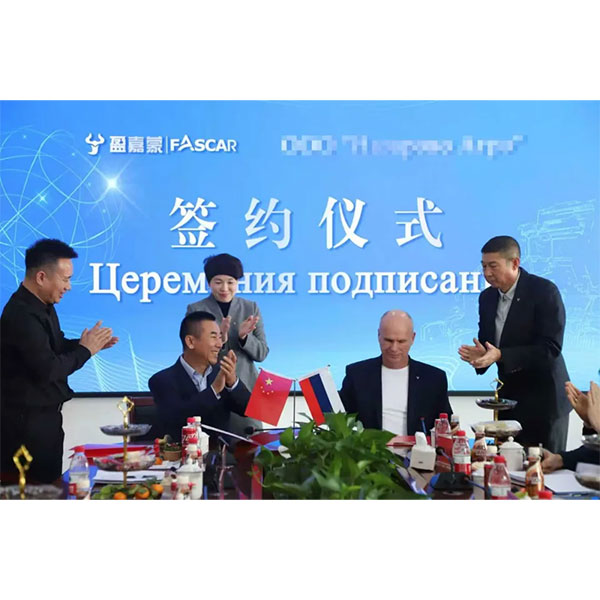
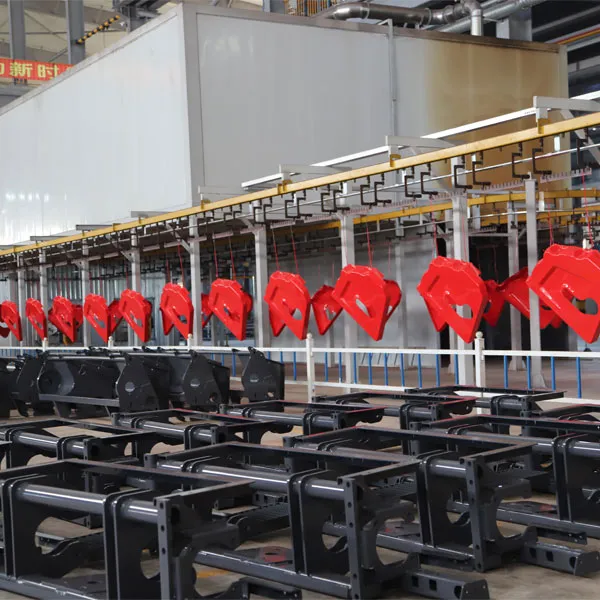
A striking example of this approach isJiujia companyfrom Hulunbuir. Founded in 2021 as a modern integrated enterprise, it has quickly risen to the top position, becoming China's No.1 in round baler sales in 2023-2024. The Jiujia production base, covering an area of more than 32,000 m², is equipped with CNC laser machines and automated welding systems, which ensures stable assembly quality. The company annually produces up to 2,000 units of balers on specialized lines and has almost a hundred technological patents. ISO 9001 certification and the status of a national high-tech enterprise confirm that Jiujia products (including the popular 9YG and 9YCM series models) meet strict international standards, while remaining affordable for Russian farmers.
Russian factories:Domestic cars benefit from simplicity. There are no complex electronics that can fail due to power surges or moisture. Repairs can be carried out “on the knee” in the field. However, the level of operator comfort and accuracy of bale formation are often inferior to foreign analogues. This is a rugged work tool, not a high-tech harvester.
Used Europe (Krone, Kuhn, Claas):Buying used equipment from Germany or France in 2026 involves high risks. Firstly, it is difficult to find a car with real mileage. Secondly, sanctions and logistical gaps have made the delivery of original spare parts expensive and time-consuming. If you do not have your own warehouse of rare parts and a staff of engineers capable of producing parts on CNC machines, we do not recommend this option for the main fleet of equipment.
How to buy a baler in the Tambov region and avoid hidden costs
The process of purchasing equipment seems simple, but the devil is in the details. Here is a step-by-step algorithm that will help you save your budget and nerves.
- Audit of the current fleet.Before calling the supplier, measure the power of your tractor at the PTO (not the engine, but the shaft!). Check for hydraulic outlets. If the tractor is old, a hydraulic distributor may need to be installed. This will save you a day of negotiations.
- Request for commercial proposal (CP).Don't just ask for “price.” Request a breakdown of the price: the cost of the base, the cost of options (knife, net, additional set of twine), delivery conditions to Tambov or your area. Check if VAT is included.
- Checking for certificates.The equipment must have a certificate of conformity with TR CU (EAC). Without this document, you will not be able to register equipment with Gostekhnadzor and receive subsidies. Request scans of valid certificates.
- Conditions of warranty and post-warranty service.Read the fine print. The warranty often does not cover “consumables” (belts, chains, knitting machine needles). Check to see if the supplier has a service team that travels to the Tambov region during the season, or if you will have to take the equipment to the service center yourself.
- Test drive or video inspection.If you buy new equipment from a factory, ask for a video of the test operation of a specific instance. If possible, come to the demonstration. Pay attention to the smooth running of the pick-up and the absence of extraneous noise in the gearbox.
Attention:One of the common mistakes is saving on pre-sale preparation. Request that the machine be fully assembled, adjusted and lubricated before shipment. Equipment is often shipped partially disassembled, and if you don't have the time or tools to assemble it, you'll lose a week of the season.
Financial instruments and government support in 2026
Buying agricultural machinery is an investment. In 2026, several mechanisms are in place to reduce the financial burden. We recommend actively using them when planning your budget.
Leasing.This is the most popular tool for fleet renewal. Leasing companies offer programs with advance payments from 0% to 30%. The advantage of leasing over a loan is the possibility of accelerated depreciation, which reduces income tax. In addition, leasing payments are included in the cost of production. Many suppliers work directly with large leasing companies (for example, Rosagroleasing, Europlan, SberLeasing), which simplifies the transaction.
Subsidies from the Ministry of Agriculture.The state continues to support the modernization of the technical park. There are programs to compensate part of the costs of purchasing domestic equipment (up to 20-30% of the cost). The conditions of the programs change annually, so it is necessary to monitor the website of the Ministry of Agriculture of the Russian Federation and regional portals of the Tambov region. Important: in order to receive a subsidy, the equipment must be produced in the Russian Federation or included in a special list of localized products. When purchasing Chinese brands, check whether they are assembled in the EAEU.
Seasonal discounts.Orders made in winter or early spring (before March) are often 5-10% cheaper than purchases during the high season (June-July). Factories strive to load production in the off-season and offer better payment terms. If you plan your purchase in advance, this is a real way to save hundreds of thousands of rubles.
Frequently Asked Questions
Which baler is best for the MTZ-82 tractor?
Lightweight cylindrical balers with a working width of up to 1.5 meters are optimally suited for the MTZ-82 tractor (power about 80 hp). Models with a constant pressure chamber will work more stably. Avoid heavy models with a working width of more than 1.8 m, as the tractor will experience overload, especially on inclines and when baling wet material. It is recommended to use presses weighing up to 1.5–1.8 tons.
How much does it cost to service a baler per season?
The maintenance budget depends on the intensity of work. On average, for one season (harvesting 500-1000 hectares), you need to budget for the cost of replacing drive belts (set), twine or net, as well as lubricants. The cost of consumables is about 30-50 thousand rubles. Major repairs of components (bearings, gearboxes) with proper operation are required no more than once every 3-4 years. Always have a spare set of straps and twine in the field.
Is it possible to bale wet hay?
Yes, but with caution. Humidity above 20% increases the risk of self-heating and mold inside the roll. For wet crops, be sure to use netting instead of twine as it allows for better air flow. It is also recommended to use preservatives for hay. Some modern presses are equipped with humidity sensors that automatically adjust the compaction density. If there is no sensor, rely on experience: the wet mass should be pressed with a lower density.
What documents are needed to register a baler?
The baler is a trailed agricultural implement. To register it with Gostekhnadzor you will need: a passport of a self-propelled vehicle (PSM) or a bill of lading indicating the serial number, a certificate of conformity (EAC), a sales contract and an acceptance certificate. If the equipment is new, an additional certificate-invoice is provided. The registration procedure is required to legally move equipment on public roads and receive subsidies.
Why is it worth buying directly from the factory and not from resellers?
Purchasing from the manufacturer or its official distributor guarantees a fixed price without intermediary markups. You receive full technical support, access to original spare parts and an official warranty. Resellers often do not bear responsibility for the quality of equipment after sale and do not have their own service base. In the event of a breakdown during the season, you will be left alone with the problem. A direct contract also makes it easier to obtain leasing and subsidies.
Conclusion: Make the right choice today
Choosing a baler in 2026 is a balance between technology, reliability and economics. For farms in the Tambov region, we see a clear trend: a transition from expensive European brands to high-quality Asian and Russian solutions that offer better service and availability of spare parts. Don't go for the cheapest option. Cheap equipment often breaks down at the most inopportune moment, and downtime during the season costs more than the difference in price between a budget and an average model.
Assess your needs honestly: what kind of tractor do you have, what crops do you harvest, what is the volume. Use leasing instruments and government subsidies to optimize cash flow. And most importantly, choose a supplier who is nearby and interested in your long-term success, and not just in a one-time sale.
If you are ready to discuss technical details, select a model for your tractor and calculate the exact cost with delivery to the Tambov region, our experts are ready to help. We represent products from leading manufacturers such as Jiujia, whose balers have already proven their effectiveness in difficult climatic conditions. We know the specifics of the region and offer solutions that work.
Contact us todayto receive an individual commercial offer and advice on the choice of equipment. Don’t put off preparing for the season - the best models are sorted in advance.