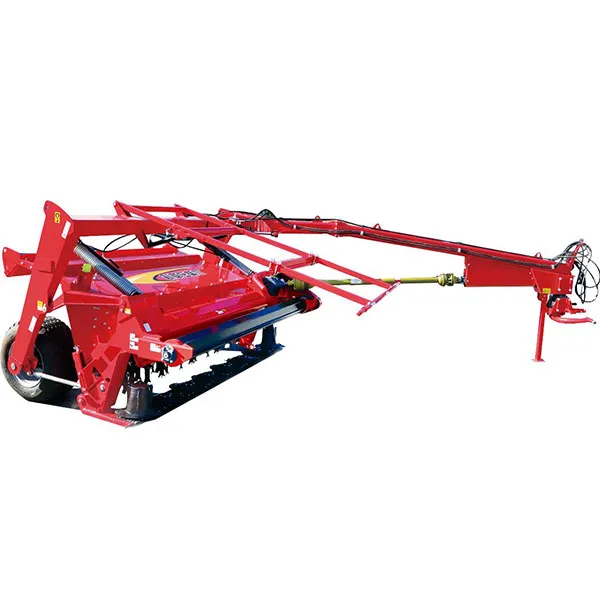
Mobile agricultural machinery 2026: prices from the factory – Suppliers
2026-08-07
- Mobile agricultural equipment market 2026: why factory direct deliveries are changing the economics of agribusiness
- Key categories of mobile agricultural machinery and their technical specifications
- Pricing analysis: what determines the manufacturer’s price
- How to choose a reliable supplier: evaluation criteria and verification
- Logistics and customs clearance: a step-by-step guide
- Warranty and post-warranty service: minimizing downtime
- Comparison: Factory Direct Purchase vs Dealer Purchase
- Trends for 2026: autonomy and environmental friendliness
- Frequently Asked Questions
- Conclusion: Your Next Step to Effective Fleet Renewal
Mobile agricultural equipment market 2026: why factory direct deliveries are changing the economics of agribusiness
In 2026 cost of ownershipmobile agricultural machineryhas become a key factor in profitability for medium and large-scale farms. We are seeing a paradigm shift: buyers are no longer willing to overpay dealers for a brand if they can get similar technical specifications directly from the manufacturer with a factory warranty. Direct deliveries can reduce capital costs (CAPEX) by 25–35%, which is critically important in conditions of volatility in prices for grains and oilseeds.
Our experience in supplying equipment to the regions of the CIS, Eastern Europe and Central Asia shows that the main mistake of buyers is focusing only on the price “on the shelf”. Real savings are formed due to the service life of components, availability of spare parts and compliance of equipment with specific soil and climatic conditions. In this article, we'll look at how to choose a reliable supplier, what technical parameters really affect performance in the field, and why EAC and GOST certification remains a requirement even when purchasing through online platforms.
If you're planning a fleet upgrade this season, understanding the factory pricing structure will give you leverage in negotiations. Below we analyze in detail the specifications, logistics and risks that agronomists and chief engineers face when importing equipment.
Key categories of mobile agricultural machinery and their technical specifications
The term “mobile farm equipment” covers a wide range of equipment, but in the context of procurement in 2026, three categories are of greatest interest: seeding systems, forage harvesting equipment and precision agriculture systems. Each of them requires an individual approach to assessing technical parameters.
Seeding complexes and direct seeding drills
For no-till, coulter pressure is a critical parameter. In our practice, we have encountered cases where farmers purchased lightweight seeders that were unable to push through the compacted layer of soil after harvesting the previous crop. The result was uneven germination and a loss of up to 15% of yield.
Modern 2026 factory models are equipped with a hydraulic pressure control system with an adjustment range from 50 to 250 kg per coulter. It is important to pay attention to the material of the discs: Hardox steel or its analogues provide a service life 2-3 times longer than conventional structural steel. When ordering, specify the thickness of the metal - the optimal value is 8–10 mm for working bodies operating in abrasive soils.
Another important aspect is the working width. For tractors with a power of 200–250 hp. Seeders with a width of 4–6 meters are optimal. Wider grips require higher horsepower track tractors, which increases fuel consumption. Manufacturers are now offering modular designs that allow you to change the working width by adding sections, giving you the flexibility to work in different field geometries.
Forage equipment: balers and choppers
In livestock farming, the quality of feed directly depends on the speed and tightness of baling. The main parameters here are the compaction density and the type of binding. For cattle (cattle), a density of at least 180 kg/m³ is required to ensure proper fermentation of silage. Cheap analogues often cannot achieve this indicator, leaving air pockets that lead to feed spoilage.
We recommend paying attention to the chopper blade system. The number of knives (usually 15–25 pcs.) and the ability to quickly replace without special tools save up to 2 hours of mechanic time on a peak day. Also check that there is an automatic lubrication system for chains and bearings. The absence of such a system is a common cause of breakdowns during the season when downtime is more expensive than the repair itself.
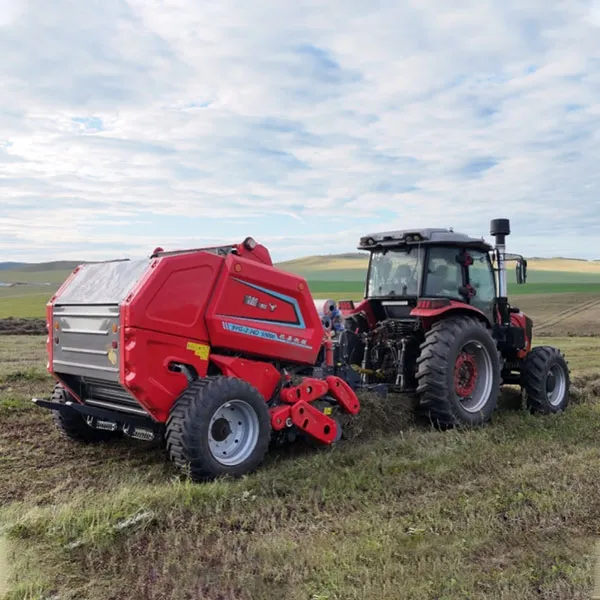
Example of successful implementation:A striking example of an enterprise that successfully combines high production technologies with adaptation to difficult climatic conditions is the Hulunbuir Jiujia Machinery Manufacturing Company. Located in the National Modern Agricultural Machinery Industrial Park, this company has been specializing in the intelligent production of forage equipment since 2021. Through the use of computer-aided modeling (CAD) and an in-house testing laboratory, their round balers (such as the 9YG-1.0 model and the 9YCM-850 film-wrap series) demonstrate high reliability and bale density, which is critical to maintaining silage quality. The company's leadership in the Chinese market in terms of baler sales in 2023–2024 confirms the effectiveness of their engineering solutions, which are now available for export to Russia and Mongolia.
Sprayers and fertilization systems
2026 mobile sprayers integrate with GPS systems and graded application maps. The key parameter is the uniformity of liquid distribution. The coefficient of variation should be no more than 7%. If the manufacturer doesn't provide test reports for the atomizers, that's a red flag.
The volume of the tank is selected based on the pump performance and the width of the rod. The optimal ratio allows you to complete the processing of one hectare in one refueling cycle, minimizing idle runs. The tank material must be resistant to aggressive chemicals; UV-stabilized low-density polyethylene (HDPE) is the industry standard.
Action:Before requesting a quote, create a table of required features for each piece of equipment based on the capacity of your tractor fleet and crop types.
Pricing analysis: what determines the manufacturer’s price
Price formobile agricultural machineryat the manufacturing plant is formed not only from the cost of materials. Understanding the cost structure helps weed out dumping companies that skimp on the quality of hidden components.
Basic price includes:
- Metal content:Steel and aluminum prices fluctuate. Mills with their own smelting partnerships or long-term contracts can offer more stable prices.
- Accessories:The use of branded hydraulic systems (Bosch Rexroth, Parker) and bearings (SKF, FAG) increases the price by 15–20%, but reduces the risk of breakdown by 5 times. Chinese or local analogues are cheaper, but require more frequent replacement.
- R&D and testing:Serious factories invest in field testing. Equipment that has not undergone a full cycle of testing in various soil conditions may fail in the first season.
- Certification:Obtaining EAC (Eurasian Conformity), CE (Europe) or ISO certifications requires costs for laboratory tests and production audits. The presence of these signs ensures that the equipment is safe and complies with regulations.
In 2026, there is a tendency for logistics to become more expensive, so many factories offer FCA (Free Carrier) or FOB (Free On Board) conditions. This means that the buyer bears the transportation costs from the factory to the port or border. However, some large manufacturers offer DAP (Delivered at Place) conditions, delivering equipment to the client’s farm, which may be more profitable for wholesale purchases.
We were faced with a situation where the client chose an offer with a price 20% below the market. Upon closer inspection, it turned out that the package did not include high-pressure hydraulic hoses and a lighting system, and the warranty only covered the frame. The final cost with additional equipment turned out to be higher than that of competitors with transparent pricing.
Action:Request a detailed cost breakdown and clarify what exactly is included in the basic package and what is an option.
How to choose a reliable supplier: evaluation criteria and verification
Selecting a supplier is all about risk management. There are hundreds of companies on the Internet offeringmobile agricultural machinery, but not all are real producers. Many act as intermediaries, which increases the price and complicates warranty service.
Production Capacity Check
Request a live video tour of the shop floor or recorded content from the past week. Please note:
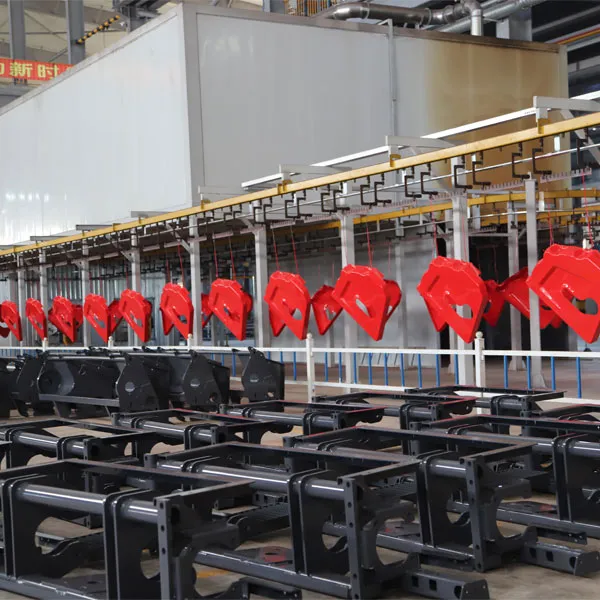
- Availability of laser cutting and robotic welding. This ensures the accuracy of the geometry of the parts and the strength of the seams.
- Spare parts warehouse. If the warehouse is empty or organized chaotically, problems will arise with post-warranty service.
- Quality Control (QC) Department. The presence of stands for testing hydraulics and electronics before shipment is mandatory.
For example, Jiujia's production base, covering an area of more than 32,000 m², is equipped with more than a hundred high-tech machines, including CNC laser cutting machines and automated welding systems. The presence of two specialized lines with an annual production capacity of up to 4,000 units of equipment and an in-house quality control laboratory serve as an indicator of a serious approach to production. Such enterprises, which have the status of national high-tech companies and ISO 9001 certification, usually provide more predictable product quality.
Analysis of documentation and certificates
Check the authenticity of ISO 9001 (Quality Management System) and industry standards certifications. To work in Russia and the EAEU countries, a TR CU (EAC) certificate of conformity is required. For export to Europe - CE. Ask for copies of certificates and check their numbers in the registers of issuing authorities.
Also study the user manual and spare parts catalog. If they are written with grammatical errors or contain inaccurate drawings, this indicates a low level of engineering support. Quality documentation saves mechanics hours of work.
Reviews and reputation
Don't limit yourself to reviews on the manufacturer's website. Find independent agrarian forums and groups on social networks. Ask other farmers who have already purchased equipment from this plant. Pay attention to complaints regarding delivery times and quality of welds.
In our practice, there was a case when a plant hid information about a change in supplier of hydraulic pumps. The new pumps turned out to be less reliable, and after six months of use, 30% of customers began to leak. An honest supplier would have warned about such changes in advance.
Action:Make a short-list of 3-5 factories and ask each for a reference list (list of clients) in your region. Contact 2-3 clients on your list.
Logistics and customs clearance: a step-by-step guide
Importing equipment is a complex process, where an error in documents can lead to cargo delays for weeks and fines. Below are the key steps that need to be monitored.
- Preparation of invoice and packing list.Make sure that the invoice accurately indicates the HS codes (HS codes) for each item. An incorrect code may result in incorrect toll calculations. For example, seeders and cultivators have different codes. Require the supplier to pre-check the codes with your customs broker.
- Certification and declaration.Before shipment of equipment, permitting documents must be obtained. For the EAEU this is the Declaration of Conformity or Certificate of Conformity of the CU TR. The process takes from 2 to 4 weeks. You cannot import equipment without these documents - it will be detained at customs.
- Cargo insurance.Always insure your cargo for its full value with “all risks” coverage. Shipping and rail transport carry risks of damage. Insurance covers damage during loading/unloading and in transit.
- Selecting a delivery route.For large shipments, sea delivery in containers or on Ro-Ro vessels is more profitable. For urgent deliveries of small pieces of equipment, road or rail transport is suitable. Calculate the time frame: sea delivery from Asia to Europe takes 30–45 days, railway delivery – 15–25 days.
- Customs clearance.Prepare a package of documents: contract, invoice, packing list, certificates of origin, waybills. Pay customs duties and VAT. After releasing the goods, arrange delivery to the farm.
Common mistake:Ignoring labeling requirements. The equipment must have signs with information in Russian (or the language of the import country): name, model, serial number, year of manufacture, manufacturer’s data. Lack of marking is grounds for refusal to release the product.
Action:Hire an experienced customs broker specializing in agricultural machinery at the stage of concluding a contract with the plant.
Warranty and post-warranty service: minimizing downtime
Purchasing equipment is the beginning of a relationship with a supplier. The guarantee should be not just paper, but a working mechanism. Export-oriented factories are required to have a network of service partners or a spare parts warehouse in the buyer's region.
Warranty terms are usually 12–24 months or 1000–2000 operating hours. It is important to clarify which components are covered by the warranty. Often hydraulics and electronics have a separate, shorter warranty period. Also pay attention to the conditions for recognizing a case as a warranty: is the presence of a plant engineer required or is photo/video recording sufficient?
Having a spare parts warehouse is critical. During the season, the breakdown of one unit can stop the operation of the entire farm. The ideal situation is for the supplier to keep a safety stock of critical parts (belts, bearings, sensors) in a local warehouse. If there is no such warehouse, check the delivery time for spare parts from the factory. Air transportation of small parts takes 5–7 days, sea transportation - up to 2 months.
We recommend concluding a maintenance contract. Regular maintenance extends the service life of equipment and preserves the warranty. The contract must specify regulations for changing oils, filters and checking chain tension.
Action:When ordering equipment, simultaneously download a set of “emergency” spare parts (fast-moving parts) in the amount of 5–10% of the cost of the machine.
Comparison: Factory Direct Purchase vs Dealer Purchase
To make an informed decision, let’s compare the two supply channels based on key parameters.
| Parameter | Factory direct purchase | Purchasing through an official dealer |
|---|---|---|
| Price | 20–35% lower. There is no intermediary markup. | Higher due to dealer margins and service maintenance costs. |
| Minimum Order Quantity (MOQ) | Often an order for a container or multiple units is required. Custom orders may be more expensive. | You can purchase one unit of equipment. |
| Delivery times | Longer (30–60 days for production + logistics). It takes planning. | Faster (equipment is often in stock at the dealer’s warehouse). |
| Warranty and service | Depends on the availability of local partners. You may need to organize your own repairs. | Full turnkey service, mobile teams, staff training. |
| Customization | High. You can change the configuration to suit your needs. | Low. Sale of standard kits. |
| Risks | The risks of logistics and communication are higher. Buyer expertise required. | Lower risks. The dealer takes care of import and certification issues. |
Recommendation:If you own a fleet of 5 or more pieces of equipment or have your own service center, direct purchase from the factory is economically justified. For small farms that buy 1-2 cars and do not have full-time mechanics, working with an official dealer is safer and more convenient, despite the higher price.
Trends for 2026: autonomy and environmental friendliness
Marketmobile agricultural machineryin 2026 is characterized by two main trends: electrification and autonomy.
Manufacturers are actively introducing hybrid and all-electric drives for small machines (sprayers, weeding robots). This reduces operating costs for fuel and internal combustion engine maintenance. However, for heavy equipment (tractors, combines), diesel engines remain the standard due to their high energy consumption.
Autonomous control systems are becoming more accessible. Autopilot modules operating on a GNSS signal with an accuracy of up to 2 cm can reduce overlaps during sowing and fertilizing by 10–15%. This is a direct saving of seeds and chemicals. When choosing new equipment, make sure that it is compatible with modern precision farming systems (ISOBUS).
Source:FAO Agricultural Machinery Report 2025indicates that the introduction of precision farming technologies increases the profitability of farms by 12–18% due to the optimization of resources.
Action:Evaluate the possibility of integrating new technology with your existing field monitoring systems.
Frequently Asked Questions
What is the minimum order quantity (MOQ) of the manufacturing plants?
MOQ depends on the type of equipment. For large-sized equipment (seeders, sprayers), it is often possible to order from 1 unit, but the price will be higher. For small parts and attachments, the MOQ is usually 5-10 pieces or one 20ft container. Please check with your specific plant manager as policies may vary depending on the season.
How to check the quality of welds and metal remotely?
Request quality inspection video (QC report) before shipment. Ask to see ultrasonic testing of welds (if applicable) or a visual inspection with measuring the thickness of the metal with a caliper. It is also possible to request an independent third party inspection (such as SGS or Bureau Veritas) before paying the balance.
What to do if the equipment arrived with a defect?
Do not sign the acceptance certificate without comments. Draw up a detailed report with photos and videos of damage. Notify the provider and insurance company immediately. According to international rules (Incoterms), liability passes to the buyer at the time of transfer to the carrier, so insurance is your main protection tool. Do not begin repairs yourself until you have agreed with the supplier.
Is Chinese technology suitable for harsh climate conditions?
Yes, but only if it is adapted. When ordering, please indicate the operating climate zone. Requires the use of frost-resistant hydraulic oils, rubber seals and batteries. Many factories offer “northern configuration”. Without this adaptation, equipment may fail at temperatures below -20°C.
Conclusion: Your Next Step to Effective Fleet Renewal
Purchasemobile agricultural machinerydirectly at the plant in 2026 - this is a strategic decision that requires careful preparation. Budget savings, customization and direct quality control provide significant benefits to those willing to invest time in vetting suppliers and organizing logistics.
Don't forget that the cheapest equipment may be the most expensive to operate. Focus on total cost of ownership (TCO), node reliability and vendor support. Use the checklists from this article to audit potential partners.
Ready to discuss technical requirements and receive a customized quote? Our experts will help you choose the optimal equipment configuration for your tasks and budget.
Contact us todayfor consultation and calculation of delivery costs.
Read also:No-Till seed drill selection guide | Certification of agricultural machinery in the EAEU: a complete guide