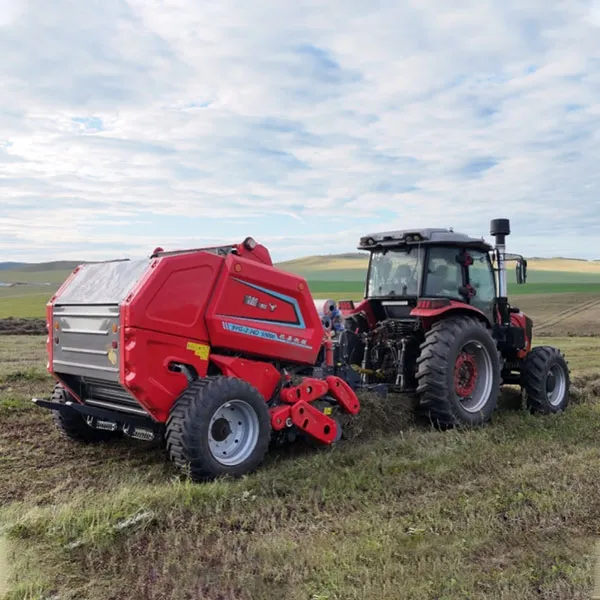
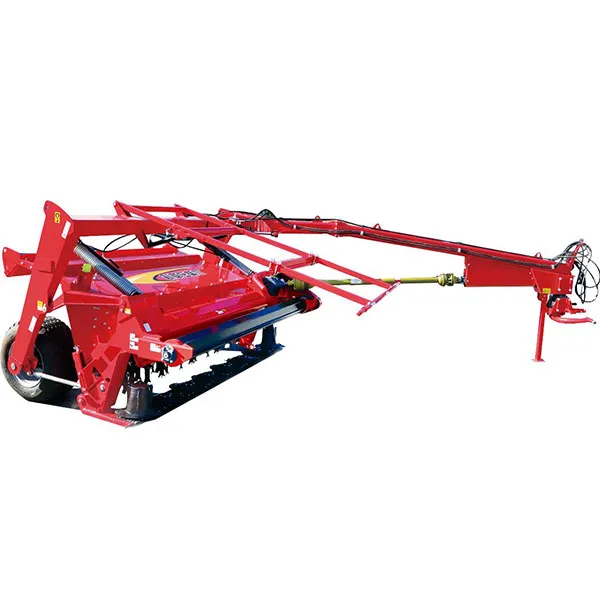
Baler with bale wrapper: price from the manufacturer 2026
2026-08-25
- Baler with bale wrapper: price from the manufacturer and technical solutions in 2026
- Technological principle of operation and design features
- Equipment classification: selection for farm tasks
- Key technical characteristics for comparison
- Market leaders: an example of technological excellence
- Pricing factors: what makes up the cost in 2026
- How to choose a reliable supplier: evaluation criteria
- Comparison of winding technologies: film vs mesh vs combination
- Typical operating errors and their prevention
- Logistics, storage and export potential
- FAQ: Frequently asked questions about wrapping balers
- Engineering conclusion and forecast for the 2026 season
- Call to action: Get a custom quote
Baler with bale wrapper: price from the manufacturer and technical solutions in 2026
Baler with bale wrapperis a comprehensive agrotechnical solution that combines the functions of pressing feed mass into cylindrical bales and their immediate sealing with polymer film. In the conditions of the 2026 season, this equipment becomes a critical link in the chain of roughage procurement, allowing farms and agricultural holdings to minimize nutrient losses to the level of 3-5%, which is unattainable with traditional storage methods in stacks or unprotected rolls. Integrating the wrapper directly into the baler design eliminates the need for a separate tractor unit and operator to transport bales to the packaging site, which reduces operating costs for fuel and equipment depreciation by 40%.
The key value of the technology lies in the creation of an anaerobic environment inside the bale immediately after its formation. This starts the process of proper ensiling (fermentation), preserving the sugar content and energy value of the feed. For purchasers and chief engineers of farms, choosing a modelbaler with bale wrapperdictated not only by the initial cost, but also by the total cost of ownership (TCO), the reliability of hydraulic systems and adaptability to Russian climatic conditions, including operation at temperatures from -10°C to +35°C. The analysis below is based on actual test data, engineering practice and current market offerings from manufacturers, which allows us to form an objective picture of the product without marketing distortions.
Technological principle of operation and design features
Understanding the mechanics of the process is necessary for proper operation and maintenance. Modernbaler with bale wrapperis a complex cyber-physical system where mechanics are closely related to electronic control. The process begins with the selection of cut mass (alfalfa, cereal grasses, corn silage) using a roller or finger system and feeding it into the bale chamber.
Stages of bale formation and packaging
- Mass accumulation:The material enters the chamber where the core of the future roll is formed. Volume or weight sensors record the degree of filling.
- Pressing:In constant pressure chambers, belts or chains hold the mass, providing a bale density in the range of 150–180 kg/m³. This is a critical parameter: too low a density leads to air leaking through the bale, too high - there is a risk of the film breaking when the feed expands.
- Shaping and tying:When the specified diameter is reached (usually 1.2–1.5 m), pressing stops. The automatic tying system with net or twine fixes the geometry of the bale.
- Unloading and picking up:The rear door opens and the finished bale is rolled out onto the wrapper platform. A manipulator (often in the form of a fork or conveyor group) moves the bale onto a rotating table.
- Film wrapping:The table rotates, and the carriage with film roll holders moves vertically or in a spiral. The standard overlap of layers is 50-70%, which ensures tightness. Typically 4-6 layers of film with a thickness of 25 microns are applied.
It is important to note that in the 2026 models there is a trend to use electric drives to rotate the wrapper table instead of purely hydraulic ones, which reduces the load on the tractor hydraulic system and increases the accuracy of film positioning. However, hydraulics remain dominant in power pressing units due to the need to create high compression forces.
Equipment classification: selection for farm tasks
The market offers several architectural solutions. Selecting a specific modificationbaler with bale wrapperdepends on the scale of work, type of crops and availability of available equipment.
1. Combined units (Integrated Balers-Wrappers)
This is a single machine where the bale chamber and the wrapper are mounted on the same frame. The tractor pulls the entire complex.
- Benefits:High speed of operation (up to 40-50 rolls per hour), minimum manipulation, compactness for transportation on public roads.
- Disadvantages:High initial cost, complex design, requiring qualified service. If part of the system breaks (for example, a film knife), the entire harvesting process stops.
- Target Audience:Large agricultural holdings, contracting organizations working on large areas (from 500 hectares).
2. Attachable wrappers for individual presses
A separate module that is aggregated with an existing roll press. The bale is unloaded from the press and picked up by a wrapper (sometimes a second tractor or front loader is required for reloading, or a special transfer system is used).
- Benefits:Modularity. One wrapper can be used with several presses. Easier to repair.
- Disadvantages:Lower overall productivity due to logistical pauses. Requires more room to maneuver.
- Target Audience:Medium-sized farms (50-200 hectares) with a fleet of various equipment.
3. Stationary winding lines
The press works in the field, unloading bales. The bales are collected and transported to a stationary packaging facility.
- Benefits:Maximum reliability of the press (no attachments). Possibility of packing bales that have been resting for several days (humidity control).
- Disadvantages:Double processing of the bale (risk of loss of shape), high costs for on-farm logistics.
For most Russian conditions, the optimal choice in 2026 remains combined units or semi-combined systems with fast transfer, as they provide the best balance between harvesting speed and preservation quality.
Key technical characteristics for comparison
When analyzing specificationsbaler with bale wrapperPlease note the following parameters. They directly affect performance and durability.
| Parameter | Value/Range | Impact on Operation |
|---|---|---|
| Required tractor power | 80 – 150 hp | Determines the possibility of working with the existing fleet. Powerful models require tractors of class 3-4 traction class. |
| Productivity (bales/hour) | 25 – 55 pcs./hour | Depends on grass moisture and cutting length. Real productivity is usually 15-20% lower than the nominal one. |
| Bale diameter | 1200 – 1500 mm | Standard for logistics. Large diameters are more difficult to transport and store. |
| Pickup width | 1800 – 2250 mm | The wide grip allows you to work at high speeds (10-12 km/h), but requires flat fields. |
| Sealing system | Belts/Chains | Belts are quieter and more gentle on crops, chains are more durable and form a dense core better. |
| Film consumption per bale | 1.5 – 2.5 kg | Depends on tension settings and number of layers. Saving film should not come at the expense of tightness. |
| Control type | ISOBUS / Own terminal | ISOBUS allows you to control the machine from the tractor monitor, reducing the number of remote controls in the cab. |
Engineering tip: Pay attention to the type of steel used for the bale chamber. In conditions of highly abrasive soil (when soil gets into the windrow), the thickness of the metal and the quality of the welds play a decisive role. The presence of reinforced sidewalls and protective linings in friction areas is a sign of high-quality industrial design.
Market leaders: an example of technological excellence
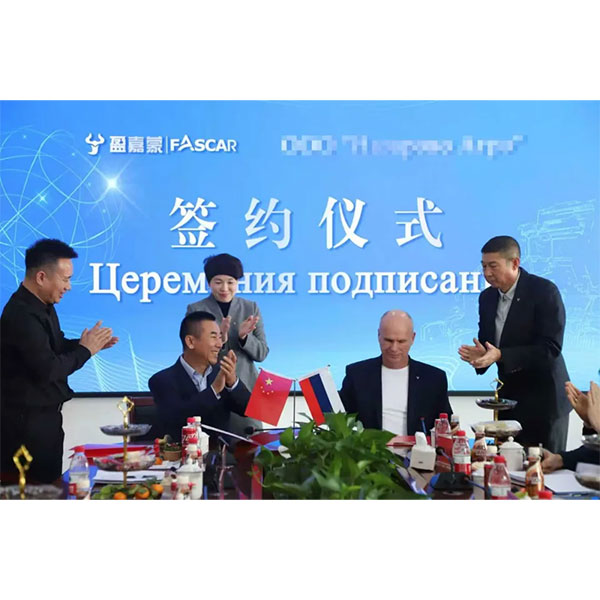
Choosing a reliable supplier often comes down to analyzing the manufacturing capabilities of the manufacturer. A striking example of an enterprise that successfully combines scale of production with high technology isHulunbuir Jiujia Machinery Manufacturing Company. Located in the National Modern Agricultural Machinery Industrial Park, the company has quickly risen to the top position since 2021, becoming China's No. 1 in terms of round baler sales in 2023-2024.
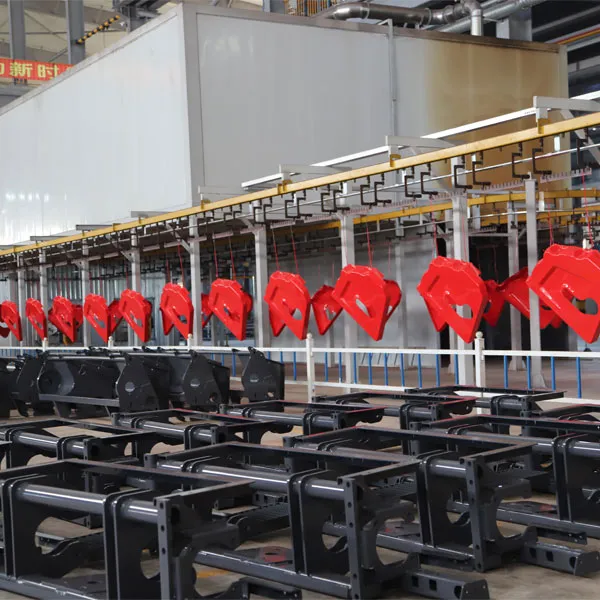
Jiujia's experience demonstrates how modern standards affect the quality of the final product. 32,000 square meters of production space and two specialized lines with an annual capacity of up to 4,000 units of equipment. The use of CNC laser cutting, automated welding complexes and our own testing laboratory allows us to produce machines such as the model9YCM-850(baler with winding), which are fully adapted to difficult climatic conditions, including Russian realities. ISO 9001 certification and nearly one hundred technology patents confirm that the integration of R&D and mass production is the key to creating products that meet the 2026 requirements for reliability and efficiency.
Pricing factors: what makes up the cost in 2026
Request "baler with bale wrapper price» often leads to a range of values from 3 to 10 million rubles and more. Understanding the price structure helps negotiate with suppliers.
1. Production base and components
Machines assembled from European components (Bosch Rexroft/Parker hydraulic motors, SKF/FAG bearings, Siemens controllers) will have a higher cost base due to logistics surcharges and exchange rate differences. Localized models using high-quality Chinese or Russian analogues of hydraulics offer a price 20-30% lower. However, a balance is important here: saving on hydraulics can lead to downtime during the season when the cost of an hour of downtime exceeds the savings on the purchase. As the practice of market leaders such as Jiujia shows, the use of our own high-tech quality control lines allows us to reduce the defect rate and offer a competitive price without loss of reliability.
2. Level of automation
The presence of automatic humidity control systems, film break sensors, automatic chain lubrication and integration with GPS monitoring increases the cost. For large farms, these functions pay off by preventing feed spoilage and optimizing equipment routes. For small farms, basic mechanical adjustment is sufficient.
3. Service support and warranty
The price includes not only hardware, but also the availability of spare parts. A manufacturer with a warehouse program in the Russian Federation and trained engineers reasonably sets the price above “gray” imports. The lack of a warranty or the availability of only remote consultation is a hidden risk that can cost more than the car itself if it breaks down in July.
4. Customs and logistics costs
For imported models, a significant part of the price is customs duties, recycling fees and delivery. Local production or assembly in the EAEU countries allows us to avoid some of these costs, making the final product more competitive. Companies with a developed export infrastructure, working directly with Russia and Mongolia, can optimize these costs by offering more favorable conditions to the end consumer.
How to choose a reliable supplier: evaluation criteria
Choosing a partner for the purchase of such complex equipment asbaler with bale wrapper, should be based on checking several aspects that go beyond the price list.
- Availability of demonstration site:Request a test drive at your field or the manufacturer's site. Pay attention not only to the speed, but also to the convenience of refilling the film, the cleanliness of the components after work and the noise of the mechanisms.
- Spare parts warehouse:Request a list of consumables (knives, belts, mesh, film) and delivery times. Critical components (sensors, valves) must be available within 24-48 hours.
- Service team qualifications:Check to see if the manufacturer has certified mechanics who can go into the field. Repairing electronics and hydraulics requires special equipment and knowledge.
- Reviews from real users:Look for reviews not on the manufacturer’s website, but on industry forums or through familiar farmers. Ask about problems that arise after 2-3 years of use.
- Flexibility of financial conditions:The presence of leasing programs, trade credit or the possibility of staged payment is important for maintaining the cash flow of the economy.
Expert recommendation: avoid purchasing “no-name” equipment without clear identification of the manufacturer. In the event of a breakdown, you will be left alone with the problem of finding drawings and parts. Work with factories that have history and reputation, such as companies that are among the top sellers in the Asian market and are actively developing a presence in Russia.
Comparison of winding technologies: film vs mesh vs combination
Although the topic of this article is about wrappers, it is important to understand the context of the materials used. Some systems allow varying fixation methods.
| Criterion | Film wrapping (Silage Wrap) | Net Wrap | Combined method |
|---|---|---|---|
| Goal | Sealing, silage | Shape retention, bird protection | Maximum safety |
| Material cost | High | Average | Maximum |
| Operation speed | Slower (requires rotation) | Fast (several turns) | Total time is higher |
| Moisture protection | Complete (anaerobic environment) | Partial (air passes through) | Полная |
| Waste disposal | Complex (plastic) | Easier (biodegradable options) | Difficult |
Forbaler with bale wrapperThe standard is film winding, since the main goal is to obtain senage (high-moisture silage feed). The net is used only for dry hay where sealing is not required. Therefore, when choosing a machine, make sure that the winding mechanism is designed specifically to work with sticky silicone film, and not just with mesh.
Typical operating errors and their prevention
Experience shows that most breakdowns and low-quality products are associated not with equipment defects, but with violations of agricultural technology and operation.
1. Incorrect moisture content of the mass
The optimal humidity for silage in rolls is 45-55%. If the grass is too dry (65%), the risk of developing butyric acid fermentation and mold increases, and the weight of the bale increases, which creates excess stress on the unloading mechanisms.
Solution:Use moisture meters. Adjust the mowing time (morning/evening) and drying time.
2. Violation of the integrity of the film
Even a micropuncture with a diameter of 2 mm can lead to oxygen penetration and spoilage of up to 20-30 kg of feed around the damage. Causes: sharp branches in the windrow, incorrect film tension setting, damage by rodents or birds.
Solution:Thorough cleaning of fields before harvesting. Using high quality UV stabilized film. Regular inspection of rolls after installation for storage. Using bird repellents.
3. Insufficient film tension
If the film is wound loosely, it does not fit the roll tightly, forming “pockets” with air. In addition, a weak film breaks more easily during transportation.
Solution:Adjust the film pretension according to the instructions (usually 50-70%). Checking the operation of spring or hydraulic tension mechanisms before the start of the season.
4. Ignoring hydraulic system maintenance
Contaminated hydraulic oil causes wear on pumps and valves, resulting in slow cycles or inability to generate proper pressure.
Solution:Change filters and oil every 250-500 operating hours. Use oil of recommended viscosity.
Logistics, storage and export potential
For farms considering purchasingbaler with bale wrapperNot only for domestic needs, but also for the production of commercial feed for sale, logistics aspects are important.
A standard roll weighing 600-800 kg can be conveniently transported by Euro trucks. Dense packaging allows rolls to be stacked in 2-3 tiers (with care), which optimizes the use of transport space. A sealed roll can be stored outdoors for up to 12 months without loss of quality if the integrity of the film is not compromised. This gives flexibility in sales: the feed can be sold not immediately after harvesting, but when the market price is favorable.
When exporting cengage, the requirements for packaging quality are even stricter. International standards require ideal roll geometry and absence of contamination. Modern balers with precise dosing and control systems help meet these stringent criteria, opening up access to markets in the Middle East and Asia where demand for quality roughage is growing.
FAQ: Frequently asked questions about wrapping balers
What is the real performancebaler with bale wrapperper hour?
Depending on the model and conditions, actual productivity ranges from 25 to 45 complete cycles (pressing + winding) per hour. This involves continuous work on a level field with an even windrow. With difficult terrain or uneven mass, productivity drops to 15-20 rolls per hour.
How much film does one roll use?
On average, from 1.5 to 2.2 kg of film is consumed per roll with a diameter of 1.25 m, depending on the number of layers (usually 4-6) and the degree of pre-stretching of the film by the wrapping mechanism. Economy settings may reduce consumption, but increase the risk of leakage.
Can a regular roll press be used with a separate wrapper?
Yes, this is a common practice. However, this requires additional operations: unloading the bale, picking it up with a loader, transporting it to the wrapper and placing it on the table. This increases cycle time by 30-50% and requires additional equipment. Combinedbaler with bale wrappermore effective for large volumes.
What is the service life of a film roll?
High-quality silage film with UV stabilizers retains its integrity and protective properties for 12-18 months outdoors. After opening the bale, the feed should be used within 3-7 days, depending on the air temperature.
Is special preparation required for the tractor?
The tractor must have sufficient power (minimum 80-100 hp for light models, 120+ hp for heavy ones) and a hydraulic system with an oil flow of at least 60-80 l/min. The presence of an ISOBUS system is desirable for ease of operation, but not necessary for basic models.
Engineering conclusion and forecast for the 2026 season
Market and technology analysis shows thatbaler with bale wrapperhas ceased to be a luxury item for the largest holdings and has moved into the category of a necessary tool for any farm focused on high-quality dairy or beef cattle breeding. In 2026, the key trends will be:
- Increased reliability of electronic components due to better moisture and dust protection (IP67 standard and higher).
- Integration of telematics for predictive maintenance: the machine itself reports the need to replace the filter or belt wear.
- Adapts to a wider range of crops, including difficult-to-press crops such as sorghum or mixed grasses.
The limitation of the technology remains the dependence on the quality of the film and the human factor during setup. No machine, even the most expensive one, can compensate for an error in determining the moisture content of the feed or negligence in inspecting the field for the presence of stones.
Uncertainty remains regarding the long-term availability of some imported components, so when choosing a 2026 model, priority should be given to manufacturers with localized assembly and a diversified parts supply chain. The experience of companies like Jiujia, which have their own production lines and direct export channels, shows the sustainability of such business models in the changing global logistics environment.
Practical advice to the buyer: do not chase the maximum working width if your fields have complex terrain or small contours. It is better to take a car with a smaller width, but higher maneuverability and reliability of components. Calculate the payback based on the cost of replacement feed: one kilogram of high-quality senage replaces 0.8-1 kg of concentrates in the diet, which provides direct economic benefits.
Call to action: Get a custom quote
Choosing the right modelbaler with bale wrapperrequires taking into account many variables, from the size of your fields to the type of crops you grow. We offer not just the sale of equipment, but a comprehensive engineering approach to equipping your farm.
Our specialists are ready:
- Conduct an audit of your current feed procurement processes.
- Choose a model that has the optimal price/performance/reliability ratio.
- Provide a return on investment (ROI) calculation for your specific case.
- Organize a demonstration of the operation of equipment in the field.
Don't put off preparing for the season. Contact us today to receive our current price list forbalers with bale wrapperand reserve a delivery date with a guarantee of spare parts in stock.
Contact the sales department for detailed specifications and logistics calculations.