Buy a roll baler for hay: prices from the manufacturer 2026
2026-08-20
- Buy a roll baler for hay: prices from the manufacturer 2026
- Why you should buy a hay round baler directly from the manufacturer
- Market Leader: Jiujia's Experience in Baler Manufacturing
- Technical characteristics and classification of roll presses
- How to choose a baler: an engineering approach to analysis
- Pricing in the 2026 market: what makes up the cost
- Technology Comparison: Chains vs. Belts
- Logistics and export: how to deliver equipment to the farm
- Typical mistakes when purchasing and using
- Recommendations for maintenance and service life extension
- FAQ: Frequently asked questions about round balers
- Conclusion and next step
Buy a roll baler for hay: prices from the manufacturer 2026
If you are planningbuy a round baler for hay, it is important to understand that the agricultural equipment market in 2026 requires careful analysis of not only the cost, but also the technological compatibility of the equipment with your tractors. Round balers remain a key link in the forage chain, ensuring high bale densities and minimal nutrient loss. Modern models from leading manufacturers integrate automatic moisture and density control systems, which are critical for maintaining the quality of alfalfa, clover and cereal grasses. The price of equipment varies depending on the class of the machine, the presence of hydraulic compaction systems and the type of strapping (mesh or twine). In this guide, we will examine in detail the technical characteristics that affect cost, logistical aspects of delivery and engineering selection nuances that will help you avoid mistakes when investing in a fleet of agricultural machinery. Direct deliveries from the manufacturer allow you to optimize your budget, eliminating intermediary markups, and also guarantee the availability of service support and spare parts throughout the entire life cycle of the machine.
Why you should buy a hay round baler directly from the manufacturer
Solutionbuy a round baler for haydirectly from the manufacturer in 2026, driven by changes in the global supply chain and after-sales service requirements. A direct contract with the manufacturer eliminates the risks associated with the incompetence of second-tier dealers, who often do not have the in-depth technical knowledge to set up the complex hydraulic systems of modern presses. In addition, the manufacturer provides access to original drawings and specifications, which speeds up the repair process in the field.
In terms of economics, direct purchasing reduces capital expenditure (CAPEX) by 15-20% compared to purchasing through multi-brand distributors. However, a more important aspect is adapting the machine to the specific agronomic conditions of your region. Factory engineers can modify chamber pressure settings or the type of pre-chopping blade unit (if we are talking about combined models) to suit the specifics of your crops. This is a level of customization not available when purchasing from a general warehouse.
- Guarantee of compliance with GOST and international standards:The equipment is certified according to EAC and ISO standards, which ensures safe operation and the possibility of leasing operations.
- Direct technical support:Access to development engineers to solve unusual problems, such as working in wet hay or difficult terrain.
- Staff training:The manufacturer includes a training program for operators and mechanics in the contract, which reduces the risk of breakdowns due to the human factor.
- Access to software updates:Modern presses are equipped with electronic control units (ECUs), which require regular updating of operating algorithms to optimize tractor fuel consumption.
Market Leader: Jiujia's Experience in Baler Manufacturing
Choosing a reliable partner is as important as choosing the machine itself. A striking example of an enterprise that successfully combines advanced technologies and direct supplies isHulunbuir Jiujia Machinery Manufacturing Company. Founded in 2021 in National Modern Agricultural Machinery Industrial Park (Hulunbuir City), the company has quickly become one of the industry leaders, ranking first in China in terms of round baler sales in 2023-2024.
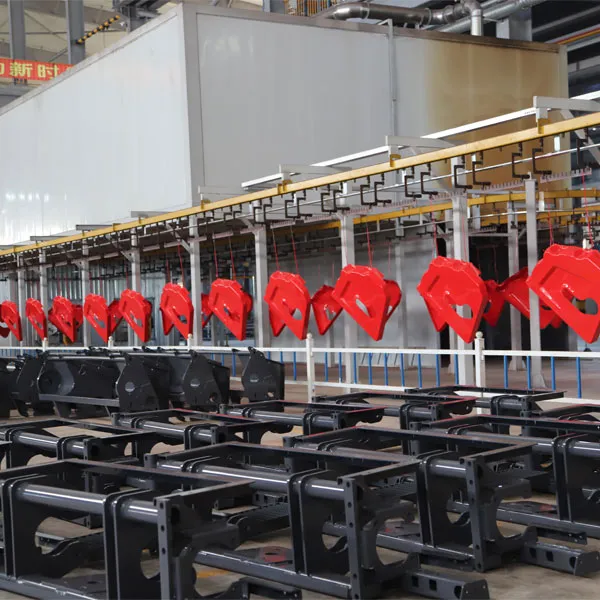
Jiujia is a modern integrated enterprise with a registered capital of 10 million yuan and a production area of over 32,000 m². The company specializes in the full cycle: from research and development to mass production and after-sales service. Thanks to the presence of two specialized production lines, the annual production capacity is up to 2000 units of balers and mower rakes.
The following advantages of cooperation with Jiujia are especially important for the Russian buyer:
- Technology Leadership:The use of computer simulation (CAD), our own testing laboratory and almost 100 technological patents guarantee the reliability of the equipment. The equipment is ISO 9001 certified.
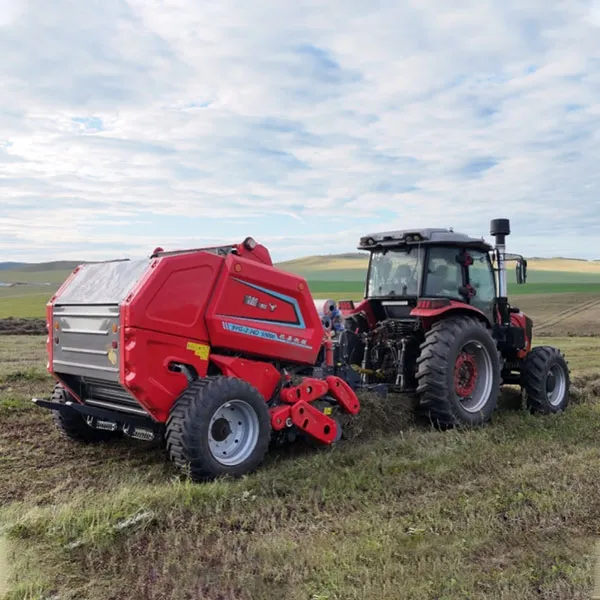
- Adaptation to the conditions of the Russian Federation:The company's products, including popular round balers (such as the 9YG-1.0) and film wrap balers (9YCM-850), are designed to suit different climate zones. The equipment has already been successfully exported to Russia and Mongolia, having proven demand.
- Direct deliveries and service:The company has the right to independently carry out import and export operations, which simplifies logistics. The philosophy of “Start with customer needs, end with customer satisfaction” is backed by real engineering support and spare parts availability.
The Jiujia experience demonstrates how modern Chinese manufacturers are reaching a new level of quality, offering an alternative to European brands at a more competitive price without sacrificing reliability.
Technical characteristics and classification of roll presses
Before placing an order andbuy a round baler for hay, it is necessary to clearly define the class of equipment. In 2026, the market is clearly segmented into light, medium and heavy vehicles, each of which solves specific problems. An error in choosing a class leads either to underloading of the tractor (excessive fuel consumption per unit of production), or to its overload and premature wear of the transmission.
Classification by type of bale formation
The main difference lies in the design of the bale chamber. There are two main types: fixed camera and variable camera.
Fixed Chamber Presses:
These models have a constant chamber diameter throughout the pressing process. They begin to form a dense bale as soon as the mass enters the chamber.
Benefits:High bale density from the very beginning, simple design, lower maintenance costs.
Disadvantages:They require a more powerful tractor to start, since the mass resistance is immediately high. Less flexibility when working with unevenly distributed windrow material.
Variable Chamber presses:
The chamber starts with a small diameter and expands as it fills. First, a soft core is formed, which is then compacted with belts or chains.
Benefits:Easy start, ability to work with tractors of lower power, careful handling of fragile crops (for example, first-cut alfalfa).
Disadvantages:A more complex belt tensioning system that requires regular checking and replacement. Risk of belt slippage due to high humidity of raw materials.
Wrapping systems: mesh vs twine
The choice of strapping system affects the speed of work and the safety of feed. The net provides faster tying (usually 2-3 turns versus 10-12 for twine) and better protects the bale from external influences when stored outdoors. Twine is cheaper in consumables, but the tying process takes longer, which reduces the overall productivity per hectare/hour. In 2026, most producers, including market leaders like Jiujia, offer hybrid systems or easy conversion between types of binding to adapt to the hay market.
| Parameter | Fixed camera | Variable camera |
|---|---|---|
| Bale density | High, uniform | Adjustable, depends on settings |
| Required tractor power | From 80 hp | From 50 hp |
| Difficulty of maintenance | Low | Medium/High (belts/rollers) |
| Equipment cost | 15-20% lower | Higher |
| Suitable crops | Cereals, straw, corn | Legumes, tender grass, hay |
How to choose a baler: an engineering approach to analysis
The selection process should not be limited to looking at brochures. To competentlybuy a round baler for hay, you need to conduct an audit of your current resources. The engineering approach involves the analysis of three key vectors: energy, agronomic and logistics.
1. Energy audit (coordination with the tractor)
The main mistake of buyers is the discrepancy between the power of the tractor and the needs of the press. The baler consumes energy not only to rotate the chamber, but also to operate the pick-up, chopper (if equipped) and hydraulics.
- Minimum power at PTO (power take-off shaft):Indicated in the passport, but this is the value for ideal conditions. For real work with wet hay, add a margin of 15-20%.
- Tractor hydraulic system:Check the tractor hydraulic pump capacity (l/min). Modern presses with active density control require a consistent flow of oil. If the tractor is older, consider purchasing a power compaction press.
- Attachment weight:Make sure the tractor's rear linkage can support the weight of the press, especially if it is equipped with a liquid preservative tank.
2. Agronomic analysis
The type of crop determines the design of the pick-up.
- Working width:The standard is 1.8–2.2 meters. If you are using a wide-cut mower-conditioner, make sure the windrow does not exceed the width of the press, otherwise there will be up to 10% wastage.
- Pickup lift height:For low cutting (eg after stubble) the sensitivity of the tracking shoes is important. Polymer shoes are preferable to metal ones as they damage the turf less and glide better.
- Raw material humidity:If you plan to bale hay with a moisture content higher than 18%, a preservative system is required. Without it, there is a high risk of spontaneous combustion or molding of the bale inside.
3. Logistics and storage
The bale dimensions (diameter and width) must be suitable for your transport and storage facilities.
- Bale diameter:Varies from 1.2 m to 1.8 m. Large bales are more efficient for transport over long distances, but require more powerful loaders.
- Bale width:Standard 1.2 m or 1.5 m. Narrow bales are easier to handle manually or with small manipulators.
Pricing in the 2026 market: what makes up the cost
When you request a quote and wantbuy a round baler for hay, the price can vary widely. Understanding the cost structure will help you negotiate wisely and choose the optimal configuration.
Basic cost of equipment
This is the price of a “naked” press without additional options. In 2026, base models of Russian and Asian production become more competitive compared to their European counterparts, offering a price-quality ratio of 70-80% at a cost of 50-60%.
Factors influencing the final price
- Monitoring system and ISOBUS:The presence of a terminal in the tractor cabin that displays density, number of bales and diagnostic error codes increases the cost by 10-15%. However, this pays off in reduced downtime.
- Grinding rotor (pre-shredder):Models with a knife block for cutting hay before baling are more expensive. This makes sense if you are producing feed mixtures or need windrows to dry out faster.
- Camera materials:Using high-strength Hardox steel or equivalent increases the life of the chain/belts, but increases the initial cost.
- Logistics and customs clearance:When importing, it is necessary to take into account VAT, duties and delivery costs to the farm. Manufacturer direct deliveries, such as Jiujia's, often include these costs in the DDP (Delivered Duty Paid) incoterm, making budgeting easier.
Hidden costs (TCO - total cost of ownership)
Don't just look at the purchase price. Calculate the cost of ownership over 5 years:
- Replacing belts/chains (every 2-3 seasons of intensive work).
- Bearings and rollers.
- Consumables for strapping (mesh/twine).
- Service (lubrication, adjustment).
A cheap press can be more expensive to operate due to frequent breakdowns and poor seal quality, which leads to feed wastage.
Technology Comparison: Chains vs. Belts
One of the most common questions when choosing: which is more reliable? To help youbuy a round baler for hayWith the right camera design, let's compare the two dominant technologies.
| Criterion | Chain Belt | Rubber Belt |
|---|---|---|
| Durability | High. Chains last 5-7 seasons. | Average. Belts require replacement every 2-4 seasons. |
| Care and maintenance | Requires constant lubrication and cleaning from dirt. Dirt is abrasive to chains. | Minimal care. Does not require lubrication. Sensitive to cuts. |
| Working in wet conditions | Better. Less risk of slipping. | Worse. Wet hay can cause belts to slip. |
| Noise and vibration | Higher noise level. | Runs quieter and smoother. |
| Replacement cost | High cost of the kit, but rare replacement. | The cost of one belt is lower, but you need to change the set. |
| Recommendation | For straw, corn, difficult conditions. | For clean hay, legumes, light conditions. |
Engineering opinion:If your farm is located in a dusty region or you work primarily with straw and silage, choose a chain chamber. For premium alfalfa hay, where product purity and the absence of grease marks are important, a belt chamber is preferable, subject to strict tension control.
Logistics and export: how to deliver equipment to the farm
After you have made your decisionbuy a round baler for hay, the question of delivery arises. In 2026, supply chains have stabilized but require careful planning.
Delivery stages
- Pre-production preparation:Conclusion of a contract, specification, agreement on production time (usually 4-8 weeks for standard models).
- Quality Control (QC):It is recommended to hire an independent inspector to inspect the machine at the factory before shipment. Welds, hydraulic connections, and electrical connections are checked. Leading factories such as Jiujia provide reports from their own testing laboratories.
- Customs clearance:Preparation of certificates of conformity (EAC), phytosanitary certificates (if required for wooden containers/pallets).
- Transportation:
- Motor transport:Optimal for distances up to 1000-1500 km. A trawl with a low loading height is required.
- Railway transport:Economical for long-distance transportation across the Russian Federation and the CIS. It is necessary to take into account the dimensions for the passage of tunnels and bridges.
- Sea delivery:For imported components or export. A 40-foot container usually holds one large machine or two compact ones (disassembled).
- Commissioning works (PNR):The manufacturer's engineer carries out assembly (if the machine is partially disassembled), adjustment and test run in the field.
Typical mistakes when purchasing and using
An analysis of calls to service centers shows that 60% of breakdowns are not related to the quality of the hardware, but to errors in operation and selection. Avoid These Pitfalls When You Decidebuy a round baler for hay.
Error 1: Ignoring tractor speed
Many operators try to increase productivity by driving faster than the recommended 8-12 km/h. This leads to uneven filling of the chamber, the formation of “loose” bales that fall apart during transportation, and overloading of the pick-up.
Solution:Use a variator or gearbox to maintain a constant PTO speed of 540 or 1000 rpm, adjusting the tractor speed depending on the density of the windrow.
Error 2: Incorrect density setting
The desire to make the bale as dense as possible “to the maximum” leads to rupture of the binding material or deformation of the chamber.
Solution:Adjust the density according to the moisture content of the hay. For wet hay, the density should be lower to allow internal ventilation and prevent rotting.
Mistake 3: Saving on strapping material
The use of cheap mesh or twine of unknown brands often leads to breaks in the binding mechanism, which causes machine downtime at the height of the season.
Solution:Use consumables recommended by the manufacturer. The difference in the price of a roll of mesh is negligible compared to the cost of an hour of idle time for a combine or press.
Mistake 4: Lack of daily lubrication
The press operates under conditions of high loads, dust and vibration. Missing lubrication points even for one day can cause bearings to seize.
Solution:Implement a daily maintenance checklist. Lubrication should be carried out every 8-10 hours of operation.
Recommendations for maintenance and service life extension
To ensure your investment pays for itself, follow the maintenance schedule. Here are the key points for owners who decidebuy a round baler for hay:
- Seasonal storage:After the end of the season, thoroughly clean the machine of plant debris. Leaving grass absorbs moisture and causes corrosion. Loosen the tension on the belts/springs to relieve the stress on the mechanisms. Lubricate all exposed metal parts with anti-corrosion compound.
- Checking knives:If the press is equipped with a shredder, check the sharpness of the blades weekly. Dull knives tear the hay instead of cutting it, which increases drag and reduces the quality of the forage.
- Hydraulics:Check hoses regularly for cracks and leaks. Replace hoses every 3-4 years as a preventative measure, even if they look intact, as rubber ages from ultraviolet radiation and ozone.
- Electrical:Clean the sensors from dust and dirt. A faulty density sensor can give false readings, resulting in substandard bales.
FAQ: Frequently asked questions about round balers
Q: What bale diameter is best for a small farm?
A: For small farms with limited means of mechanization, bales with a diameter of 1.2–1.35 m are optimal. They are lighter, easier to move with small tractors with a front loader, and they dry faster inside.
Q: Can wet hay be baled?
A: Yes, but only if a preservative (propionic acid or its salt) is used and the bale density is reduced. Humidity should not exceed 20-22% even with a preservative, otherwise the risk of mold remains high.
Q: How many hectares can one press process per season?
A: The average service life of a modern press before major repairs is 1500–2000 hectares. For intensive use (more than 2000 ha/year), it is recommended to have a backup machine or enter into an extended service agreement.
Q: What is the difference between a hay baler and a straw baler?
A: They are structurally similar, but straw presses often have more powerful choppers and are designed to handle larger amounts of material. Hay balers are more gentle on the crop to preserve legume leaves. Universal models exist, but require reconfiguration when changing culture.
Q: How quickly does a baler pay for itself?
A: If used correctly and there is a market for hay, the payback period is 2-3 seasons. The key factor is not only the sale of hay, but also the savings in feed loss compared to bulk storage.
Conclusion and next step
The choice of agricultural machinery is a strategic decision that affects the profitability of the entire livestock farming complex. Tobuy a round baler for hay, which will work reliably, efficiently and for a long time, an integrated approach is required: from analyzing technical characteristics to assessing logistics and service. The market of 2026 offers modern, technological solutions that will automate processes and reduce dependence on operator qualifications.
Don't risk the quality of your feed and your business's money. Receive an individual commercial offer tailored to your specific tasks and fleet of equipment. Our engineers are ready to conduct a free audit of your needs and offer the optimal equipment configuration.
Ready to modernize your fleet?
Contact us today to receive:
✅ Detailed calculation of cost of ownership (TCO)
✅ 3D model and technical drawings of the selected model
✅ Delivery schedule and leasing conditions
Request consultation and price list 2026