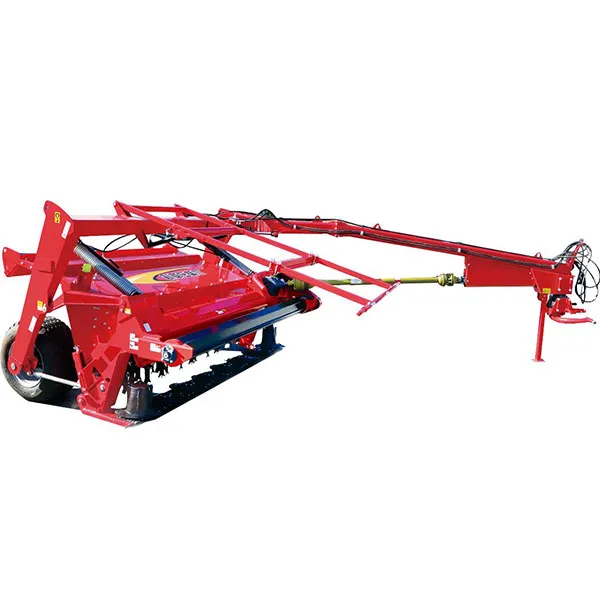
Rotary tedder for hay: prices from the manufacturer 2026
2026-08-24
- Rotary tedder for hay: prices from the manufacturer 2026
- Operating principle and design features of rotary tedders
- Where is a rotary hay tedder used: industry specifics
- Specs: What to look for in the 2026 spec
- Manufacturers in the market: an example of technological leadership
- Pricing: prices from the manufacturer in 2026
- How to Choose a Rotary Hay Tedder: A Step-by-Step Guide
- Model comparison: Budget vs Premium
- Typical errors during operation and maintenance
- Logistics and export: nuances of delivery in 2026
- FAQ: Frequently asked questions about rotary tedders
- Buying Recommendations and Final Thoughts
Rotary tedder for hay: prices from the manufacturer 2026
Rotary tedder for hayis a specialized mounted or trailed agricultural equipment designed for intensive aeration of the mown mass in order to speed up the drying process. In the context of climate change in 2026, when periods of stable weather are reduced, the use of rotary technology becomes critical to maintaining the nutritional value of feed. The main task of the mechanism is to uniformly distribute the grass layer across the field without contaminating it with soil, which is achieved through the unique kinematics of rotating rotors with rake fingers.
For agricultural holdings and farms, the choice of the right model determines not only the speed of procurement, but also the final cost of milk or meat. Modernrotary tedders for hayensure gentle handling of the leaf mass of legumes, minimizing protein losses. Prices for equipment in 2026 are determined by the cost of steel, supply chains and the introduction of new composite materials in the design of rakes. In this review, we will examine in detail the technical aspects, pricing and selection criteria, based on real operating experience in the field.
Operating principle and design features of rotary tedders
Understanding the mechanics of the process is necessary for the correct choice of technology. Unlike roller tedders, which collect the mass in rows, the rotary model works on the “tossing” principle. When the tractor moves across the field, the rotors, installed at an angle to the direction of movement, capture the lower layers of mown grass and throw them up and to the side. This creates the effect of “fluffing” the formation, opening it to the sun’s rays and wind.
Kinematics of the rotor unit
The heart of the machine is the rotor unit. Each rotor is driven either through a driveshaft from the tractor's PTO (power take-off shaft) or through a hydraulic system. In 2026, there is a trend towards abandoning complex mechanical transmissions in favor of individual hydraulic motors for each rotor, which allows flexible adjustment of the rotation speed regardless of the speed of the tractor.
Key design elements:
- Rotors:Typically their number varies from 4 to 16 depending on the working width. The rotor diameter affects the aggressiveness of the tedding.
- Rake fingers:Made from spring steel or composite materials. Their shape (S-shaped or straight) determines the intensity of the mass lift.
- Frame and suspension:Must ensure copying of the field topography. Uneven cutting height up to 15-20 cm should not lead to combing out the soil.
- Transportation system:For models with a working width of more than 6 meters, hydraulic folding of the wings is provided for transport on public roads.
Advantages over other types of tedders
The main advantage of the rotary design is its high performance when working with wet grass. While a drum tedder can become clogged at humidity levels above 40%, a rotary tedder continues to work effectively, albeit with increased fuel consumption. In addition, rotary models perform better in heavy crops such as alfalfa or clover where leaf retention is important.
Where is a rotary hay tedder used: industry specifics
The scope of application of the equipment is wider than just hay harvesting. The adaptability of the design allows it to be used in various agrotechnological cycles. Let's consider the main scenarios of use in the conditions of Russian agriculture and CIS countries.
Preparation of roughage for cattle
This is the main segment. For dairy farming, the energy content of feed is critical. Fast drying prevents the development of molds and bacteria that cause fermentation. A rotary tedder allows you to reduce drying time from 3-4 days to 1-1.5 days in favorable weather. This is especially true for regions with short summers, such as the North-West of the Russian Federation or Siberia.
Preparation of straw and crop residues
In grain crop rotations, tedders are used to distribute straw after the combine before plowing or disking. Uniform distribution of the mass ensures high-quality grinding and mixing with the soil, which speeds up the humification process. What is important here is not so much care as power and working width.
Tedding of silage masses (preservation)
Although conditioners are more often used for silage, tedding is necessary when making haylage. Before picking up with a baler, the mass must be evenly distributed across the field to form an even shaft. A rotary tedder is ideal for this step as it does not compact the mass, keeping it loose.
Specs: What to look for in the 2026 spec
When studying manufacturers' catalogs, attention should be paid not only to the working width, but also to hidden parameters that affect durability and efficiency.
| Parameter | Budget segment | Professional segment | Impact on work |
|---|---|---|---|
| Working width | 4.5 – 6.0 m | 7.5 – 12.0+ m | Determines the throughput and required power of the tractor. |
| Number of rotors | 4 – 6 pcs. | 8 – 16 pcs. | More rotors = better terrain following, but more difficult to maintain. |
| Finger material | Steel 65G | Composite / Reinforced steel | The composite does not rust, is lighter, has less inertia, but is more expensive to replace. |
| Drive | Mechanical (cardan) | Hydraulic / Combined | Hydraulics allow you to turn off individual sections and regulate speed. |
| Angle of attack | Fixed | Adjustable from the cab | Allows you to change the intensity of tedding depending on humidity. |
| Tractor requirements | From 50 hp | From 120 hp | Lack of power leads to PTO failure and uneven operation. |
Importance of tine material
In 2026, manufacturers are actively introducing hybrid solutions. Traditional steel pins are strong, but are susceptible to corrosion and are heavy, which increases stress on the rotor bearings. Composite fingers (made of fiberglass with a polymer matrix) have shape memory: after hitting a stone, they return to their original position without permanent deformation. However, when working on rocky soils, the composite may wear out faster due to the abrasive effect of sand.
Manufacturers in the market: an example of technological leadership
Choosing a reliable supplier in 2026 is becoming as important as choosing the equipment model itself. The market is saturated with offers, but only a few companies combine their own production capacity, scientific base and successful export experience. A striking example of a modern integrated enterprise isHulunbuir Jiujia Machinery Manufacturing Company.
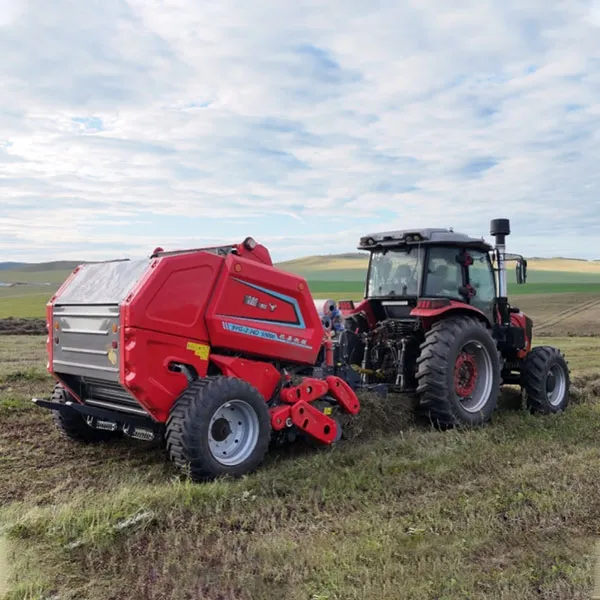
Founded in 2021 and located in the National Modern Agricultural Machinery Industrial Park, Jiujia has quickly risen to the top position, becoming China's No. 1 round baler sales volume in 2023-2024. The company demonstrates an approach that is becoming a quality standard in the industry: combining R&D, serial production and service on one site with an area of more than 32,000 m².
For the buyer of rotary tedders and other forage equipment, the Jiujia experience is indicative for several reasons:
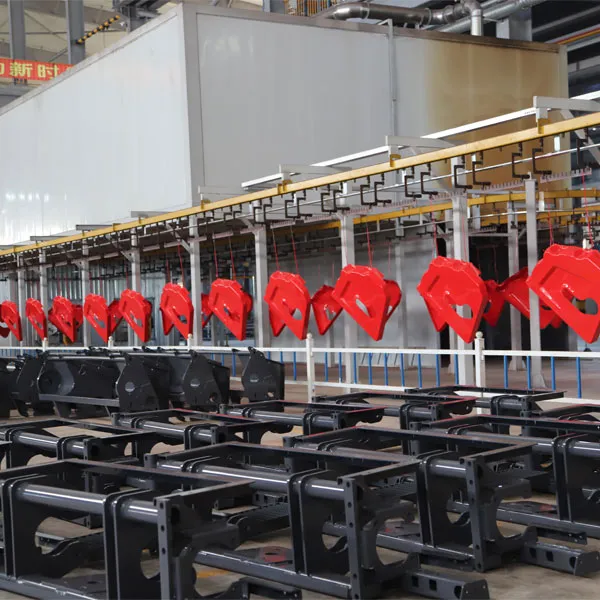
- Manufacturability of production:The use of CNC laser cutting, automated welding systems and electrostatic spraying lines ensures high precision rotor geometry and frame durability, which is critical for high-speed operation.
- Adaptability to Russian and CIS markets:The company has the status of a national high-tech enterprise, is ISO 9001 certified and has already successfully exported equipment to Russia and Mongolia, having a subsidiary in Choibalsan. This ensures that local operating conditions are understood and that the required EAC certifications are in place.
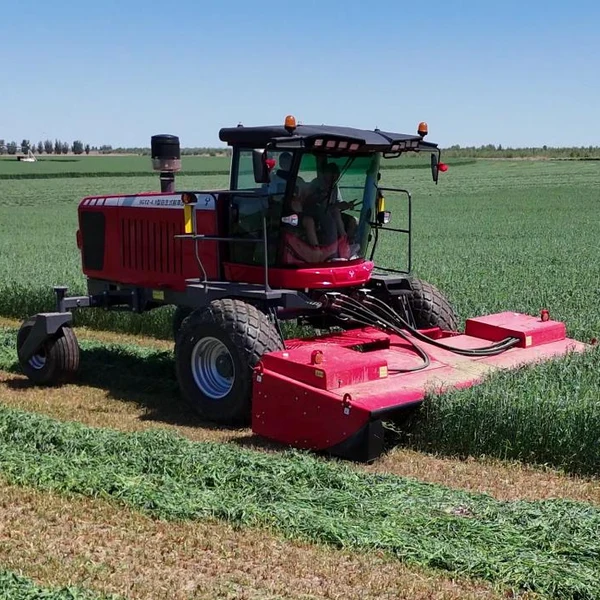
- Wide range of solutions:In addition to tedders, the manufacturer offers comprehensive solutions for forage preparation, including mower rakes (9GL, 9GD series), balers (9YG-1.0, 9YCM-850) and lifting machines, which allows you to create a complete fleet of equipment from one vendor.
Focusing on manufacturers such as Jiujia helps farms avoid the risks associated with “gray” imports and receive equipment adapted to difficult climatic zones with full warranty support.
Pricing: prices from the manufacturer in 2026
The agricultural machinery market in 2026 is characterized by high volatility in prices for metal and components. Costrotary tedder for haydepends on many factors, and understanding the price structure will help you avoid overpayments.
Price range (indicative)
- Small mounted models (4-5 rotors, reach 4-5 m):800,000 – 1,200,000 rub. This is the basic level for small farms up to 100 hectares of arable land.
- Medium trailed/mounted models (6-8 rotors, reach 6-8 m):1,500,000 – 2,500,000 rub. The optimal choice for farms with an area of 200-500 hectares.
- Wide-cut professional complexes (10+ rotors, grip 9-12 m):from 3,000,000 rub. and higher. They require powerful, energy-rich tractors.
Note: Prices do not include VAT and logistics. The final cost may vary depending on exchange rates and delivery region.
What affects the cost?
- Drive type:Hydraulic systems are 20-30% more expensive than mechanical systems, but they reduce the risk of tractor transmission failure and allow more precise adjustment of the operating mode.
- Brand and origin of components:The use of European bearings (SKF, FAG) and Italian hydraulics increases the price, but guarantees a service life of 5-7 years. Chinese analogues are cheaper, but require more frequent replacement.
- Availability of options:Automatic leveling systems, speed control sensors, reinforced frame - all this increases the cost, but is justified under intensive use.
- Service support:Purchasing from an authorized dealer or directly from the manufacturer includes a warranty and availability of spare parts. “Gray” supplies can be 15% cheaper, but the risk of downtime during the season is critical.
How to Choose a Rotary Hay Tedder: A Step-by-Step Guide
The choice of technology is always a compromise between performance, cost and reliability. An error in choice leads not only to financial losses, but also to loss of harvest. Below is a selection algorithm based on engineering practice.
Step 1: Assessment of area and fleet of equipment
Do not buy a machine “with a reserve” if you do not have the appropriate tractor. The working width of the tedder must be matched to the working width of the mower. The ideal option is when the tedder overlaps the width of the mower by 10-15% to ensure that the entire mass is picked up. Also check the power of your tractor: for each meter of grip of the rotary tedder, approximately 15-20 hp are required. for comfortable work.
Step 2: Field relief analysis
If your fields have complex terrain (slopes, holes), pay attention to the number of support points and the rotor suspension system. Models with independent suspension of each rotor follow the surface better than rigid frames. For flat steppe zones, you can consider simpler and cheaper designs with a rigid frame.
Step 3: Selecting Finger Type
For clean fields without stones, you can use steel - it's cheaper. If there is a risk of encountering rocks, roots or uneven surfaces, composite pins are highly recommended. They are more expensive, but they save time on straightening bent rakes and reduce the load on the bearings.
Step 4: Check service availability
Ask the supplier: “Are the bearings and pins in stock right now?” The tedding season is short (2-3 weeks at peak). If you wait a week for a spare part, you will lose hay. Having a spare parts warehouse at the manufacturer or dealer is more important than a 5% discount.
Model comparison: Budget vs Premium
To make your decision easier, let's compare two typical approaches to the production of rotary tedders on the market in 2026.
| Criterion | Budget model (Economy) | Premium model (Pro) |
|---|---|---|
| Frame | Profile pipe of standard thickness, semi-automatic welding. | High-strength steel, reinforced fastening points, anti-corrosion treatment. |
| Rotor bearings | Closed, unattended, made in China. | Reinforced, lubricable, SKF/NSK brands. |
| Adjustment | Mechanical, requires getting out of the tractor and using a tool. | Hydraulic from the cab, fine adjustment of angle of attack on the move. |
| Transport position | Manual folding or lack of a complex system (for narrow models). | Full hydraulic folding, transport locking. |
| Resource before overhaul | 3-4 seasons at average load. | 7-10 seasons or more. |
| Cost of ownership | Low initial price, high repair costs. | High initial price, low operating costs. |
Engineering opinion:If you plan to cultivate more than 300 hectares annually, savings on the initial cost of purchasing a budget model will result in losses in the second year due to downtime and repairs. For areas up to 100 hectares, the budget option is quite cost-effective, subject to careful operation.
Typical errors during operation and maintenance
Even the most expensiverotary hay tedderwill fail prematurely if the operating rules are violated. Here is a list of the most common problems machine operators encounter.
1. Running at too low a speed
Many operators believe that the slower the tractor goes, the better the hay will turn. This is a misconception. The rotors must have a certain peripheral speed to effectively throw the mass. At a speed of less than 6-8 km/h, the hay is not thrown over, but drags along the ground, becoming contaminated with soil. The optimal speed is 10-12 km/h.
2. Ignoring lubrication
Rotors operate under conditions of high dust loads. Even “maintenance-free” bearings are recommended to be checked and lubricated (if the design includes grease nipples) every 10-15 hours of operation. Dust getting inside the bearings is the main reason for their jamming.
3. Incorrect PTO height
The cardan shaft must be able to move freely when raising and lowering the implement. If the shaft is clamped, when hitting a bump, the force will be transferred to the tractor gearbox or tedder gearbox, which will lead to destruction of the splines or bearings.
4. Tedding at night or in dew
Wet grass has more weight and a tendency to stick to your fingers. This creates an imbalance in the rotors, causing vibration that destroys the frame and bearings. Work only on dry hay.
Logistics and export: nuances of delivery in 2026
When ordering equipment from a manufacturer, it is important to consider logistical aspects. Rotary tedders carry large loads. The width of transport dimensions often exceeds 2.5 meters, which requires special permission for transportation on public roads or the use of a trawl.
If you are in a remote area, check for local assembly capabilities. Some manufacturers supply equipment partially disassembled (Knock-down kit) to save on transport costs. Make sure you have qualified personnel perform the assembly, as improper assembly can disrupt the geometry of the rotors and cause runout.
For export deliveries (Kazakhstan, Belarus, Uzbekistan), please pay attention to the availability of EAC certificates and compliance with customs requirements. The manufacturer must provide a full package of documents for smooth border crossing and registration.
FAQ: Frequently asked questions about rotary tedders
How much fuel does a rotary tedder consume?
The tedder itself does not consume fuel, but creates a load on the tractor. On average, working with a wide-cut rotary tedder increases tractor fuel consumption by 20-30% compared to idling. For tractor 100 hp this is approximately 10-12 liters of diesel per hour.
Can a rotary tedder be used for straw?
Yes, you can. However, for heavy, wet straw, the angle of attack of the rotors may need to be adjusted. Straw is less delicate than hay, so you can work more aggressively. The main thing is to make sure that the length of the straw does not exceed the gripping capacity of the rotors (usually up to 1.5 meters).
How often do you need to change tine fingers?
The service life depends on the material and operating conditions. Steel fingers last 2-3 seasons, composite ones - 3-5 seasons. Replacement is required if the finger has lost elasticity, has cracks, or has worn away by more than 30% of its diameter. It is recommended to change pins as a set on one rotor to maintain balance.
What is the optimal moisture content of hay for tedding?
Tedding works most effectively at a humidity of 30-50%. When the humidity is above 60%, the grass is too heavy and sticky, and the quality of turning decreases. If the humidity is below 15% (over-dried hay), the risk of leaf breakage and nutrient loss increases.
Do I need a special tractor to operate the tedder hydraulics?
For models with hydraulic folding and angle of attack adjustment, the tractor must have an additional hydraulic section (spool). If there is no such section, the installation of an additional hydraulic distributor will be required, which will increase the cost of modernizing the tractor.
Buying Recommendations and Final Thoughts
Purchaserotary tedder for hayin 2026 is an investment in the quality of your feed. Don't just look at the catalog price. Assess the total cost of ownership, availability of service and suitability of the machine for your specific conditions (area, terrain, fleet).
We recommend requesting a demonstration of the equipment in your field before purchasing. Only actual use will show how the machine copes with your grass type and terrain. Pay attention to the behavior of the rotors on uneven surfaces and the cleanliness of the selected mass.
Remember: good hay is milk and meat. Savings at the drying stage are unacceptable. Choose reliable manufacturers that provide a warranty and technical support.
Ready to discuss the selection of equipment for your farm? Our engineers will help you calculate the optimal configuration based on your tasks.
→ Receive an individual commercial offer and advice from an engineer: Contact sales department
We also recommend that you familiarize yourself with our catalog of attachments:Products and technical solutions