Agricultural and livestock equipment 2026: prices from the manufacturer
2026-08-17
Agricultural and Livestock Equipment 2026: Market Overview, Manufacturer Prices and Technical Standards
Agricultural and livestock equipmentin 2026, it is a complex engineering complex that integrates high-strength mechanical components with precision farming and automated microclimate control systems. For agribusinesses, the choice of equipment is determined not only by initial cost, but also by total cost of ownership (TCO), energy efficiency of Stage V/Euro 5 engines and compatibility with digital farm management platforms. Direct deliveries from the manufacturer can reduce capital costs by 15–20%, excluding intermediary markups, and provide direct technical support for integrating machines into existing production lines.
A modern fleet of machines for crop and livestock production requires careful analysis for specific soil and climatic conditions and the types of crops grown or animals raised. In this material, we analyze the key technical parameters that affect performance, current price ranges in the Russian and CIS markets, as well as criteria for assessing the reliability of suppliers. We avoid marketing slogans, focusing on engineering characteristics, component life and real return on investment in conditions of unstable logistics and changing requirements for environmentally friendly production.
Classification and purpose: what is included in the concept of agricultural machinery
Termagricultural and livestock equipmentcovers a wide range of equipment, which is divided into two large groups according to functional purpose: equipment for working with soil and plants (crop farming) and equipment for keeping, feeding and caring for livestock (livestock farming). Understanding this differentiation is critical for the correct formation of the budget and technical specifications.
Crop farming equipment
This category includes power vehicles (tractors of various traction classes) and mounted/trailed equipment. Key subcategories:
- Tillage:plows (reversible, disc), cultivators (steam, seedbed), harrows (disc, spring). The most important parameter here is the depth of cultivation and the quality of soil crumbling, which affects moisture conservation.
- Sowing and planting:grain seeders, corn planters, potato planters. The accuracy of sowing (seed dosage per hectare) directly determines the yield.
- Crop care:sprayers (boom, self-propelled), fertilizer spreaders. Requires high chemical resistance of tank and pump materials.
- Harvest:grain harvesters, forage harvesters, balers.
Animal husbandry equipment
Here the emphasis shifts from power characteristics to dosing accuracy, hygiene of materials and reliability of electronics. Main groups:
- Feed distribution:feed mixers (vertical and horizontal screw), feed distribution conveyors, feed robots.
- Milking and milk pipe:milking machines, vacuum installations, milk cooling tanks. The level of vacuum and pulsation is critical for the health of the cow's udder.
- Manure removal:scrapers, screw-type conveyors, lavage cleaning systems.
- Climate control:fans, fogging systems, ventilation curtains.
Where Agricultural and Livestock Equipment is Used: Industry Scenarios
The use of equipment is strictly tied to the technological maps of farms. An error in selecting equipment for a specific scenario leads to a loss of up to 30% of efficiency. Let's consider two typical engineering operating scenarios in 2026 conditions.
Scenario 1: Large grain farm (Black Earth Region, Russian Federation)
Task:Cultivation of 5000 hectares of arable land, growing wheat and sunflower. Minimizing grain losses during harvesting.
Required equipment:
- Tractors of the 3–4 tf class (250–350 hp) for aggregation with wide-cut sowing complexes (12–15 meters).
- Combine harvesters with a hopper of 8000 liters and more and a Rotar or hybrid separation system.
Engineering aspect:In compacted soil conditions, ground pressure is critical. The use of caterpillar tracks or twin wheels reduces the specific pressure to 0.6–0.8 kg/cm², which prevents the formation of a plow sole. The productivity of the combine should be at least 15–18 tons per hour with a grain moisture content of 14%. When choosing a combine, it is important to pay attention to the sieve area: for our conditions, at least 5.5–6 m² is optimal to avoid engine overheating and under-grinding.
Scenario 2: Dairy farm for 500 head (Free housing)
Task:Automation of feeding and milking, reduction of personnel labor costs.
Required equipment:
- Vertical mixer-feed dispenser with a volume of 12–14 m³.
- Milking parlor type “Carousel” or “Herringbone” for 2×12 places with automatic removal of cups.
- Manure removal system with frequency control of engines.
Engineering aspect:The quality of feed mixing (TMR) is determined by the homogeneity of the fraction. A vertical auger should provide a mixing time of 3-5 minutes without destroying the structure of long-stemmed haylage. For milking equipment, the key parameter is the stability of the vacuum (42–44 kPa) and the absence of changes when connecting new devices. Any fluctuations above 2 kPa lead to an increase in mastitis in the herd by 15–20% within six months.
Main technical characteristics and selection parameters
When purchasing equipment, it is necessary to operate with specific technical metrics, and not with general phrases about “high quality.” Below are the key parameters that should be in the specification.
| Parameter | Impact on Operation | Recommended values (2026) |
|---|---|---|
| Engine power (kW/hp) | Traction force, operating speed, fuel consumption | Specific fuel consumption no more than 220 g/kWh for diesel engines |
| Hydraulic system | Attachment operation, positioning accuracy | Pump capacity from 100 l/min, pressure 20–25 MPa |
| Cutting element material | Wear resistance, sharpening/replacement frequency | Hardox steel 450/500 or heat treated equivalents |
| Control system (ISOBUS) | Compatible with GPS monitoring, autopilot | Minimum ISOBUS UT Level 3 certificate |
| Resource until CR (overhaul) | Long-term economics of ownership | For tractors: from 10,000 operating hours; for combines: from 3000 hours |
Particular attention should be paid to the hydraulic system. In 2026, the use of electro-hydraulic valves with proportional control becomes standard. This allows the operator to precisely control the depth of the planter's implements or the lifting height of the loader bucket, which cannot be done with the same efficiency with conventional levers.
Pricing: what determines the cost of agricultural machinery
Price foragricultural and livestock equipmentis formed under the influence of several factors. Understanding the price structure helps you negotiate with the manufacturer and avoid hidden fees.
1. Design and materials
The use of high-strength steels (for example, Swedish brands or their high-quality analogues) increases the cost of the frame by 10–15%, but extends the service life in abrasive soils by 2–3 times. Cheap equipment often saves on metal and bearings, using conventional structural steel instead of wear-resistant steel.
2. Level of automation
The presence of an on-board computer, yield monitoring systems, autopilot and telematics adds from 500 thousand to 2 million rubles to the cost of the machine. However, these systems pay for themselves due to savings in seeds, fertilizers and fuel (up to 15% savings in fuel and lubricants).
3. Logistics and customs duties
For imported components or finished machines, the logistics component can reach 20% of the price. Purchasing from a local manufacturer that uses localized nodes reduces this risk. It is important to check the availability of EAC (Eurasian Conformity) certificates, without which the operation of equipment is illegal.
4. Service support
The price often includes the cost of the first year of service or extended warranty. Cheap equipment without a developed network of service centers can become a “headache” during the harvesting campaign, when downtime costs tens of thousands of rubles per hour.
Comparison of drive types and designs: an engineering perspective
The choice between different types of structures is often controversial. Let's consider a comparison using the example of feed distributors and tractors.
Vertical vs Horizontal mixer
Horizontal mixers handle roughage better and require less power, but they do not mix ingredients well until they are homogeneous and can create “dead zones.” Vertical mixers provide perfect homogeneity of the mixture due to the vertical auger, but consume more energy and have higher wear on the bottom. For dairy farms with high dietary requirements, the vertical type is the only choice, despite the high price.
Wheeled vs Crawler tractor
Tracked tractors provide better traction and less ground pressure, but their top speed is limited (usually 20–25 km/h), making them ineffective for long-distance transport work. Wheeled tractors are more versatile and faster, but require ballasting and tire pressure monitoring. In 2026, the trend shifts to wheeled tractors with central tire pressure control systems, which allows them to compete with tracked tractors in terms of soil impact.
How to choose a supplier: reliability criteria
The market is saturated with offers, but not all suppliers are able to ensure long-term performance of equipment. When choosing a partner, pay attention to the following points:
- Availability of own production or direct contracts.Check whether the company is a manufacturer or just a reseller. Request a video from the production line.
- Spare parts warehouse.Availability of running spare parts (filters, belts, bearings, coulters) in stock in your region. The delivery time for critical components should not exceed 3–5 days.
- Qualification of the service team.Ask to see engineer training certificates. Modern technology requires diagnostics via laptops, and not just the “hearing” of a mechanic.
- Reference list.Request contact information for existing clients in your region. Call them and ask about the real breakdown of equipment during the season.
- Transparency of the guarantee.Clearly stated terms of the guarantee: what is covered, what cases are rejected, response times to the application.
An example of a reliable manufacturer: the experience of Jiujia
To illustrate the criteria for a quality manufacturer, consider the case of a companyHulunbuir Jiujia Machinery Manufacturing Company. It is a modern integrated enterprise located in the National Modern Agricultural Machinery Industrial Park (Hulunbuir City). Founded in 2021, the company has quickly risen to the top position, becoming China's No. 1 in round baler sales in 2023-2024.
Jiujia demonstrates the approach mentioned above: a combination of in-house R&D, a powerful production base and a direct export policy. The plant, with an area of more than 32,000 m², is equipped with CNC laser machines, automated welding systems and electrostatic spraying lines. Having its own testing laboratory and almost a hundred patents allows the company to produce equipment adapted to difficult climatic conditions, including the regions of Russia and Mongolia.
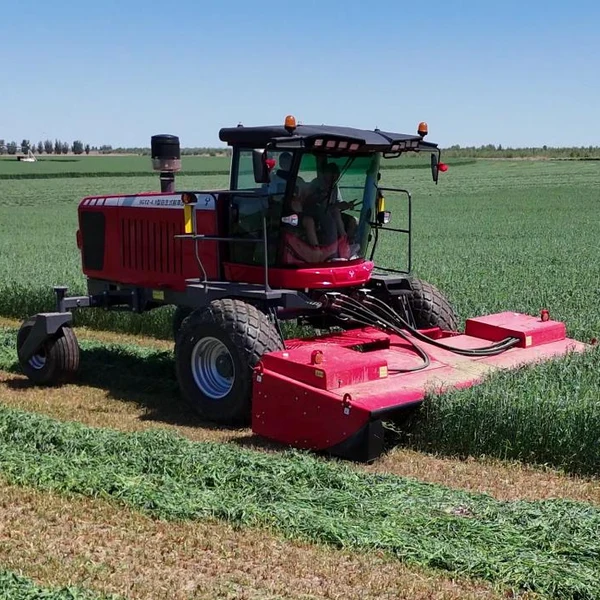
The company's portfolio includes specialized equipment for the preparation of feed: round balers (for example, model 9YG-1.0 and 9YCM-850 with wrapping), mower rakes (9GL-2.5/2.9), drum rakes (9LG-9.0) and lifting machines for beans. Direct deliveries from such a manufacturer, which has the status of a national high-tech enterprise and an ISO 9001 certificate, guarantee compliance with technical standards and transparency of pricing, which is especially important when working under sanctions restrictions and logistics challenges in 2026.
Typical mistakes when purchasing and using
An analysis of calls to service centers shows that most breakdowns are not due to manufacturing defects, but to operating and selection errors.
- Incorrect selection of tractor for attachments.Often they buy a tractor with power reserves “for the future”, but with insufficient hydraulic performance. As a result, the attachment operates jerkily or does not develop the required pressure.
- Ignoring run-in.New equipment requires a break-in mode (the first 50–100 operating hours at reduced loads). Neglect of this rule leads to scoring in the cylinders and premature wear of the transmission.
- Savings on maintenance.The use of cheap oils and filters that do not meet manufacturer specifications (for example, SAE viscosity or API/ACEA class) leads to loss of warranty and failure of expensive components.
- Lack of calibration.Seeders and sprayers require annual calibration. Working “by eye” leads to over-consumption of seeds by 10–15% and uneven application of plant protection products.
Trends 2026: where the industry is heading
Marketagricultural and livestock equipmentis actively transforming. Three main vectors of development can be distinguished:
1. Electrification of small equipment.Compact electric tractors and loaders are appearing for greenhouses and small farms. They are quieter, have no emissions and require minimal maintenance (no engine oil, no filters). However, batteries do not yet provide sufficient autonomy for heavy field work.
2. Robotization.Robots for weeding, milking and fruit picking are moving from the pilot stage to mass production. They help solve the problem of staff shortages in rural areas.
3. Precision farming as standard.Variable fertilization systems (VRA) are becoming affordable even for medium-sized farms. This requires the equipment to have ISOBUS interfaces and be compatible with task cards.
Logistics and export features
When ordering equipment from a manufacturer, it is important to take into account logistical nuances. Large loads (wide-cut seeders, combines) require special permits for transportation on public roads. Shipping costs may vary depending on season and trawl availability. When exporting, it is necessary to prepare in advance a package of documents for customs clearance, including a certificate of origin form ST-1 (if applicable) to receive preferential duties in the EAEU countries.
We recommend planning deliveries 2-3 months before the start of the season to avoid queues at production and logistical collapses. It is also worth considering the possibility of modular delivery: some machines are delivered disassembled to reduce size, which requires skilled assemblers on site.
FAQ: Frequently asked questions
What is the payback period for modern agricultural machinery?
The payback period depends on the type of crop and intensity of use. For grain harvesters, the average period is 3–4 seasons, for tractors – 4–5 years, for livestock equipment (milking parlors) – 5–7 years. Using equipment in multi-shift mode reduces the payback period in proportion to the load.
Is it possible to buy agricultural machinery on lease?
Yes, most manufacturers and dealers work with leasing companies. Leasing allows you to renew your fleet without withdrawing large working capital. It is important to compare the full cost of leasing (including price increases) with lending rates. Manufacturers often offer subsidized leasing programs with low rates.
What to do if your equipment breaks down during the season?
The first step should be to contact the supplier's customer service hotline. Having a service agreement will prioritize your request. Independent repair of complex components (hydraulics, electronics) without diagnostics may void the warranty. Keep a minimum set of critical spare parts (belts, fuses, sensors) in stock.
Does the weight of equipment affect productivity?
Yes, excessive weight leads to overcompaction of the soil, deterioration of its aeration and water permeability. This reduces yield by 5–10% in the long term. It is recommended to use equipment with low specific soil pressure (wide tires, tracks, pressure reduction systems).
How to check the build quality before purchasing?
Pay attention to the quality of welds (must be smooth, without pores), painting (layer thickness, no smudges), tightening of bolted connections (must be marked with paint). Ask to turn on the car and check the operation of the hydraulics at idle: there should be no extraneous noise, vibrations or oil leaks.
Purchase recommendations and final checklist
Purchaseagricultural and livestock equipmentis an investment for years to come. To make the right choice, follow this algorithm:
- Conduct an audit of your fields or farm: determine the exact power and functionality needs.
- Draw up technical specifications with specific parameters (working width, tank volume, power).
- Request commercial offers from 3-5 manufacturers, comparing not only the price, but also the equipment.
- Check service and parts availability in your area.
- Visit an exhibition or demo field to see the equipment in action.
- Discuss leasing terms and warranties.
- Sign the agreement, carefully studying the clauses on the responsibilities of the parties.
Don't chase the lowest price. Cheap equipment often turns out to be expensive to operate due to downtime and repairs. Choose a balance of price, reliability and support.
Conclusion
In 2026agricultural and livestock equipmentbecomes a high-tech asset that requires competent management. Direct cooperation with manufacturers allows you to get the best prices and personalized approach. Investments in quality equipment that meets your agricultural technological requirements guarantee stable profits and business resilience to external challenges. Remember that equipment should work, and not be under repair.
If you are ready to discuss technical details, select a configuration to suit your needs, or request an up-to-date price list, contact our engineers. We will help you find the optimal solution for your farm.
Do you need advice on selecting equipment?
Receive an individual commercial offer and payback calculation.
→Contact sales department | Download product catalog 2026