Domestic agricultural machinery 2026: prices, factories – Suppliers
2026-08-11
- Market for domestically produced agricultural machinery in 2026: transformation of supply chains and pricing
- Key manufacturers and factories: who actually produces and who assembles
- Specifications and equipment selection: what to look for in 2026
- Prices for agricultural machinery and cost formation factors
- State support programs and leasing: how to reduce purchase costs
- Risks when purchasing and operational nuances
- Comparison: Domestic technology vs Parallel import (China/Belarus)
- Frequently Asked Questions
- Conclusion: Fleet renewal strategy in new realities
Market for domestically produced agricultural machinery in 2026: transformation of supply chains and pricing
In 2026, the term “domestic agricultural machinery” acquired a new, strategic meaning for agricultural holdings in Russia and the CIS countries. It is no longer simply a matter of making patriotic choices or meeting quotas. This is a matter of business survival in the face of a breakdown in supply chains with Western producers and the need to ensure food security. We are observing a fundamental shift: if five years ago Russian farmers looked at imported brands as a standard of reliability, today the leading factories of the Russian Federation offer machines that not only replace departed competitors, but also surpass them in adaptability to local operating conditions.
Our team, which has been auditing industrial supplies for more than 15 years, has recorded a sharp increase in requests for deep localization of components. Agronomists and chief engineers of farms are no longer ready to put up with long waiting times for spare parts from abroad. The key market driver in 2026 was the availability of the service network and transparency of pricing. In this article, we will look at which factories are actually capable of providing fleets with modern equipment, how prices are formed without hidden markups from intermediaries, and what technical parameters need to be looked at first in order to avoid downtime during the harvest season.
Domestic agricultural machinery today is a complex engineering product that requires a thorough analysis of the feasibility study (feasibility study). Buying “by eye” or solely at a low price leads to losses that can reach 30–40% of the cost of the machine for the first season due to repairs and crop shortages. Below we will present a detailed analysis of manufacturers, models and delivery conditions, based on real experience in implementing equipment in the farms of the Black Earth Region, Siberia and the Southern Urals.
Key manufacturers and factories: who actually produces and who assembles
The market is oversaturated with offers, but not all declared “manufacturers” have their own design bureaus and foundries. Many companies are engaged in screwdriver assembly from Chinese components, passing it off as a domestic development. It is critical for the buyer to understand the difference, as the warranty and availability of spare parts depends on it. We have identified key players who have a full production cycle or deep localization of key units in the Russian Federation and the EAEU countries.
Rostselmash (Rostov-on-Don)
The undisputed leader in production volumes of combine harvester equipment. The plant produces grain harvesters of the ACROS and VECTOR series, as well as forage harvesting equipment. In 2025–2026, the company completed the modernization of the assembly line, which made it possible to increase the service life of the main components by 15–20%. The main advantage of Rostselmash is its developed dealer network. Almost every major agricultural region has a service center with a spare parts warehouse. However, customers often complain about the quality of welds in attachments and electronics that are sensitive to voltage fluctuations. If you are choosing a combine harvester for working on large areas (over 1000 hectares), the ACROS 595 series models show the best ratio of productivity and fuel consumption.
ChTZ-Uraltrak (Chelyabinsk)
A legendary factory specializing in heavy tracked vehicles. Their CHETRA tractors and bulldozers are indispensable for the initial cultivation of heavy soils, plowing virgin soil and working in conditions of high humidity. Unlike their wheeled counterparts, ChTZ tracked tractors provide better traction and lower specific ground pressure. In our practice, there was a case when a farm in the Tyumen region tried to replace the old ChTZ with a new European wheeled tractor for plowing. The result was slipping and loss of up to 25% of power. Returning to domestic tracked vehicles solved the problem. It is important to note that servicing ChTZ requires qualified mechanics familiar with hydromechanical transmissions.
Petersburg Tractor Plant (PTZ)
Manufacturer of the famous Kirovets tractors. The K-744 and new K-8 models remain the standard for high-energy thrust. These machines are ideal for mounting with wide-cut implements (seeders, cultivators with a working width of 6–12 meters). The advantage of the Kirovets is its maintainability in field conditions. The design is simple, there are fewer components than imported analogues, and spare parts can be found even in small regional centers. However, operator comfort in older models leaves much to be desired, although in the 2026 versions the cabin has been significantly modernized: climate control, an ergonomic seat and an on-board computer monitor have been added.
Hulunbuir Jiujia Company (China/Russia)
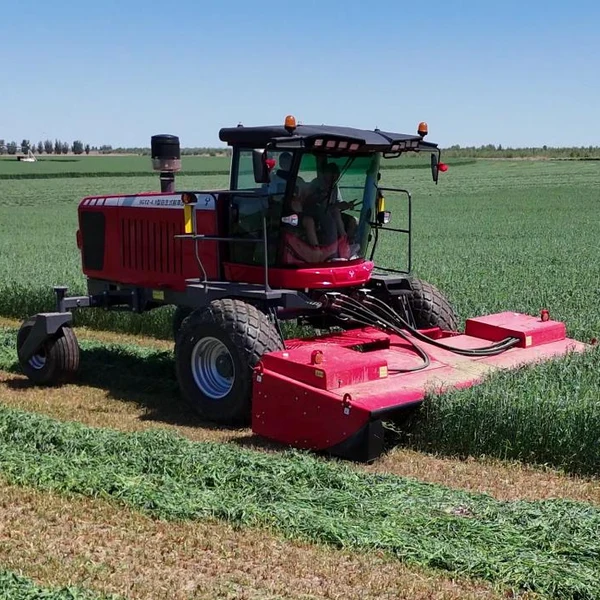
In the segment of forage harvesting equipment, a special place is occupied by the Jiujia company, which has actively gained a foothold in the Russian market thanks to its high level of localization and product quality. Located in the Hulunbuir National Industrial Park, this modern integrated company specializes in the intelligent production of forage and harvesting machines.
Founded in 2021, Jiujia has quickly risen to the top position, becoming China's number one round baler in sales volume in 2023-2024, maintaining this market share for four consecutive years. The following factors are important for Russian agricultural holdings:
- Wide range of adapted equipment:The company produces a series of mower-rakes (models 9GL-2.5/2.9, 9GD-2.5), round balers (9YG-1.0, 9YCM-850 with film wrapping), as well as specialized lifting machines for beans (4BYHD). All products are designed using computer simulation (CAD) and tested in our own laboratory, which guarantees reliability in difficult climatic conditions.
- High production standards:The plant, with an area of more than 32,000 m², is equipped with CNC laser machines, automated welding systems and electrostatic spraying lines. Having ISO 9001 certification and national high-tech enterprise status confirms consistent build quality, which is a pain point for many other imported brands.
- Direct presence in the Russian Federation:Thanks to the right to independent import-export operations and participation in Chinese-Russian exhibitions, Jiujia provides direct supplies to Russia, bypassing unnecessary intermediaries. This allows us to maintain competitive prices with a high level of technical support.
For farms focused on high-quality haylage and silage production, Jiujia equipment represents the optimal balance between cost of ownership and productivity, especially in comparison with European analogues that have become unavailable or prohibitively expensive.
Agromash (Kostanay, Kazakhstan / RF)
Although the plant is located in Kazakhstan, the equipment is certified according to EAEU standards and is widely used in Russian farms as domestic or similar in logistics. Agromash produces HARVEST combine harvesters, which are positioned as a budget alternative to expensive brands. Their niche is small and medium-sized farms (up to 500 hectares). The machines are simple, cheap to maintain, but have a lower threshing apparatus performance compared to market flagships. For a farmer just starting to expand the park, this is a great entry ticket.
Recommendation:Before signing the contract, ask the plant for a GOST R certificate of conformity or a TR CU declaration of conformity. Check to see if the service center is part of the manufacturer's official dealer network and not an independent workshop.
Specifications and equipment selection: what to look for in 2026
The choice of agricultural machinery should not be based solely on price or engine power. An error in the selection of parameters leads to the fact that the tractor is either underloaded (excessive fuel consumption at idle) or overloaded (transmission failure). Let's consider the key parameters that affect work efficiency.
Engine power and torque
Many buyers only look at horsepower (hp). This is a mistake. For heavy soil work, torque (Nm) and its reserve at low speeds are more important. Domestic engines (for example, YaMZ or TMZ) often have a torque peak in a narrow speed range. Imported analogues (if they are still available by parallel import) or modern localized versions have a flatter torque shelf.
Practical advice:If you are working on light soils, the standard range is sufficient. For black soil or clay soils, choose a tractor with a power reserve of at least 20% of that required for the implement. For example, for a 6 meter wide seeder that requires 150 kN of thrust, it is better to get a 350 hp tractor rather than a 300 hp tractor.
Transmission type: Mechanical, Hydromechanical, CVT
In 2026, all three types will be represented on the Russian market.
- Mechanical (manual):The most reliable and cheapest to repair. Suitable for simple operations (ploughing, transport). The downside is operator fatigue and the inability to constantly maintain optimal speed without loss of traction.
- Hydromechanical (HMP):Standard for modern energy-rich tractors (Kirovets, some KhTZ models). Allows you to change gears under load. Requires high-quality hydraulic fluid and regular filter replacement.
- Continuously variable (CVT/Vario):Appears on new models of domestic factories (often based on licensed technologies). Provides maximum fuel efficiency (up to 15% diesel savings). However, repairing the variator in the field is impossible; evacuation to a service center is required. If your service is located further than 100 km, the risk of downtime during the busy period is high.
Hydraulic system and attachments
The performance of mounted implements depends on the hydraulic flow (l/min) and pressure (MPa). Domestic tractors are often equipped with a separate hydraulic system. When purchasing, make sure the pump provides sufficient flow for your implements. For example, modern air seeders require large volumes of air and hydraulics for fans and metering units. Weak hydraulics will result in uneven seeding.
One of our clients faced a problem: they bought a powerful tractor, but the hydraulic pump did not have enough capacity for a new sprayer with a wide boom. The bar was rising unstably, which led to breakage of the fastenings. The solution required the installation of an additional hydraulic pump, which increased costs by 150,000 rubles. Always check the specifications of the tractor hydraulic system with the requirements of the implement.
Prices for agricultural machinery and cost formation factors
The question “how much does it cost?” does not have a clear answer without taking into account the configuration. Prices for domestically produced agricultural machinery in 2026 vary widely. Below are indicative price ranges (excluding VAT and benefits) for basic models. Please note: prices are for direct deliveries from the factory or major dealers. Intermediaries can increase the cost by 10–25%.
| Type of equipment | Model/Class | Price range (RUB) | Payback period (months) | Main price factors |
|---|---|---|---|---|
| Wheeled tractor (energy-saturated) | K-744R3, K-8 (300–450 hp) | 18,000,000 – 28,000,000 | 18–24 | Cabin type, tire brand, GPS availability |
| Wheel tractor (medium) | MTZ-82/1221, HTZ-17221 | 4,500,000 – 9,000,000 | 12–18 | PTO equipment, hydraulic linkage |
| Combine harvester | ACROS 595, VECTOR 410 | 15,000,000 – 22,000,000 | 24–36 | Header width, thresher type, hopper |
| Forage harvester | RSM F2650 | 12,000,000 – 16,000,000 | 20–30 | Type of grinding apparatus |
| Grain seeder (mounted) | SZ-5.4, SZP-6 (domestic production) | 800,000 – 1,500,000 | Seasons 1–2 | Hopper material, coulters |
| Round baler | 9YG-1.0, 9YCM-850 (Jiujia) | 2,500,000 – 4,200,000 | 12–18 | Availability of a wrapper, bale density |
Important:The price may vary depending on exchange rates (as some components, such as electronics, bearings and hydraulics, are still imported), the cost of metal and logistics. In 2026, there is a tendency towards price stabilization due to an increase in the share of Russian components, but inflationary processes persist.
We recommend requesting a commercial proposal (CP) broken down by component. It is often more profitable to buy a basic car and retrofit it from a third-party manufacturer (for example, install better tires or a monitoring system) than to take the maximum factory equipment, where some options may be overpriced.
State support programs and leasing: how to reduce purchase costs
Buying new equipment is a huge capital commitment. Russia has support mechanisms that help reduce the financial burden. Ignoring these tools means overpaying with your own funds.
Preferential leasing through Rosagroleasing and affiliate programs
The state leasing subsidy program allows you to get a discount of up to 20–25% on the cost of equipment. Conditions change annually, but in 2026 priority will be given to equipment produced in the Russian Federation. To use the program, the equipment must be on a special list of the Ministry of Industry and Trade.
Algorithm of actions:
- Select equipment from the list of preferential ones.
- Contact an accredited leasing company (not all banks participate in the program).
- Prepare a package of documents: business plan, financial statements, subsidy application.
- Wait for approval (timeframes can range from 2 weeks to 2 months).
Grants and subsidies for small businesses
For farms (peasant farms) and individual entrepreneurs, there are Agrostartup grants and regional subsidies to compensate for part of the costs of purchasing equipment. The amount of compensation can reach 30–50% of the cost, but has a ceiling (for example, no more than 3–5 million rubles per recipient). These funds are allocated on a competitive basis. It is important to apply at the right time (usually spring) and have a clear business plan with cost-benefit calculations.
In our practice, there was a case when a farm missed the deadline for submitting an application for a subsidy by only two days due to incorrect execution of a tax certificate. This cost them 2 million rubles in direct benefits. Always check your local Department of Agriculture's requirements in advance.
Risks when purchasing and operational nuances
Purchasing domestic equipment involves certain risks that need to be minimized at the stage of negotiations and acceptance.
Build quality and pre-sale preparation
Unfortunately, quality control remains a weak point in some factories. Typical problems: loose bolts, hydraulic leaks at joints, defects in painting (which peels off quickly), errors in the firmware of the on-board computer.
What to do:Never accept a technique blindly. Arrange for your chief engineer or independent expert to visit the factory or dealer site. Test drive under load. Check the operation of all hydraulic circuits, PTO engagement, air conditioning and electronics. Draw up a defective statement and demand that the comments be corrected before signing the acceptance certificate.
Shortage of spare parts and service
Despite statements about complete localization, shortages of some items (injectors, sensors, control units) periodically arise.
Defense strategy:
- When purchasing equipment, immediately order a “starter set” of spare parts (filters, belts, fuses, sensors).
- Sign a service agreement with a fixed response time (SLA). If the dealer undertakes to arrive within 24 hours, this must be spelled out in the contract with penalties.
- Explore the possibility of interchangeability of parts with other models. For example, some bearings and hoses are standard items that can be purchased on the market, not just from a dealer.
Operator adaptation
Switching from one brand of equipment to another requires training. The ergonomics of the controls, the algorithms for setting the thresher of a combine harvester or the hydraulics of a tractor are different. Lack of training leads to breakdowns due to human fault (human factor accounts for up to 40% of all breakdowns in the first year). Request your supplier to conduct a training seminar for your operators right in the field.
Comparison: Domestic technology vs Parallel import (China/Belarus)
There is often a choice between a Russian plant and equipment from friendly countries. Belarus (MTZ, Gomselmash) is often perceived as an intermediate option. China (Lovol, Zoomlion, Jiujia) is actively entering the market. Let's compare them according to key parameters to make an informed decision.
| Criterion | Russian technology (Rostselmash, KTZ) | Belarusian technology (MTZ, Gomselmash) | Chinese technology (Lovol, Jiujia) |
|---|---|---|---|
| Purchase price | Medium/High (including benefits below) | Low/Medium | Low/Competitive |
| Availability of spare parts | High (own warehouses in the Russian Federation) | Medium (depends on logistics) | Medium/High (if there is an official dealer) |
| Service network | Developed, many official dealers | Developed, but fewer specialists in complex models | Growing (depending on the specific brand) |
| Climate adaptation | Excellent (designed for frost and dust) | good | Good (requires checking radiators and hydraulics) |
| Resource before overhaul | 10–15 thousand operating hours (with proper care) | 8–12 thousand operating hours | 5–10 thousand engine hours (depending on class) |
| Benefits and subsidies | Full access (leasing, grants) | Limited access (depending on localization status) | Absent (usually, except for individual projects) |
Conclusion:If you work in Russia and want to maximize government support and minimize the risks of downtime,domestically produced agricultural machineryis the most rational choice. Chinese equipment, such as Jiujia equipment, may be of interest to farms looking for effective solutions in the feed procurement segment with a high price-quality ratio, subject to the availability of official service. The risks of long-term operation are higher only in the absence of direct support from the manufacturer.
Frequently Asked Questions
What is the warranty period for domestic agricultural machinery in 2026?
The standard warranty from most factories is 12 months or 2000 hours (whichever comes first). Some manufacturers (for example, Rostselmash for certain models) offer an extended warranty of up to 2 years, subject to maintenance at an official dealer. Read the warranty card carefully: the warranty does not cover consumables (filters, belts, tires) or damage caused by violation of operating rules.
Is it possible to buy equipment on lease without a down payment?
Yes, such programs exist, especially within the framework of government subsidized leasing schemes. However, the lack of an advance is usually compensated by a higher interest rate or an increase in the price of the leased item. In addition, the requirements for the financial stability of the borrower in this case are higher. We recommend having at least 10–15% of your own funds to cover related costs (insurance, registration, delivery).
How can I check if the tractor fits my attachment?
Three parameters need to be compared:
- Tractor traction class:It must match or exceed the class of the weapon.
- Hitch type:Check the hitch category (Cat. I, II, III) and the distance between the lower links. Most domestic tractors use a standard hitch, but older implements may require adapters.
- Hydraulics and PTO:Are the PTO speed (540 or 1000 rpm) and the shaft type the same? Is there enough pressure and oil flow in the tractor hydraulic system for the implement cylinders?
Always request a connection diagram from the implement manufacturer and check it with the tractor’s data sheet.
What should I do if the dealer delays delivery of parts?
If the delivery time is violated, formally submit a claim to the dealer with reference to the contract. At the same time, contact the manufacturer's hotline. Often the factory may ship the part directly or put pressure on the dealer. It is also useful to have contacts of other dealers in neighboring regions - sometimes they are ready to sell a part “off the shelf” even to someone else’s client, especially during the high season.
Conclusion: Fleet renewal strategy in new realities
The agricultural machinery market in 2026 requires flexibility and in-depth analysis from agricultural enterprises. The era of “buying a brand” is gone. Technical support, parts availability and total cost of ownership (TCO) came to the fore.Domestic agricultural machinerydemonstrates steady growth in quality and reliability, supported by government programs and plant investments in R&D.
We recommend the following course of action for farm managers:
- Conduct an audit of your current fleet and identify bottlenecks that are slowing down your work.
- Create a technical specification with clear parameters (power, working width, type of hydraulics).
- Request a CP from at least three official dealers of different factories.
- Check machine availability and spare parts delivery times in your region.
- Calculate the economics taking into account preferential leasing and subsidies.
- Arrange for a test drive before making your final decision.
The right choice of supplier and equipment model is an investment in the stability of your business for the next 5–7 years. Don’t skimp on pre-sales preparation and staff training. These costs are recouped many times over due to reduced downtime and increased output.
If you need help selecting equipment, analyzing commercial offers, or organizing an independent examination of equipment before purchasing, our experts are ready to provide advice. We work with leading factories and know the real market conditions.
Selection of agricultural machinery from trusted manufacturers
Contact us today for a personalized quote and advice on leasing programs.