Agricultural machinery: prices from the manufacturer 2026
2026-08-22
- Agricultural machinery and transport: prices from the manufacturer in 2026
- What is agricultural machinery transport: classification and purpose
- Where transport agricultural machinery is used: industry scenarios
- Key Specs: What to Look for in the 2026 Spec
- How to choose agricultural machinery transport: selection algorithm
- Price Range and Cost Factors in 2026
- Logistics and export: delivery features
- Comparison of models: domestic assembly vs Import
- An example of a reliable partner: the experience of the Jiujia company
- Typical mistakes when choosing and using
- FAQ: Frequently asked questions
- Recommendations for purchasing and concluding a contract
- Conclusion
Agricultural machinery and transport: prices from the manufacturer in 2026
Transport agricultural machinery is a set of engineering solutions designed to mechanize the processes of growing, collecting and primary processing of products. In the 2026 market, the key selection factor is not only the base cost of a piece of equipment, but also the total cost of ownership (TCO), including logistics, service and adaptation to specific soil and climate conditions. Direct deliveries from the manufacturer allow agricultural holdings and farms to optimize capital costs by 15–20%, excluding intermediary markups. This review focuses on the technical parameters, pricing and reliability criteria of modern agricultural transport, providing a basis for making informed investment decisions.
What is agricultural machinery transport: classification and purpose
Concepttransport agricultural machinerycovers a wide range of mobile units that perform the functions of transporting goods within farms, transporting crops to elevators and performing auxiliary operations. Unlike road equipment, these machines are designed taking into account off-road operation, high loads on the chassis and interaction with attachments.
In 2026, the structure of the park was significantly transformed under the influence of requirements for energy efficiency and precision farming. Main categories include:
- Universal row crop tractors:the basis for most agro-technological operations. Modern models are equipped with auto-driving and telemetry systems.
- Grain trucks and trailers with increased load capacity:specialized transport for harvest logistics. The key trend is to increase the bunker volume to 40–50 m³ while maintaining maneuverability.
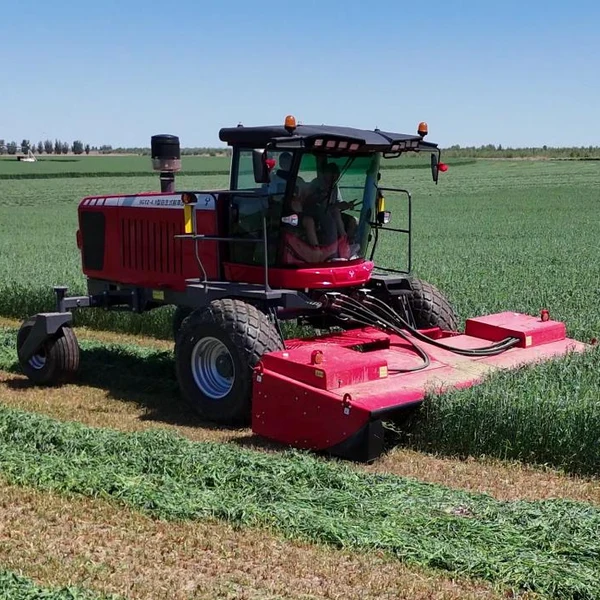
- Self-propelled chassis:multifunctional platforms that allow you to quickly change working parts (sprayer, spreader, mower).
- Front and telescopic loaders:critical for warehouse logistics and livestock feeding.
Integration of these units into a single digital ecosystem of the farm makes it possible to dispatch the operation of the fleet in real time, reducing downtime and fuel consumption. The query “transport of agricultural machinery” often implies a search for precisely such integrated solutions, rather than isolated machines.
Where transport agricultural machinery is used: industry scenarios
The efficiency of using agricultural transport directly depends on the correct selection of the model for specific technological maps. Let's look at two real-life engineering application scenarios that demonstrate the impact of technical characteristics on process economics.
Scenario 1: Harvesting grain crops in a risky farming area
In conditions of a short harvest window (14–18 days), the throughput of the transport link becomes a critical parameter. The use of standard two-axle trailers with a capacity of 10–12 tons creates a bottleneck for combines with a capacity of over 300 hp.
Engineering solution:Application of the “tractor 200+ hp” hitch + grain carrier 30 tons.” With an average yield of 45 c/ha and a hectare harvester productivity of 2.5 ha/h, transport must ensure the removal of at least 112 tons of grain per hour. This requires 3-4 such units per combine or the use of extra large trailers (40+ tons) with a quick unloading system.
Economic effect:Reducing combine downtime waiting for transport from 15% to 3%. The payback for additional tonnage is less than one season due to the preservation of grain quality (reducing losses from shedding).
Scenario 2: Application of liquid fertilizers on heavy soils
Working on waterlogged soils in spring requires minimizing the specific pressure on the ground. Traditional wheeled tractors with heavy tanks cause excessive soil compaction, reducing future yields by 10–12%.
Engineering solution:Use of self-propelled sprayers based on ultra-low pressure tires or tracked chassis. Tire pressure drops to 0.8–1.0 bar. The engine power must be at least 250 kW to ensure high speed (up to 25 km/h) with a full tank (3000–4000 l).
Technical nuance:The body roll compensation system allows the 24-36 meter boom to remain stable even when driving over uneven surfaces, ensuring application accuracy of ±5 cm.
Key Specs: What to Look for in the 2026 Spec
When analyzing proposals where a request appearstransport agricultural machinery, buyers must evaluate not only marketing claims, but also hard technical parameters. In 2026, the following requirements became the de facto standard:
| Parameter | Minimum Requirement (Basic Level) | Recommended Standard (High Efficiency) | Impact on Operation |
|---|---|---|---|
| Engine emission class | Stage IIIA / Euro 3 | Stage V / Euro 5 | Access to subsidies, environmental fees, engine efficiency. |
| Transmission type | Mechanical / Simple hydrostatics | CVT (variable transmission) / Powershift with automation | Fuel consumption, operator fatigue, speed accuracy. |
| Hydraulic system | Open center, flow 60-80 l/min | Closed center (LS), flow 100+ l/min, pressure 200 bar | Speed of work of attachments, ability to use complex units. |
| Operator's cabin | Air conditioning, basic sound insulation | Noise category 4, air suspension, climate control | Labor productivity, retention of qualified personnel. |
| Digital integration | No or basic GPS tracker | ISOBUS Universal Terminal, telemetry, precision driving | Data collection for agronomy, elimination of overlaps, flow control. |
Particular attention should be paid to the material of the frame and axles. Equipment operating under high dynamic loads (such as applying liquid fertilizer at speed) requires S700MC steel or similar high-strength steel that provides resistance to fatigue cracks.
How to choose agricultural machinery transport: selection algorithm
The process of selecting agricultural transport in 2026 requires a systematic approach. An error at the specification stage can cost a company millions of rubles in lost profits and expensive repairs. Follow the following algorithm:
- Audit of the existing fleet and tasks:Determine peak loads. How much cargo needs to be transported per day during the cleaning period? How much area is processed per season? Do not buy equipment “for growth” if there is no clear plan for expanding the acreage.
- Compatibility Analysis:Check the compliance of the tractor's traction class with the power of the consuming unit. For example, a wide-cover sprayer (36 m) requires a tractor with a powerful hydraulic system and sufficient weight for traction.
- Service infrastructure assessment:Availability of spare parts in dealer warehouses within a radius of 200–300 km from the field is a critical factor. The waiting time for a part should not exceed 24–48 hours per season.
- Test drive in real conditions:Laboratory data may differ from field data. Request a demonstration of the equipment in your field with your operator.
When searching for a querytransport agricultural machineryPay attention to the presence of GOST and EAC certificates of conformity. Lack of proper documentation can lead to problems when registering with Gostekhnadzor and receiving subsidies.
Price Range and Cost Factors in 2026
Pricing for agricultural machinery in 2026 is characterized by high volatility due to the cost of raw materials, logistics costs and exchange rate differences. Purchasing directly from the manufacturer (prices from the manufacturer) allows you to fix a more favorable price, but it is important to understand the cost structure.
What affects the final cost?
- Engine configuration:The transition to Stage V engines increases the cost of the power plant by 15–25% due to the complexity of the exhaust gas aftertreatment system (AdBlue, particulate filters).
- Tire kit:Premium tires with Ultra Flex technology can add up to 20% of the cost of a trailer or tractor, but provide better flotation and soil preservation.
- Electronics and software:Licenses for driving and telemetry systems are often sold on a subscription basis. The initial cost may be lower, but annual payments must be factored into your budget.
- Logistics:Delivery of oversized equipment from Asia or Europe requires complex logistics. Including these costs in the turnkey contract protects the buyer from hidden fees.
Approximate price segments (RF, 2026)
Note: Prices are estimates and may vary depending on exchange rates and specific configuration.
- Tractors of energy class 3-4 (150-200 hp):8 – 12 million rubles. (domestic assembly/China) up to 18 – 25 million rubles. (premium brands/import).
- Trailed grain trucks (20-30 tons):3.5 – 6 million rub.
- Self-propelled sprayers (3000-4000 l):15 – 30 million rubles.
- Front loaders (3-5 tons):4 – 8 million rubles.
Purchasing as a package (tractor + trailer + attachments) often gives an additional discount of 5% to 10%, since it is more profitable for the manufacturer to implement a comprehensive solution.
Logistics and export: delivery features
For large agricultural holdings considering importing equipment, a key aspect is customs clearance and certification. In 2026, the requirements for confirming the country of origin of goods in order to receive preferential VAT and duty rates were tightened.
A direct contract with the manufacturer simplifies the process of obtaining warranty service. However, it is necessary to agree in advance on the conditions for installation supervision and commissioning. Manufacturer engineers should be present when complex equipment (for example, combines or sprayers with electronic control) is first launched to ensure that the software is correctly configured for local conditions.
Delivery time varies from 2 months (warehouse program) to 6–8 months (production to order). Procurement planning should be carried out at least six months before the start of the season.
Comparison of models: domestic assembly vs Import
The choice between locally produced equipment and imported equipment remains a dilemma for many managers. Below is an objective comparison of key parameters.
| Criterion | Local assembly / CIS | Import (Asia/Europe) |
|---|---|---|
| Purchase cost | 20-30% lower | Above, dependence on exchange rates |
| Availability of spare parts | High, short delivery times | Medium/Low, risks of logistics failures |
| Technological level | Medium, fast catch-up development | High, advanced solutions in precision farming |
| Maintainability | Tall, simpler design | Requires specialized dealer service |
| Liquidity in the secondary market | Stable | High for famous brands |
Recommendation:For simple operations (soil transportation, basic plowing), it is advisable to choose local equipment. For high-tech processes (precise application of plant protection products, harvesting of expensive crops), investments in imported or licensed equipment with a high level of automation pay off faster by saving materials and improving product quality.
An example of a reliable partner: the experience of the Jiujia company
Choosing a manufacturer that can provide not only a competitive price, but also high quality workmanship is a decisive factor. A striking example of a modern integrated enterprise successfully operating in the Russian market is the Hulunbuir Jiujia Machinery Manufacturing Company.
Founded in 2021 in Hulunbuir National Industrial Park, Jiujia specializes in the intelligent production of forage and harvesting machinery. The company has its own cycle of complete quality control: from scientific research and CAD design to serial production and after-sales service. The production base with an area of more than 32,000 m² is equipped with CNC laser machines, automated welding complexes and electrostatic spraying lines, which allows the production of up to 4,000 units of equipment annually.
The company's product portfolio includes a series of round balers (top sellers in China in 2023–2024), mower rakes, bean lifting machines and other specialized equipment. All models, such as the 9YG-1.0 baler or the 9GQY-3.2 mower-conditioner, are tested in our own laboratory and adapted to difficult climatic conditions, including operation in Russia and Mongolia. ISO 9001 certification and national high-tech enterprise status confirm the reliability of Jiujia equipment, making it an attractive choice for those seeking a balance between innovation and cost-effectiveness.
Typical mistakes when choosing and using
An analysis of service calls for 2024–2025 revealed a number of system errors that customers make when integrating new equipment into their fleet.
1. Ignoring hydraulic oil requirements
Modern hydraulic systems operate at pressures in excess of 200 bar. Using oils with the wrong viscosity index or lacking the necessary additives will result in rapid wear of pumps and valves.Engineering advice:strictly follow the manufacturer's specifications (for example, HVLP 46) and change filters more frequently during the first year of break-in.
2. Incorrect tire selection
Installing tires with insufficient load capacity on heavy grain trucks leads to overheating and cord failure. The savings on tires are “eaten up” by replacing a set every 2 seasons instead of the required 5–7 years.
3. Lack of electronics calibration
Purchasing equipment with ISOBUS and differentiated application systems without subsequent agronomic calibration makes these functions useless. The equipment operates in manual mode, and the overpayment for “digital” is not refunded.
FAQ: Frequently asked questions
What is the service life of modern transport and agricultural machinery?
If maintenance regulations are followed and correct operation is performed, the average service life of tractors and trailers is 10–12 years or 10,000–12,000 operating hours. For intensively used grain carriers, this figure may be lower (8–10 years) due to high dynamic loads on the frame.
Is it possible to purchase on lease from the manufacturer?
Yes, most large manufacturing plants offer partner leasing programs in 2026 with advance payments ranging from 0% to 20%. This allows you to distribute the financial burden and update the fleet without withdrawing working capital.
How does the weight of equipment affect soil compaction?
Excessive weight leads to the destruction of the soil structure, reducing its aeration and water permeability. It is recommended to use low pressure tires, twin wheels or crawler undercarriages to reduce the specific pressure to below 0.6 kg/cm².
What is included in the manufacturer's warranty?
The standard warranty is 1–2 years or 2000–3000 operating hours. It covers defects in materials and workmanship. Consumables (filters, belts, tires) and damage due to violation of operating rules are not included in the warranty.
Recommendations for purchasing and concluding a contract
When forming a technical specification for a purchase, where the key is the requesttransport agricultural machinery, include the following points in the contract:
- A clear definition of the terms “downtime” and the procedure for compensation for delays in the delivery of spare parts.
- Manufacturer's obligation to train operators and mechanics (at least 2 days on site).
- Fixation of prices for spare parts for the first 2 years of operation (protection against inflation).
- Terms of transfer of software and rights to use it.
Do not forget that the cheapest equipment at the purchase stage may be the most expensive to operate. Consider the cost per hour, not just the sticker on the hood.
Conclusion
The agricultural machinery market in 2026 offers ample opportunities for fleet modernization. Correctly selectedtransport agricultural machinerybecomes a driver of growth in labor productivity and farm profitability. The key to success lies in a thorough technical audit, understanding long-term costs and choosing a reliable manufacturing partner who can provide not only sales, but also full technical support.
Ready to find the optimal solution for your farm? Our engineers will help you calculate the required power and equipment based on your specific tasks and budget.
→ Receive an individual commercial offer and payback calculation
Contact sales department
See also:Tractor catalog | Trailed equipment | Service and spare parts