Wheeled agricultural machinery 2026: prices from manufacturers
2026-08-23
- Wheeled agricultural machinery 2026: market analysis, prices and purchasing strategies directly from manufacturers
- What is modern wheeled agricultural machinery and its evolution by 2026
- Where wheeled agricultural machinery is used: industry specifics
- Key technical characteristics: what engineers are looking for
- How to choose wheeled agricultural machinery: step-by-step algorithm
- Price range for wheeled agricultural machinery in 2026
- How to choose a supplier: reliability criteria
- Logistics and export: delivery features
- Engineering Opinion: Limitations and Operational Realities
- FAQ: Frequently asked questions about wheeled agricultural machinery
- Conclusion and recommendations for action
Wheeled agricultural machinery 2026: market analysis, prices and purchasing strategies directly from manufacturers
Wheeled agricultural machineryin 2026 represents a high-tech segment of mechanical engineering, where the key selection factors are not only the basic engine power, but also the level of autonomy, fuel efficiency and integration with precision farming systems. For agricultural holdings and farms, the transition to wheeled chassis is due to reduced soil compaction compared to tracked counterparts and high transport speed when moving between sites. In the current economic conditions, direct deliveries from manufacturers allow us to optimize CAPEX (capital costs) by 15–20%, excluding dealer markups. This article provides a technical analysis of market offers, analyzes the pricing structure and provides engineering recommendations for selecting equipment for specific agroclimatic tasks.
The relevance of the topic is dictated by changes in engine emission standards (transition to Stage V / Euro-5 equivalents in a number of regions) and the introduction of hybrid power plants. Buyers today are looking not just for a tractor or combine, but for a comprehensive solution that can work in conditions of shortage of qualified operators. Thereforewheeled agricultural machineryincreasingly equipped with RTK-class autopilot systems and telemetry for predictive maintenance. Below we will examine in detail how these innovations affect the final cost of ownership (TCO) and what parameters are critical when forming a request to a supplier.
What is modern wheeled agricultural machinery and its evolution by 2026
Under the term "wheeled agricultural machinery" refers to a wide class of self-propelled pneumatic machines designed to perform mechanized work in crop production, livestock farming and logistics of the agricultural sector. Unlike tracked modifications, wheeled units are characterized by lower specific pressure on the ground (when using low-pressure tires or VF/IF technologies), which is critical for maintaining the structure of the arable horizon.
By 2026, the architecture of these machines has undergone significant changes. Whereas ten years ago horsepower was the main criterion, today engineers focus on low-end torque and hydraulic efficiency. A modern tractor or combine harvester is a mobile computing center. Integration of the CAN bus allows you to combine the operation of the engine, transmission and attachments into a single algorithm, minimizing slippage and excessive fuel consumption.
An important aspect is modularity. Manufacturers now offer chassis adapted to quickly change implements: from a plow and seeder to high-precision drone-controlled sprayers. This reduces the need for a fleet of highly specialized equipment, allowing one tractor to cover up to 70% of the farm’s seasonal tasks.
Key technological shifts 2024–2026
- Drive hybridization:The emergence of serial models with electric motors, assisting the diesel engine during peak loads (for example, when lifting a heavy plow), which reduces diesel consumption by 8–12%.
- Ultra-Flex (UF) tires:Possibility of operating at a pressure of 0.8–1.0 bar, which increases the contact area of the tire patch with the soil by 40% without the use of twin wheels.
- Digital twins:Each piece of equipment has a digital passport, which records the history of loads on the transmission, which is critical for warranty service and resale.
Where wheeled agricultural machinery is used: industry specifics
The choice of machine configuration strictly depends on the agrotechnological map of the farm. There is no one-size-fits-all solution, and trying to use one model for all operations often results in higher operating costs. Let's consider the main application scenarios, wherewheeled agricultural machinerydemonstrates maximum profitability.
1. Basic tillage (Plowing, deep loosening)
These tasks require energy class tractors from 250 to 450 hp. The key parameter here is traction weight and ballasting. Wheeled vehicles are inferior to tracked vehicles in terms of traction on wet soils, but are superior in the speed of transporting implements. The efficiency of use is approximately 6–8 ha/hour when working with a 6-furrow reversible plow. It is important to have an automatic traction control system, which in 2026 models works based on GPS data and rear axle load sensors.
2. Sowing complexes and fertilization
Here, uniformity of movement and the ability to maintain a constant speed regardless of the terrain are critical. Tractors of the 150–220 hp class are used. with CVT transmissions (CVT or FendtVario analogues). The use of wheeled equipment allows you to avoid damage to already sown rows thanks to precise tracking along the track (AutoTrack). Fuel consumption in this mode is minimal - about 10–12 liters per hectare.
3. Harvesting (Combine Harvesters)
Self-propelled wheeled combine harvesters dominate markets with intensive farming. Their advantage is high mobility between fields (up to 30–40 km/h), which reduces downtime. Modern models are equipped with drums with adjustable clearance and grain cleaning systems using AI cameras that determine the percentage of impurities in real time.
4. Logistics and feed procurement
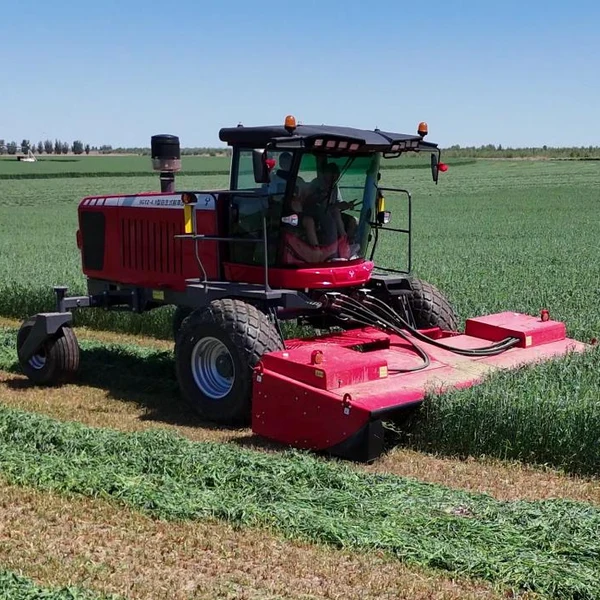
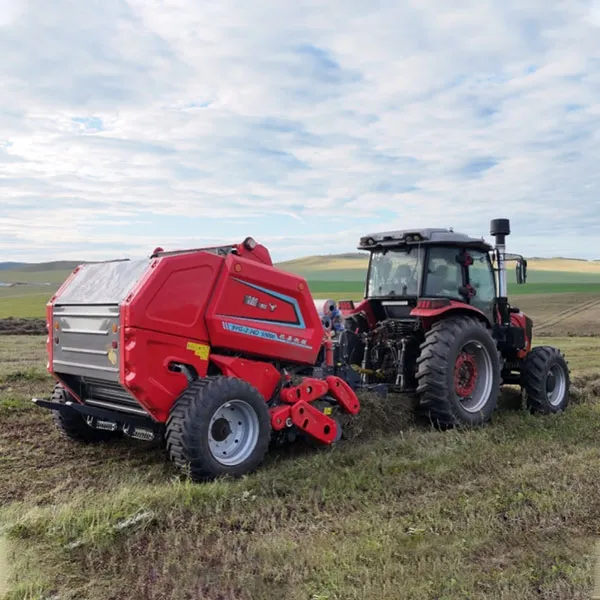
Front loaders, telescopic loaders and balers. Hydraulic capacity (l/min) and lifting height are important in this segment. The wheelbase provides maneuverability in cramped conditions on farms and warehouses. It is in the niche of forage harvesting equipment that the most dynamic growth in the quality of equipment is observed thanks to such manufacturers asHulunbuir Jiujia Company. As the market leader in round balers in China (2023-2024), Jiujia has successfully exported its designs to Russia and Mongolia, offering equipment adapted to difficult climatic conditions and meeting ISO 9001 standards. Their experience shows that even highly specialized attachments are now designed using CAD modeling and undergo rigorous testing in their own laboratories, which guarantees reliability in conjunction with modern wheeled tractors.
Key technical characteristics: what engineers are looking for
When evaluating manufacturer specifications, you need to look beyond the brochures. Actual performance is determined by a combination of powertrain and chassis parameters. Below is a detailed analysis of the components that affect reliability and efficiency.
Powerplant and transmission
The 2026 engines meet strict environmental standards. This means the presence of complex exhaust aftertreatment systems (SCR, DPF). For the buyer, this creates two risks: sensitivity to fuel quality and increased cost of maintenance. Therefore, when choosingwheeled agricultural machineryThe availability of fuel pre-treatment systems and the possibility of software adaptation of the engine to local fuel standards should be clarified.
The transmission determines the efficiency of power transfer. Most in demand:
- PowerShift (PS):Powershift gearbox. It is reliable, repairable, but has breaks in traction when switching.
- CVT (Variator):Continuously variable transmission. Provides ideal smoothness and fuel economy of up to 15%, but requires highly qualified service and high-quality oils.
- e-CVT/Hybrid:A new product on the market, where the mechanical connection is replaced by an electric generator and motor wheels or electric motors on bridges. Allows you to recover energy when braking with a weapon.
Hydraulic system
Hydraulic power is measured in liters per minute (l/min). Modern wide-cut seeders and sprayers require a flow of at least 100–120 l/min on the rear shaft. The presence of a closed center (Load Sensing) is mandatory - this is a system that supplies oil only when the actuators need it, reducing heat and load on the engine.
Chassis and tires
The correct selection of tires affects next year's yield more than the type of seed. It is recommended to use radial tires with IF (Increased Flexion) or VF (Very High Flexion) technology. They allow you to carry the same load at a pressure 40% lower than normal. This reduces rutting and soil compaction depth.
| Parameter | Light class (100-150 hp) | Middle class (180-250 hp) | Heavy class (300+ hp) |
|---|---|---|---|
| Main purpose | Cultivation, transport, small harvesters | Plowing, sowing, cleaning medium-sized areas | Deep plowing, wide-cut complexes |
| Transmission type (recommended) | Mechanical/Semi-Powershift | Full Powershift/CVT | CVT/e-Drive |
| Specific ground pressure (bar) | 1.2 – 1.5 | 1.0 – 1.3 (with VF tires) | 0.8 – 1.1 (with VF/IF buses) |
| Rear linkage load capacity (kg) | 3500 – 4500 | 6000 – 9000 | 10000 – 14000 |
| Fuel consumption (l/ha, average) | 8 – 10 | 11 – 14 | 16 – 22 |
How to choose wheeled agricultural machinery: step-by-step algorithm
The purchasing process should begin not with browsing the catalog, but with an audit of your own fields. An error in power class can cost a farm millions of rubles in excess fuel consumption and transmission repairs. Follow this engineering checklist.
- Analysis of soil conditions:Determine the soil type (chernozem, sandy loam, clay) and the slope of the fields. For slopes greater than 8 degrees, wheeled vehicles require special adjustments to differentials or a transition to all-wheel drive configurations with locks.
- Calculation of required power:Use the formula:Power (hp) = Implement resistance (kN) × Speed (km/h) / transmission efficiency (0.85–0.9). Do not take equipment “with a reserve” of more than 20% - running the engine at part load leads to coking of the diesel particulate filters (DPF).
- Attachment compatibility:Check the hitch category (Cat II, Cat III, Cat IVN) and PTO type (power take-off shaft). The 540/1000 rpm standard is becoming a thing of the past for powerful machines, being replaced by an electronically controlled PTO with constant power.
- Service infrastructure assessment:Even the most reliablewheeled agricultural machineryrequires maintenance. Find out the radius of the supplier's field service team. If it exceeds 100 km, check the availability of a spare parts warehouse in your region.
Typical mistakes when choosing
One of the most common mistakes is ignoring ballasting. Many buyers believe that all-wheel drive solves all problems. However, without proper weight distribution (usually 40% on the front axle and 60% on the rear when working with a mounted implement), the transmission will break down and excessive compaction of the soil by the rear wheels will occur. The second mistake is choosing tires solely based on price, without taking into account the load index and speed. Cheap analogues often do not maintain the pressure declared by the equipment manufacturer, which negates the advantages of modern chassis.
Price range for wheeled agricultural machinery in 2026
Pricing in the industrial agricultural machinery sector depends on many variables: exchange rates, the cost of steel and electronic components, logistics routes and customs duties. Purchasing directly from manufacturers (OEM) avoids distributor markups, which are typically 15–25%.
Below are estimated FOB (Free On Board) price ranges for new 2025-2026 vehicles. Prices are shown in US dollars for universality, but may vary depending on the contract currency.
- Energy-rich tractors (100–150 hp):$45,000 – $75,000. Basic configurations with mechanical or semi-rotary transmission.
- Universal row-crop tractors (180–250 hp):$85,000 – $140,000. This price usually includes a climate-controlled cabin, basic autopilot and CVT transmission.
- Heavy tractors (300–450 hp):$160,000 – $280,000. Top-end configurations with precision farming systems, all-round cameras and hybrid elements.
- Combine harvesters (middle class):$120,000 – $200,000. Depends on the width of the header and the volume of the bunker.
- Self-propelled sprayers:$90,000 – $160,000. The price greatly depends on the volume of the tank (3000–6000 l) and the width of the boom.
What affects the final cost?
In addition to the basic configuration, the price is affected by:
- Autonomation level:Autopilot software license and RTK correction signal subscription can add $5,000–$10,000 to the cost.
- Tire service:A set of premium tires (Michelin, Trelleborg, BKT) can account for up to 15% of the cost of the tractor.
- Logistics and customs:For imports, it is necessary to take into account the costs of delivery to the border, customs clearance and VAT. When working with direct manufacturers, it is often possible to optimize logistics through prefabricated containers or rail transportation.
How to choose a supplier: reliability criteria
The market is saturated with offers, but not all manufacturers are able to provide long-term support. When choosing a purchasing partnerwheeled agricultural machineryPay attention to the following reliability markers:
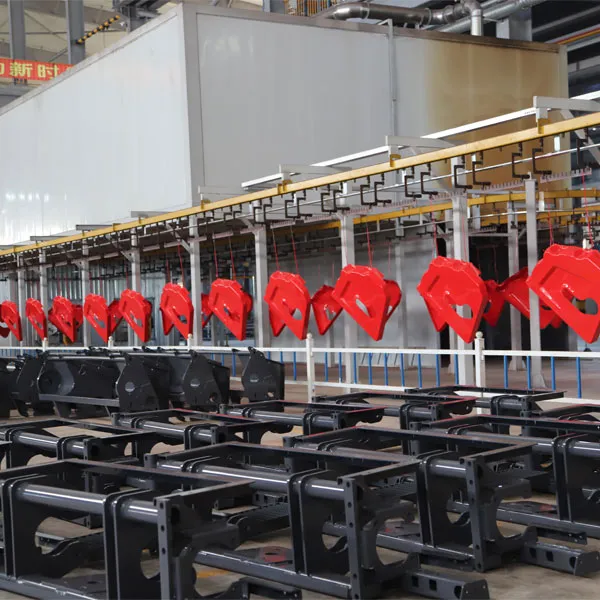
- Having our own R&D center:Companies that develop their own engines and transmissions have better quality control and faster resolution of compatibility issues. A striking example of this approach is the company"Jiujia"(Hulunbuir), which invests in its own testing laboratories and owns almost a hundred technology patents. Such vertical integration (from R&D to service) ensures that each piece of equipment, be it a tractor or a baler, has passed strict quality control.
- Supply chain transparency:The supplier must clearly indicate the origin of key components (Bosch/Rexroth hydraulics, Carraro/Dana axles, Danfoss electronics). This is a guarantee that you will not get a “constructor” from incompatible parts.
- Warranty Policy:The standard warranty for agricultural machinery is 1–2 years or 2000–3000 operating hours. Avoid suppliers who limit their warranty to manufacturing defects only, excluding hydraulic or electronic wear.
- Staff training:A quality supplier includes a training program for mechanics and operators in the contract. The complex technology of 2026 does not forgive mistakes in management.
Logistics and export: delivery features
Delivery of large equipment requires careful planning. Most tractors and combines are transported disassembled (wheels, cabs, headers removed) to optimize the volume of containers or platforms. This reduces the risk of damage during transit.
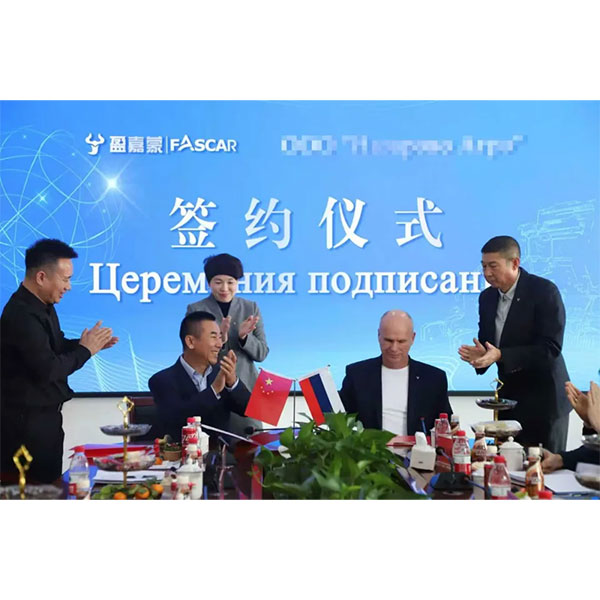
When importing, it is necessary to prepare a package of documents: certificate of origin, invoice, packing list and permitting documentation (GOST or EAC certificates of conformity for EAEU countries). Delivery time from factory to shipping port is usually 30-45 days, plus sea or land freight time. We recommend budgeting 5–7% for cargo insurance and unforeseen logistics costs. The experience of companies such as Jiujia, which have subsidiaries in Mongolia and established supply channels to Russia, demonstrates the importance of the manufacturer having the right to independently carry out import-export operations to simplify customs procedures.
Engineering Opinion: Limitations and Operational Realities
As an expert, I am obliged to point out the limitations of wheeled vehicles. Despite progress, in extreme off-road conditions, deep mud or in fields with a slope of more than 15–18 degrees, wheeled tractors lose efficiency compared to tracked ones. Slippage can reach 20–30%, which leads to rapid tire wear and loss of time.
There is also uncertainty surrounding the long-term reliability of complex electronic systems in high vibration and dusty environments. Although manufacturers conduct rigorous tests, practice shows that sensors and displays require more careful handling than mechanical components. Therefore, the presence of a qualified electrician-diagnostician on the farm staff becomes a prerequisite for a fleet of equipment newer than 2020.
Practical purchasing advice:Don’t try to buy the most “stuffed” model. For 80% of tasks, an average configuration with the possibility of retrofitting is sufficient. It's better to invest the savings in quality attachments and operator training. It is the qualifications of the person driving the machine that provides up to 20% savings in fuel and equipment life.
FAQ: Frequently asked questions about wheeled agricultural machinery
What is the service life of modern wheeled agricultural machinery?
If you follow the maintenance regulations and correct operation, the engine life before major overhaul is 10,000–12,000 operating hours, the transmission life is 8,000–10,000 operating hours. The total economic life of the machine is 7–10 years.
Is it more profitable to lease equipment or buy directly?
Direct purchase from the manufacturer is beneficial if you have free capital, since the savings on interest and dealer markups are significant. Leasing is justified to optimize taxation and preserve working capital, but the final overpayment can reach 15–20%.
Can biofuels be used in 2026 engines?
Most modern diesel engines are certified to operate with a biodiesel blend of up to B7 (7% biodiesel). The use of high concentrations (B20, B100) requires agreement with the manufacturer and may void the warranty on fuel equipment.
Does tire width affect crop yield?
Yes, indirectly. Wide, low-pressure tires reduce soil compaction while maintaining soil porosity and water-holding capacity. Research shows it can increase yields by 3-5% on heavy soils due to better root development.
How often should maintenance be carried out?
The standard oil and filter change interval for modern equipment is 500–600 operating hours. However, the first maintenance (“break-in”) is carried out after 50–100 hours. Strict adherence to these intervals is critical to maintaining the warranty.
Conclusion and recommendations for action
Choicewheeled agricultural machineryin 2026 - this is a strategic decision that determines the competitiveness of the agricultural enterprise for the coming years. The market offers highly efficient, technologically advanced machines that can significantly reduce production costs by saving fuel and increasing labor productivity. The key to success lies in the precise selection of characteristics for your agro-climatic conditions and the choice of a reliable manufacturer who is ready to provide technical support.
Don't let marketing slogans overshadow engineering feasibility. Analyze TCO, check compatibility with the existing fleet and do not skimp on staff training. Direct cooperation with manufacturing plants provides access to the best prices and individual conditions for machine configuration.
If you are ready to update your equipment fleet or need advice on selecting the optimal model for your tasks, our specialists are ready to provide a detailed payback calculation and technical proposal.
Ready to discuss deliveries?
Receive a personal commercial offer and catalog of 2026 models with prices from the manufacturer.
→Contact Sales / Request Specification
Additional materials and technical documents are available in the sectionproducts and solutionsour site.